Content note: This article discusses the deaths of children and the photographs families made of them. It does not show any photographs of the dead.
Few pieces of “dark history” travel as fast online as the Victorian post-mortem photograph: a dead child propped upright between living siblings, eyes painted onto closed lids, a hidden metal stand holding the body in place. The practice behind those images was real. Most of the images that circulate today, and the story told about them, are not.
Photographers in Europe and North America did make portraits of the dead, from the first years of commercial photography onwards. Historians who have worked through studio records, trade journals and surviving pictures describe a practice that was quieter and more tender than the internet version, and they found no evidence for the standing corpse.
At a glance
- When: from the 1840s, when the first portrait studios opened, into the 20th century.
- Who: mostly infants and young children, at a time when many families lost children young.
- How: the dead were shown lying as if asleep, held by a parent, or later in an open coffin with flowers.
- The myth: bodies propped upright on posing stands. Photo historians have found no evidence for it.
Why families photographed their dead
Early photography was expensive and slow, and many people never sat for a portrait in their lifetime. When a child died, a memorial photograph could be the only picture the family would ever have. The anthropologist Jay Ruby, who studied American examples for his book Secure the Shadow, read these images as part of ordinary mourning: a way to keep a likeness, to send it to relatives who could not attend the funeral, and to prove that the child had existed.
Studios advertised the service openly and photographers often worked in the family’s home, because the body was usually laid out there before the funeral. Audrey Linkman’s study of British practice, Photography and Death, shows the same pattern on the other side of the Atlantic: memorial portraits were commissioned, paid for and kept by families, not made as curiosities.
What real post-mortem photographs look like
The surviving pictures fall into a few recognisable types. Early images often show the dead person lying on a bed or sofa, eyes closed, arranged as if asleep. Infants were frequently photographed in a parent’s lap or arms. Later in the century, as funerals became more elaborate, the coffin itself moves into the frame, often surrounded by flowers, and some families commissioned group photographs around the casket.
What these images have in common is that they do not hide death. The child is clearly lying down, clearly still, and usually framed by the objects of mourning. The physician and collector Stanley B. Burns has published many such images from his archive in the Sleeping Beauty volumes.
The posing stand myth
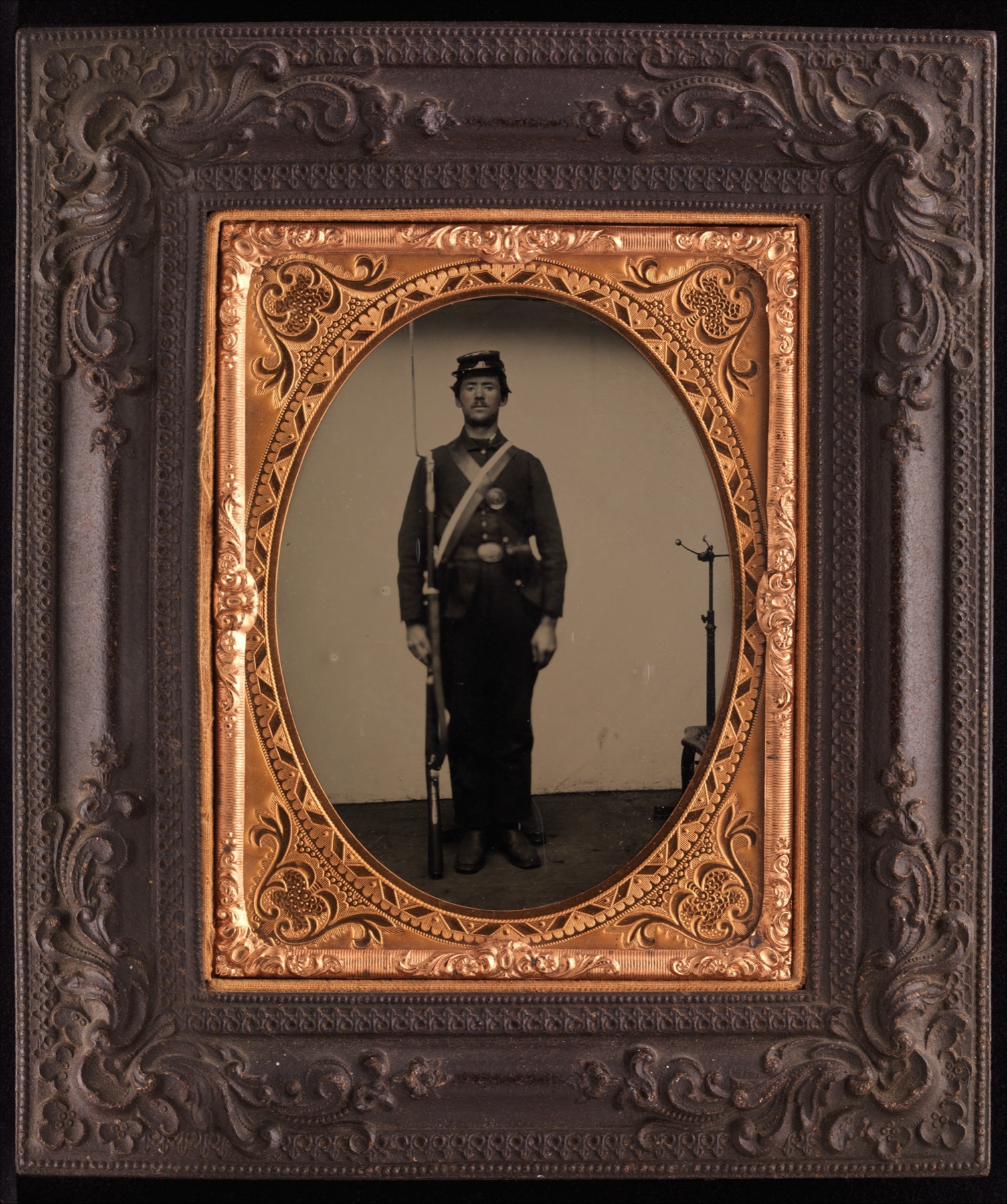
The stand that appears in so many “dead person standing” claims was a standard piece of studio furniture. A heavy iron base held an adjustable rod with a clamp or cradle for the back of the head. Exposure times in the 1840s and 1850s could run to several seconds, and the stand helped a living sitter keep still long enough to avoid a blurred face.
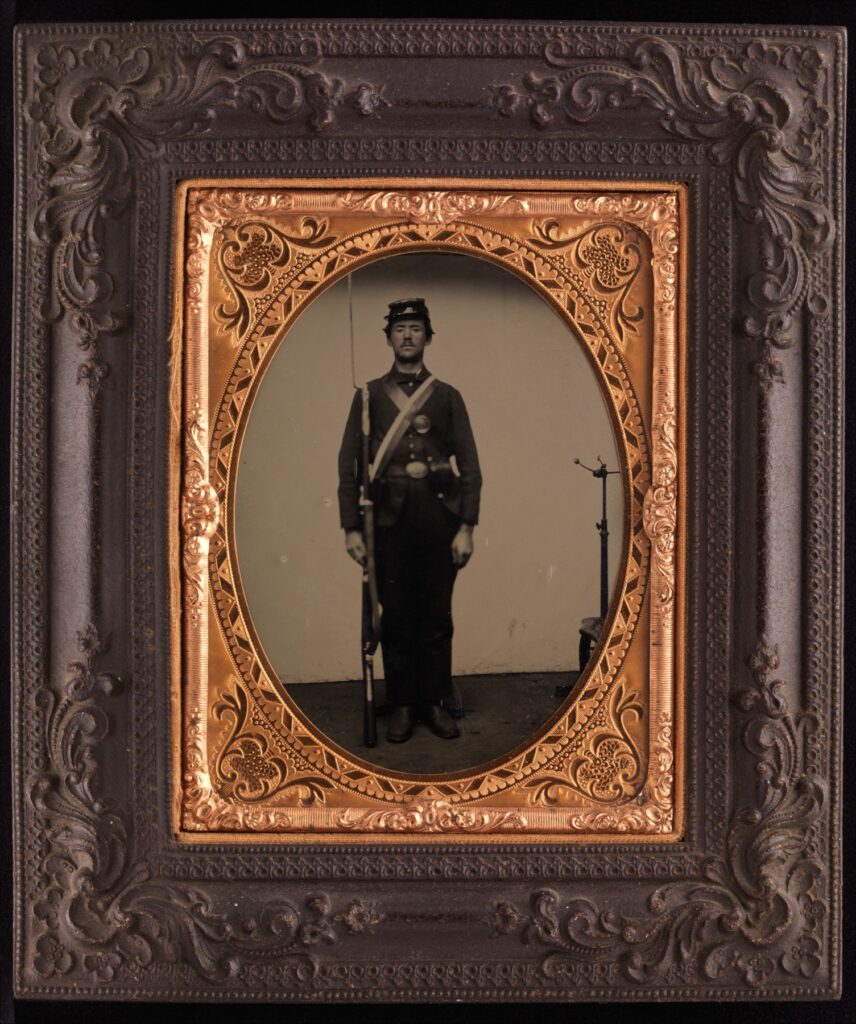
That is exactly why the stand shows up at the feet of so many living people in old photographs. It was not built to carry a body’s weight, and nothing in the period literature that Ruby and Linkman examined describes photographers propping the dead upright. A visible stand behind a sitter is evidence that the sitter was alive and needed help holding still.
Two other popular “tests” fail for the same reason. A perfectly sharp figure in a group where others are blurred is not proof of death; living sitters who held still came out sharp too. And many pictures labelled online as showing painted-on eyes turn out to show living people with heavy retouching, which was common on 19th-century prints for everyone.
How the practice faded
As cameras moved into ordinary homes in the 20th century, families had photographs of the living and the need for a single memorial portrait shrank. Ruby argues that the practice never disappeared, it became private. People still photographed the dead and the funerals of relatives, but stopped showing those pictures outside the family. That silence helped the 21st-century myth: an unfamiliar custom is easy to fill with ghoulish stories.
Documented / Disputed
Documented
- Photographers made portraits of the dead from the early years of commercial photography, often in the family home (Ruby; Linkman).
- Children and infants are the most common subjects among surviving memorial portraits (Ruby; Burns).
- Common poses were lying as if asleep, being held by a parent, and later lying in an open coffin (Ruby; Linkman).
- Posing stands existed and were used to steady living sitters during exposures (Met object above).
Disputed or often repeated
- “Corpses were propped upright on posing stands.” No evidence. The stands were not built to carry a body, and the period sources studied by Ruby and Linkman do not describe it.
- “The sharpest person in the picture is the dead one.” Not a reliable test: living sitters who held still were sharp too.
- “Eyes were painted onto closed lids.” Retouching of prints was common for everyone; many examples shared online show living sitters. We found no reliable documentation that this was a usual practice for the dead.
- “Victorians did it because they were morbid.” The sources point to remembrance: for many families it was the only portrait they would ever have.
Timeline
- 1839: Photographic processes are announced publicly in France and Britain.
- 1840s: Portrait studios open in large cities; portraits of the dead are made from these early years.
- 1850s–1860s: Cheaper processes such as ambrotypes, tintypes and cartes de visite bring photographs within reach of many more families.
- Late 19th century: Photographs of the dead in open coffins and at funerals become more common.
- 20th century: With cameras in ordinary homes, memorial photography becomes private and rarely discussed, but does not disappear (Ruby).
Sources
Primary sources
- Unknown photographer, Union Soldier Holding Rifle, with Photographer’s Posing Stand, tintype, 1861–65. The Metropolitan Museum of Art, object DP265281. Open-access image.
Secondary sources
- Jay Ruby, Secure the Shadow: Death and Photography in America (MIT Press, 1995). Catalogue record.
- Audrey Linkman, Photography and Death (Reaktion Books, 2011). Publisher’s page.
- Stanley B. Burns, Sleeping Beauty: Memorial Photography in America (Twelvetrees Press, 1990); see also The Burns Archive.
Image credits
- Header image: Union soldier holding a rifle, with photographer’s posing stand, tintype: Unknown photographer, 1861–65. The Metropolitan Museum of Art. Licence: CC0 1.0 (public domain), via Wikimedia Commons.
Related
- Victorian Mourning Rituals: Crape, Black Borders and a Queen in Black
- Mourning and Memento Mori Jewelry: Rings, Hair and Whitby Jet
- Death Masks: Faces Cast After the Last Breath
Part of Death Customs in Dark History, Documented. How we research and how we use AI: Editorial Standards. Spotted an error? Tell us at contact@macabrechronicle.com; fixes are logged on the Corrections page.
Editor’s note: This article replaces four shorter pieces on coffin and post-mortem photography that first appeared in the Macabre Chronicle section of moleopedia.com. It was rewritten from the sources above and published here on 30 October 2026.
Evergreen bestsellers Picks

TCL QM64L 85-Inch QD-Mini LED 4K Smart Fire TV

Ninja CREAMi 7-in-1 Ice Cream Maker, NC299AMZ

De'Longhi Magnifica Evo Fully Automatic Espresso Machine with Manual Milk Frother, Silver
As an affiliate, we earn on qualifying purchases.