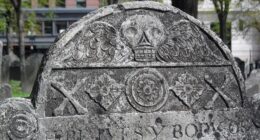
Long before photographs, people who wanted to keep the dead close wore them. A gold ring with a name and a date, a brooch holding a lock of hair behind glass, a black jet necklace: mourning jewellery was a way of carrying grief in public, and of keeping a physical piece of someone who was gone.
The objects changed with the centuries. Early “memento mori” pieces reminded the wearer of their own death; later mourning jewellery remembered one particular person. Museums such as the Victoria and Albert Museum and the Royal Collection hold many of them, and their records tell the story better than the myths that have grown around them.
At a glance
- Memento mori: Latin for “remember that you must die”; skull and skeleton motifs on rings and pendants were meant as moral reminders.
- Mourning rings: made to remember a named person, often with a name and a date of death, and given to mourners.
- Hair: from the 18th century, hair of the dead was set into rings, lockets and brooches, and Victorian “hair artists” wove it into whole pieces.
- Jet: after Prince Albert died in 1861, black Whitby jet became the fashionable mourning stone and the industry boomed until the end of the century.
Remember that you must die
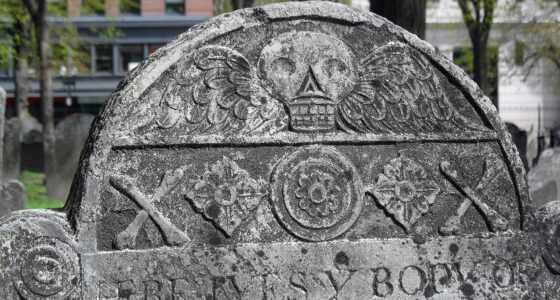
The phrase memento mori sums up a habit of late medieval and early modern Europe: keeping reminders of death in plain sight so as to live and die well. Rings, pendants and clothing ornaments carried skulls, skeletons, hourglasses and coffins. They were not about a particular person; their message was moral and religious. By the 17th century, rings with the same motifs often also carried the name of someone who had died, and the memento mori ring turned into the mourning ring.
Rings for the mourners
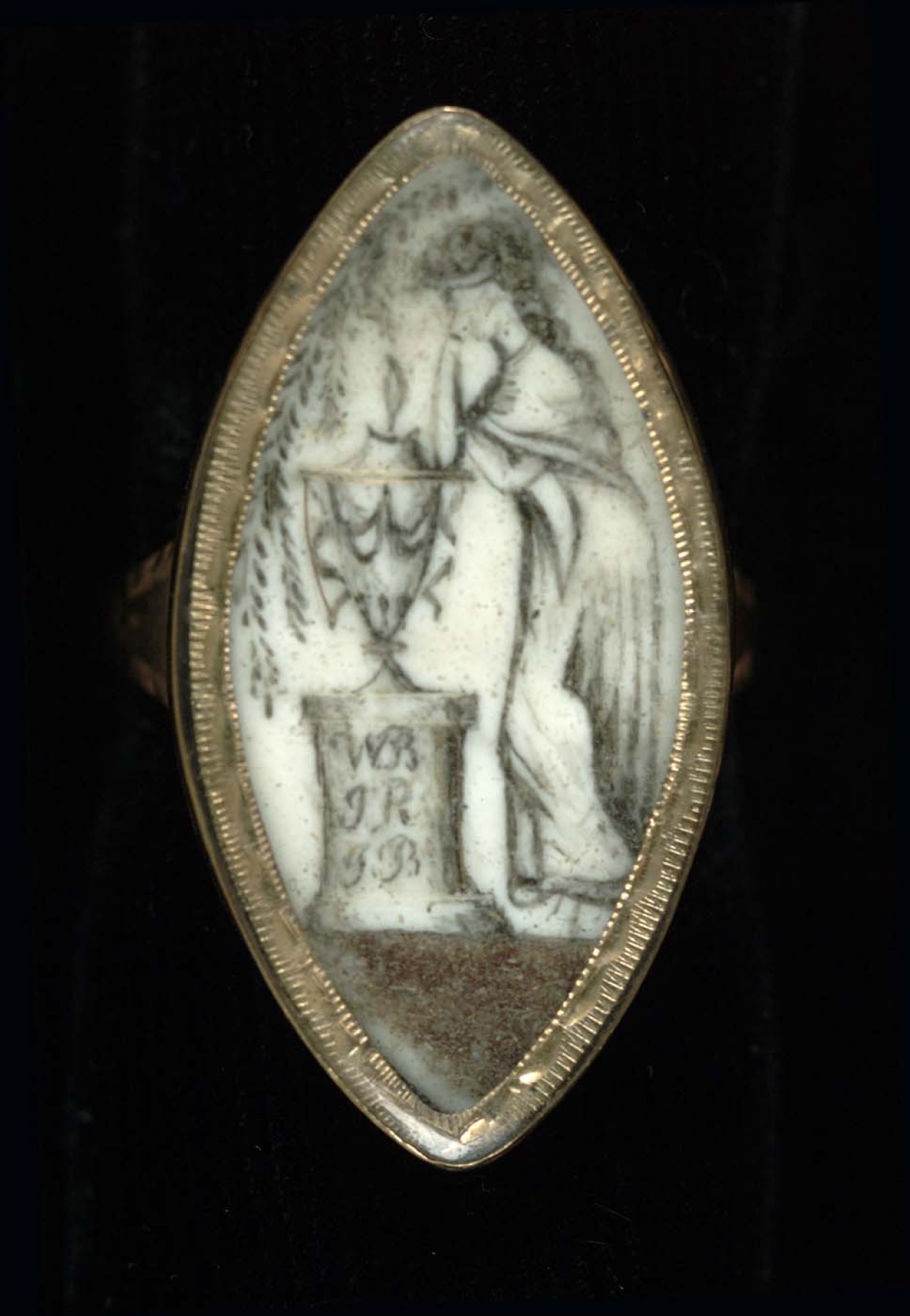
In England and its colonies, wealthier families ordered mourning rings and gave them to relatives and friends at the funeral, often as instructed in the dead person’s will. The rings usually carried the name, the date of death and sometimes the age, engraved on the inside or set under a crystal. The ring at the top of this article, made in 1788 in memory of William Burnside, is one of many such rings in American and British museums.
Royalty followed the custom too. After Prince Albert’s death, a gold and black enamel memorial ring was made for Queen Victoria with a tiny reversed microphotograph of Albert in the bezel; it is now in the Royal Collection.
Hair as a keepsake
From the 18th century, mourning jewellery often contained hair of the dead. The literary historian Christiane Holm describes rings and lockets in which a lock of hair was cut, curled and arranged behind glass, sometimes into miniature scenes of urns and willows. In the Victorian period specialised “hair artists” wove hair into entire brooches, bracelets and watch chains. According to the V&A, their printed catalogues offered customers a choice of designs and “discreet guarantees” that the hair would not be mixed up or replaced. Not all hair jewellery was for mourning: lovers and friends exchanged it too.
The jet boom
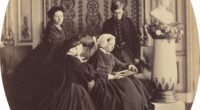
Jet is the fossilised remains of ancient trees, a dense kind of coal that can be carved and polished, and the best-known English source is the coast around Whitby in Yorkshire. According to the V&A, when Prince Albert died in 1861 the British court went into deep mourning and jet became the only acceptable material for jewellery there, a fashion that spread through society. At the industry’s peak, around 1872, the Whitby jet works employed some 1,500 men, women and children.
The boom did not last. Supplies grew scarce, cheaper substitutes such as glass (sold as “French jet”) and vulcanite rubber damaged the trade’s reputation, and jet designs fell behind changing fashions. By 1900, the V&A notes, the boom was over.
Documented / Disputed
Documented
- After Prince Albert’s death in 1861, jet became the only acceptable jewellery at the British court; Whitby’s jet works employed about 1,500 people at their peak; the boom ended by 1900 (V&A).
- Victorian hair artists offered catalogues and guarantees that customers received their own relative’s hair (V&A).
- Queen Victoria owned a memorial ring with a microphotograph of Albert (Royal Collection Trust).
- Hair was set into 18th-century mourning jewellery (Holm).
Disputed or often repeated
- “All Victorian hair jewellery is mourning jewellery.” No; hair was also exchanged as a token of love and friendship (V&A).
- “Black jewellery means jet.” Much of it is glass, vulcanite or bog oak; only testing tells real jet from substitutes.
- “Memento mori rings mourned a specific person.” Early ones did not; they were general reminders of mortality. Named rings came later.
Timeline
- 15th–17th centuries: Memento mori motifs such as skulls and hourglasses appear on rings and pendants.
- 17th–18th centuries: Named mourning rings are given to mourners, often as set out in wills.
- 18th century: Hair of the dead is set into mourning rings and lockets.
- 1788: Mourning ring made in memory of William Burnside (Smithsonian American Art Museum).
- 1808: The first industrial jet workshops open in Whitby (V&A).
- 1861: Prince Albert dies; jet becomes the court’s mourning stone.
- About 1900: The Whitby jet boom has ended.
Sources
Primary sources
- Victoria and Albert Museum, tiara of “French jet”, object O120604 (catalogue text on jet and the Whitby industry). collections.vam.ac.uk.
- Victoria and Albert Museum, jet necklace, object O120609 (catalogue text on the Whitby workshops). collections.vam.ac.uk.
- Victoria and Albert Museum, hair-work brooch by A. Forrer, about 1842, object O130484. collections.vam.ac.uk.
- Royal Collection Trust, mourning ring with a microphotograph of Prince Albert, RCIN 65364. rct.uk.
- Mourning ring for William Burnside, 1788. Smithsonian American Art Museum, 1999.27.56. Image record.
Secondary sources
- Christiane Holm, “Sentimental Cuts: Eighteenth-Century Mourning Jewelry with Hair”, Eighteenth-Century Studies 38, no. 1 (2004): 139–143. doi:10.1353/ecs.2004.0059.
- Victoria and Albert Museum, “An A–Z of gemstones” (entry on jet). vam.ac.uk.
Image credits
- Header image: Mourning ring for William Burnside: Unknown maker, 1788. Smithsonian American Art Museum. Licence: Public domain, via Wikimedia Commons.
Related
- Victorian Mourning Rituals: Crape, Black Borders and a Queen in Black
- Post-Mortem Photography: What Was Real, and What Is Myth
Part of Death Customs in Dark History, Documented. How we research and how we use AI: Editorial Standards. Spotted an error? Tell us at contact@macabrechronicle.com; fixes are logged on the Corrections page.
Editor’s note: This article replaces three shorter pieces on mourning and memento mori jewellery that first appeared in the Macabre Chronicle section of moleopedia.com. It was rewritten from the sources above and published here on 30 October 2026.