A popular story says that wakes began as a precaution: relatives sat with the body for a night or two to make sure the person was really dead and would not “wake”. It is a neat explanation, and it is wrong. The English word wake comes from an Old English word for a watch or vigil. A wake is the watch the living keep over the dead.
That watch is found in many traditions. It could be a quiet vigil of prayer, a Jewish guard who stays with the body until burial, or an Irish wake in a crowded cottage where lament, prayer, storytelling and games went on through the night.
At a glance
- Word: “wake” comes from Old English for a watch or vigil, not from waking up.
- Purpose: to keep the dead company, honour them, pray for them and gather the community before burial.
- Irish wakes: lament (caoineadh, keening) and wake games were documented by folklorists and long opposed by church authorities.
- Jewish tradition: shemira, a watcher who stays with the body from death until burial.
A watch, not a test
Dictionaries trace “wake” in this sense to Old English, where the word family meant keeping watch or staying awake, as in a night vigil before a feast day. Applied to a death, it meant sitting up with the body. The idea that wakes existed to catch people who were not really dead appears in modern lists of “weird history”, but no historian of the custom gives it as an origin. The real fear of premature burial belongs to the 18th and 19th centuries, long after wakes were common; it has its own story in Buried Alive: How a Medical Debate Became a Panic.
The Irish wake
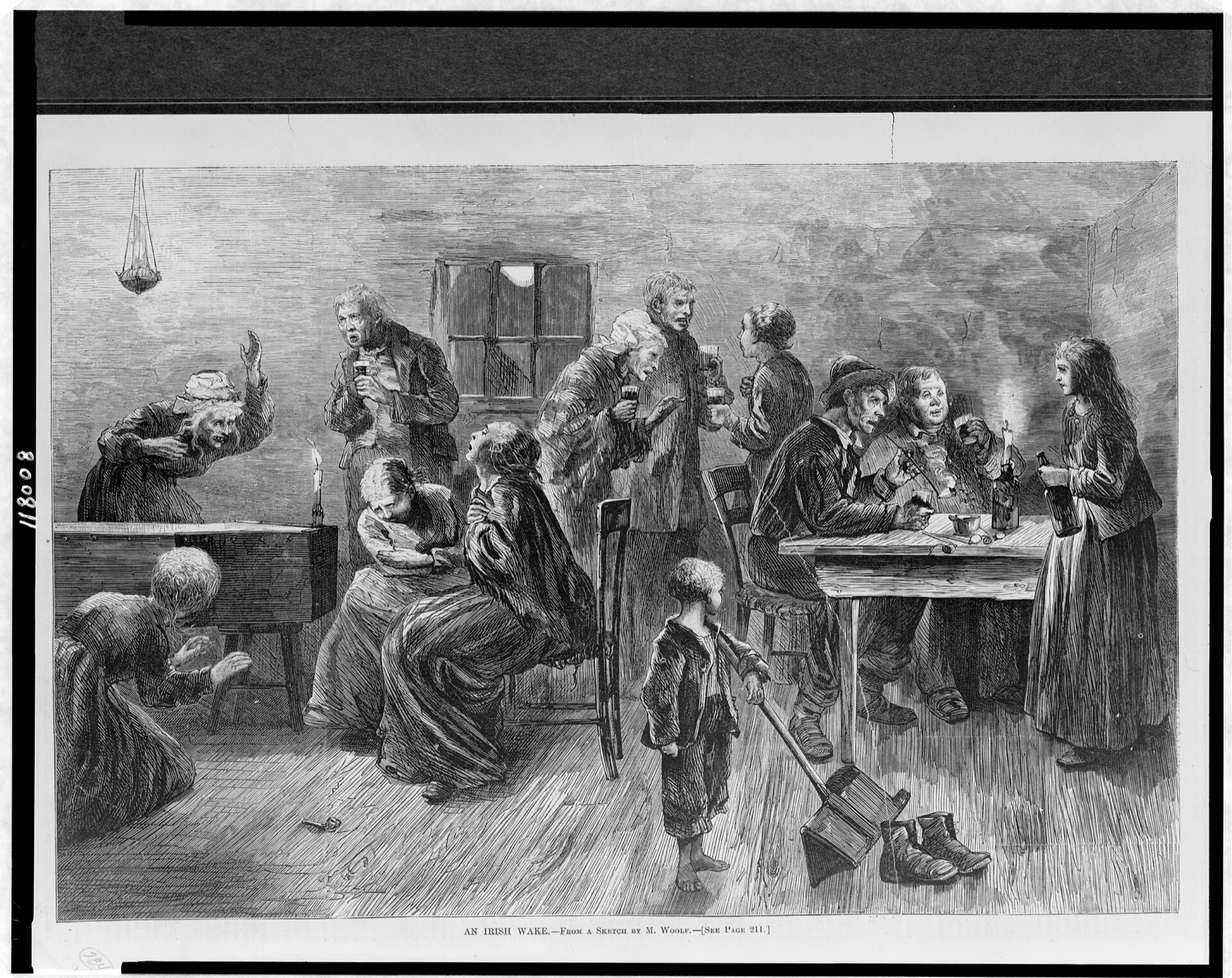
In rural Ireland until well into the 20th century, the dead were laid out at home and neighbours came to the house through the night. The folklorist Seán Ó Súilleabháin, who drew on the vast National Folklore Collection, described two sides of the custom that outsiders found hard to reconcile. One was the lament: women, sometimes professional keeners, sang and cried improvised verses over the body in praise of the dead. The other was the wake amusements: storytelling, riddles, contests of strength and mock rituals, which kept people awake and brought the community together around the bereaved family.
Church synods condemned the wake games and the drinking from the 17th century onwards, and the old forms faded in the late 19th and early 20th centuries. Illustrated papers abroad, like the 1873 engraving above, tended to show only the drink and the noise. Ó Súilleabháin’s collection shows something more serious: a ritual that marked a death in public and refused to leave a family alone with it.
Shemira: guarding the body
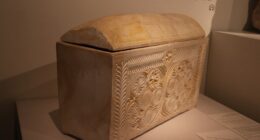
In Jewish tradition, as Maurice Lamm explains in The Jewish Way in Death and Mourning, the body is not left alone between death and burial. A watcher, the shomer, stays with it, usually reading psalms. The custom expresses respect: a person who has died is still owed care and company. Because Jewish law favours a prompt burial, the watch is usually short.
The Christian vigil
Christian churches kept vigils over the dead from early times, and the custom survives in liturgy. The Catholic Order of Christian Funerals, in use in the English-speaking world since 1989, includes a “Vigil for the Deceased”, which may be held at home, in a funeral home or in church, with readings, prayers and time for family and friends to remember the person who has died. In many places today the “wake” or “viewing” at a funeral home is its secular descendant.
Documented / Disputed
Documented
- “Wake” derives from an Old English word for a watch or vigil (Oxford English Dictionary, “wake”).
- Irish wakes combined lament and amusements; church authorities opposed the games (Ó Súilleabháin; National Folklore Collection).
- Jewish tradition keeps a watcher with the body until burial (Lamm).
- The Catholic funeral rite includes a vigil for the deceased (Order of Christian Funerals).
Disputed or often repeated
- “Wakes were held to see whether the dead would wake up.” A modern folk etymology; the word means a watch.
- “Irish wakes were just parties.” An outsiders’ caricature. Lament, prayer and games belonged together.
- Exact dates for the end of keening. Sources disagree; it declined region by region between the late 19th and the mid-20th century.
Timeline
- Old English period: The word family behind “wake” means a watch or vigil.
- 17th–19th centuries: Irish church synods repeatedly condemn wake games and drinking.
- 1873: Illustrated papers publish scenes of Irish wakes for outside readers, such as the engraving above.
- 1937–1939: Irish schoolchildren record local customs, including wakes, for the National Folklore Collection’s Schools’ Collection.
- 1961: Seán Ó Súilleabháin publishes his study of wake amusements in Irish (English translation: Irish Wake Amusements).
- 1969: Maurice Lamm publishes The Jewish Way in Death and Mourning.
- 1989: The Order of Christian Funerals, with its vigil for the deceased, comes into use in English.
Sources
Primary sources
- National Folklore Collection, University College Dublin, including the Schools’ Collection (1937–1939). dúchas.ie.
- “An Irish wake”, wood engraving from a sketch by M. Woolf, 1873. Library of Congress, Prints and Photographs Division, LCCN 97512458. Image record.
- Order of Christian Funerals (International Commission on English in the Liturgy, 1989). Catalogue record.
Secondary sources
- Seán Ó Súilleabháin, Irish Wake Amusements (Mercier Press; Irish original Caitheamh aimsire ar thórraimh, 1961). Catalogue record.
- Maurice Lamm, The Jewish Way in Death and Mourning (Jonathan David Publishers, 1969). Catalogue record.
- Oxford English Dictionary, “wake, n.1”.
Image credits
- Header image: “An Irish wake”, wood engraving from a sketch by M. Woolf: M. Woolf (sketch), 1873. Library of Congress, Prints and Photographs Division. Licence: Public domain, via Wikimedia Commons.
Related
- Buried Alive: How a Medical Debate Became a Panic
- Victorian Mourning Rituals: Crape, Black Borders and a Queen in Black
Part of Death Customs in Dark History, Documented. How we research and how we use AI: Editorial Standards. Spotted an error? Tell us at contact@macabrechronicle.com; fixes are logged on the Corrections page.
Editor’s note: This article replaces three shorter pieces on wakes, watching the dead and all-night vigils that first appeared in the Macabre Chronicle section of moleopedia.com. It was rewritten from the sources above and published here on 30 October 2026.
Halloween Picks

Thuodo 8 FT Tall Halloween Inflatable Three-Headed Dragon with LEDs

Kalolary 11 ft Halloween Inflatable Archway Ghost House Tunnel

Panefright Halloween Window Projector – Scary Projector for Spooky Decor
As an affiliate, we earn on qualifying purchases.