
TL;DR
To organize a horror figure collection by franchise, choose one consistent rule for assigning figures, group each series together, then arrange within each group by character, release order, scale, or visual impact. Use shelf labels and a simple inventory to keep figures and accessories easy to find, protect displays from dust and sunlight, and leave space for future additions.
A shelf can hold dozens of monsters and still feel like a maze. One minute you’re looking for a favorite masked slasher; the next, you’re shifting boxed figures to find a loose accessory that vanished behind a riser. A clear franchise system turns that crowded shelf into a collection you can browse and enjoy.
This guide shows you how to choose a sorting rule, place crossovers, plan for mixed scales, keep small parts together, and track what you own. You’ll also find practical ways to protect your figures and leave room for the next release. The goal isn’t a museum-perfect display. It’s a setup that feels like yours and stays useful when the collection changes.
Assign each figure one primary franchise home, including crossover characters, and record secondary connections in a note.
Choose a consistent order inside each franchise, such as film chronology, character, scale, or manufacturer.
Use risers, movable dividers, and readable labels to make mixed-size figures easier to see and retrieve.
Store accessories in labeled bags or containers linked to the figure, and add a photo to your inventory.
Track franchise, character, maker, release details, condition, accessories, and location in a spreadsheet or collection app.
Collector’s Field Guide · Display & Care
How to Organize a Horror Figure Collection by Franchise
Turn a crowded shelf into a collection you can browse. Give every figure one clear home, choose a repeatable order, and keep the display ready for what comes next.
01 / Set the rule
Give every franchise a clear boundary
Decide where sequels, reboots, spin-offs, and crossovers belong before arranging the shelf. A short rule prevents figures from drifting between groups.
Default home
Group by primary series
Choose the character’s main film or television series as its shelf home. Keep the choice consistent across manufacturers and packaging styles.
Crossover case
Choose one place to file it
Create a small crossover section, or file the figure with the franchise you collect most closely. Note its other connection in your inventory.
Small collections
Let groups grow naturally
A single spin-off figure can stay with its parent series. Split film and television groups only when each section becomes useful on its own.
One figure, one primary shelf home. Use a crossover section or inventory note for secondary connections, so every figure remains easy to locate.
02 / Arrange within the group
Pick an order you can explain in a sentence
There is no single correct order. Choose the one that best supports the way you browse, compare, or display each franchise.
Four useful sorting rules
Make the rule repeatable
03 / Make the shelf readable
Give each group room to show
Use shelves, cabinets, risers, and movable dividers to show franchise boundaries while keeping figures visible and reachable.
Lift the back row with a low riser. Leave clearance for bases, capes, accessories, and safe handling.
Keep box art and character details in view. If finding one figure means moving several others, simplify or expand the layout.
Place larger pieces toward the back or at the ends; use lower risers to lift shorter figures into sight.
Use readable labels and movable dividers. A small group may need only a shelf card, not a full barrier.
04 / Arrival-to-shelf flow
A simple routine for every new figure
Use the same path for loose figures, boxed releases, and crossover characters so the display and inventory stay in sync.
05 / Keep the collection findable
Build a small, useful inventory
A spreadsheet or collection app can connect the figure on display to its accessories, condition, and storage place. Photos help identify variations and document condition.
The record should answer
What is it? Which franchise and character does it belong to? What came with it, and where can you find it? Keep notes on crossover ties or your chosen sorting rule when they help explain its place.
For accessories, use labeled bags or small containers linked to the figure. Record interchangeable hands, weapons, stands, and other parts together with its inventory entry.
06 / Protect & enjoy
Keep figures safe and accessible
Display and storage solve different needs. Plan for loose figures, boxed collectibles, cleaning, and safe access as part of the same system.
Keep figures and packaging away from prolonged direct sunlight.
Place displays away from heat sources and damp areas.
Use sturdy shelves, stable footing, and stands when a pose needs support.
A cabinet can reduce dust. Leave clearance for cleaning and retrieval.
Keep some open shelf space and favor labels or dividers you can move. The best arrangement stays useful when a new release or a new favorite changes your priorities.
Clear homes. Easy retrieval. Space for the next addition.
Start with one franchise rule that settles the tricky cases
Organizing horror figures by franchise works best when every figure has one clear home, even if a character appears in a sequel, reboot, spin-off, or crossover. Pick the rule first: for example, file each figure under the character’s primary film series, then keep that choice consistent. That simple decision makes a crowded shelf easier to scan.
Crossovers can make the rule feel less obvious. Say you own a figure tied to a movie that brings two horror icons together. You could give it a small crossover section, or file it under the franchise you collect most closely and note the crossover in your inventory. Either choice can work; moving the figure between two groups depending on the day makes the display harder to follow.
Give each franchise a label, even if the label is just a handwritten card tucked beneath the shelf. For a small collection, separate films and television series only when you have enough figures to make two useful groups. If you own one figure from a spin-off, it may sit comfortably with its parent series until the collection grows.
One figure, one primary shelf home. Use notes or a crossover section to record its other connections.
This rule also helps when your collection mixes licensed figures from different makers. A shelf organized by franchise still reads as a story, even when the figures have different styles, scales, or packaging. Consistency gives the collection its backbone.
Popular right now

Bose QuietComfort Wireless Earbuds with Active Noise Cancellation, Dewdrop Mint

Shark Navigator Lift-Away Upright Vacuum, NV360

De'Longhi Dinamica Plus Fully Automatic Espresso Machine
As an affiliate, we earn on qualifying purchases.
Choose an order that makes each franchise easy to browse
Once you group figures by franchise, choose an order inside each group that helps you find what you want. Chronological order tells the series’ story, character groupings make alternate versions easy to compare, and sorting by scale or manufacturer creates a tidier visual line. Your best choice depends on what you enjoy seeing and how you use the shelf.
For example, a collector with several figures from a long-running movie series might place them by film release, with each era forming a little chapter. If you own three versions of the same character, lining them up together makes changes in costume and sculpt easy to spot. A display with figures from several manufacturers may look calmer when similar heights sit together, even if that means bending strict chronology.
- Choose the first sorting rule for the franchise: story order, character, scale, or maker.
- Use one secondary rule to settle ties, such as release year within a character group.
- Keep a short note of the rule so you can repeat it when a new figure arrives.
- Review the result from across the room and adjust if the visual flow feels crowded.
You can combine methods without making the shelf confusing. For instance, group by character first, then arrange each character’s figures by film appearance. The key is being able to explain the order in a sentence. A clear rule beats a perfect-looking arrangement that you have to rebuild every time a new release comes home.
Make shelves readable without squeezing in every figure
A readable horror figure display gives each group enough room to be seen, reached, and rearranged. Use shelves, cabinets, risers, or movable dividers to mark franchise boundaries, and leave clearance for tall figures, wide bases, and accessories. A display should show the figures, not just prove how many you can fit on one plank.
Imagine a narrow shelf with several boxed figures standing shoulder to shoulder. The boxes may look orderly from the front, but the names and artwork disappear if one row blocks another. A low riser can lift the back row into view. For loose figures, leave a little breathing room between elbows, capes, and stands so a quick dusting doesn’t turn into a careful rescue operation.
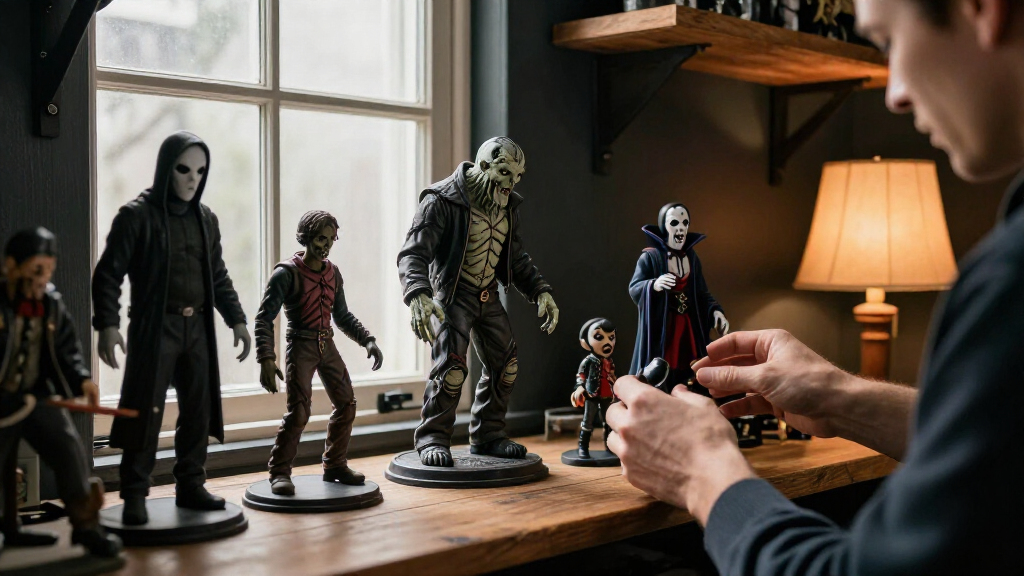
Different scales can still share a franchise section. Put the largest pieces toward the back or at the ends, and use lower risers for shorter figures. A consistent shelf label helps the eye understand the group when the figures themselves vary in height or packaging. If the group is only two or three pieces, a small label may be enough; a full divider can feel like a wall.
Try the display at more than one distance. From a few feet away, the franchise groups should read clearly; up close, you should still be able to see character details and box art. Visibility is part of organization. If you can’t find a figure without moving several others, the shelf needs more space or a simpler arrangement.
Protect figures while keeping the display easy to enjoy
Protect figures from direct sunlight, heat, moisture, dust, and unstable shelves. A cabinet can reduce dust, while a sturdy shelf and sensible spacing lower the chance of a fall. For collectors, care is part of organization: a figure that is safely placed and easy to reach is more enjoyable than one trapped behind a precarious stack.
Consider a sunny room with a window that throws a bright rectangle across the display each afternoon. That may look dramatic in photos, but prolonged direct light can affect materials and packaging. Shift the cabinet away from the window or use a shaded spot. Likewise, keep displays away from heat sources and damp areas, where conditions can change more than you expect.
Loose figures need room for stable footing and safe handling. Stands can help with poses, and a cabinet door can keep dust from settling on small sculpted details. Boxed figures need their own plan: label the shelves so you can retrieve a box without tugging at the ones beside it. Avoid stacking in a way that puts weight on delicate packaging or makes a top box likely to slide.
- Check shelf stability before adding heavy figures or boxes.
- Keep displays away from direct sun and damp or hot spots.
- Leave access space so routine cleaning doesn’t require moving an entire franchise group.
- Use a cabinet or dust cover when it suits your room and collection.
There is a tradeoff: open shelves make figures easy to admire, while enclosed storage cuts down on dust and casual bumps. Choose the setup that fits your room and how often you handle the collection.
Keep tiny accessories from disappearing between franchises
Small accessories stay organized when you label them by figure and store them close to their franchise group. Use a small bag or divided container for alternate hands, stands, and other parts, then record where each container lives. This prevents a loose accessory from becoming an unidentified piece at the bottom of a drawer.
Picture a figure with interchangeable hands and a display stand. If you place both in a general “extra parts” box, you may remember the pieces but forget which character they belong to. A labeled bag marked with the franchise and character name keeps the parts together. If you have several versions of one character, add the figure line or release year to distinguish the bags.
For an open display, a shallow, labeled drawer near the shelf can work well. For a boxed collection, keep accessories with the figure’s box or assign them a numbered container that matches your inventory. Take a quick photo of the figure with its accessories laid out when you add it to the collection. That image gives you a useful reference if you later wonder whether a small part belongs with that release.
A simple system is better than an elaborate one you stop using. You don’t need a custom cabinet for every spare hand. You need a repeatable place for each piece and a label you can read without sorting through everything else. When you display a figure for a seasonal scene, you can return its parts to the right spot afterward.
Build an inventory you’ll actually update
A useful figure inventory records enough detail to identify each piece and find it again. Start with franchise, character, manufacturer, figure line, release year if known, condition, accessories, and storage location. Add a photo when you can. A spreadsheet is often enough for a modest collection; a collection app or community database may be more convenient if you want to track many releases and variations.
Here’s a practical example: a row might list the franchise, character, maker, line, “loose” or “boxed,” accessories, and “cabinet, upper shelf.” If you move the figure, update the location at the same time. A photo of the front and a second image of the accessories can help distinguish similar releases without relying on memory.
Keep the inventory focused on questions you really ask. If you often wonder whether you already own a certain version, include release details or a photo. If you mostly need to find stored boxes, prioritize the exact shelf and container. A spreadsheet gives you flexible columns and easy searching; an app may offer a more visual catalog, but its usefulness depends on how well it handles your figures and whether you’ll keep the entries current.
Different manufacturers and scales make tracking more useful, not less. When your shelves hold boxed and loose figures together, the inventory can tell you what is displayed and what is stored. The best catalog is the one you’ll maintain. Add new arrivals when you bring them home, while the character, accessories, and storage spot are still fresh in your mind.
Leave room for new releases and changing display plans
Leave some open shelf space and use labels or dividers you can move. Horror figure collections change as new releases arrive, older favorites return to display, or a franchise gets a new corner of its own. A system with a little flexibility saves you from rebuilding the whole shelf after every addition.
For example, if you currently own four figures from one series and expect to add more, avoid filling that shelf edge to edge. An open space can hold the next figure, while a movable divider keeps the neighboring franchise distinct. If you do not know what you’ll collect next, use a labeled shelf section that can expand into the space beside it.
Packaged and loose figures may need separate zones because they take up space differently. A boxed figure has a footprint shaped by its packaging; a loose figure may need a stand, pose clearance, and a nearby accessory container. A mixed setup is perfectly workable, provided your labels and inventory show where each item belongs. You might display favorite loose figures at eye level and store boxed figures on labeled shelves nearby.
When the shelf starts to feel tight, review the arrangement before adding another layer. You might shift a secondary character to a smaller riser or consolidate figures by character. Leave room to change your mind. A good organization system is a map you can redraw, not a set of rules that turns every new figure into a puzzle.
Frequently Asked Questions
Should I organize figures by franchise, character, manufacturer, or release date?
Start with franchise if you want a display that’s easy to browse by series. Then pick one secondary rule, such as character, release order, scale, or manufacturer. For example, you can group a film series together and arrange each character’s versions by release order.
Where should I put crossover figures that fit more than one franchise?
Choose one primary home for each crossover figure, such as its main film series, or create a small crossover section if you own several. Record its other connections in your inventory. That way, the figure stays findable without appearing to belong to two shelf groups at once.
Is it better to display figures in or out of their boxes?
Use the approach that fits your priorities and available space. Loose figures need room for stands, poses, and accessories; boxed figures need clear shelf labels and space that won’t put pressure on delicate packaging. A collection can use both methods, with the inventory showing what is displayed and what is stored.
How do I organize figures that come in different sizes and scales?
Keep them grouped by franchise, then use height and risers to improve visibility. Larger pieces often work toward the back or ends, while shorter figures can sit on low risers in front. If scale consistency matters more to you than story order, use scale as your secondary sorting rule.
What is the easiest way to stop small accessories from getting lost?
Store each figure’s parts in a labeled bag or divided container marked with the franchise and character. Add the container location to your inventory, and take a photo of the accessories when you add the figure. A nearby, clearly labeled drawer makes it easier to return parts after a display change.
Conclusion
Give every figure a clear franchise home, choose an order you can repeat, and record where the figure and its accessories live. That small framework makes a collection easier to browse, safer to handle, and ready for the next arrival.
Leave a little breathing room on the shelf. The empty space is not a gap in your collection; it’s the quiet patch of shadow where the next favorite can stand.