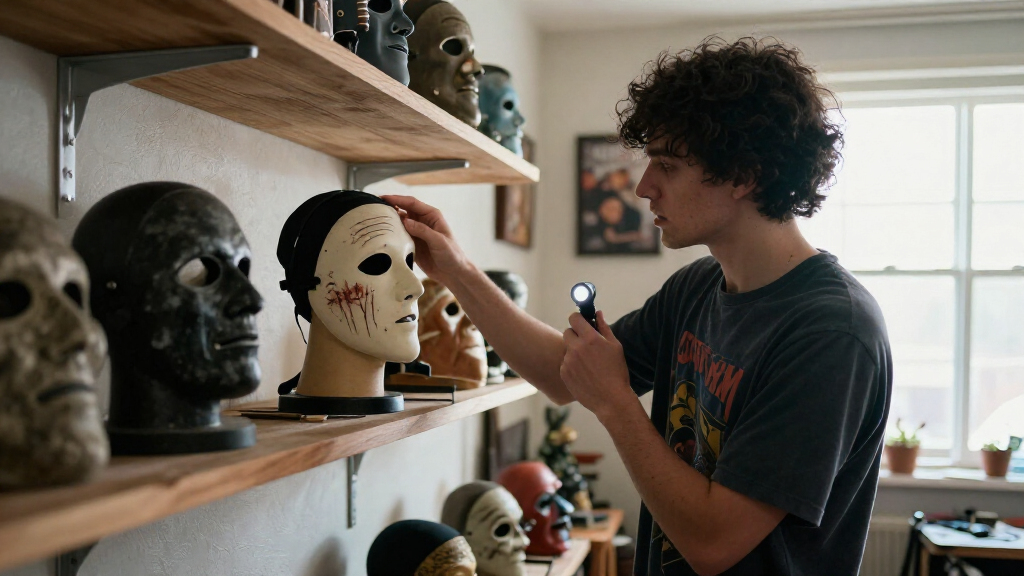

TL;DR
Most horror movie prop replicas are made to evoke a film, not used during production. Before you buy, check what the seller means by “official,” “screen accurate,” or “authentic,” ask for the exact item’s photos and measurements, and review its condition, provenance, and return terms. Buy for the piece you want to display, not a promise of future value.
A replica can look like it walked off a movie set and still have never been near a camera. That difference matters when you’re weighing the price, judging a seller’s claims, or deciding what story to tell when a friend spots the piece on your shelf.
This guide covers what to know before collecting horror movie prop replicas: how replicas differ from production-used props, what licensing and certificates can—and cannot—tell you, and how to check workmanship, condition, shipping, and display needs. You’ll also get a practical set of questions to ask before money changes hands.
Whether you want a small, carefully finished mask for a cabinet or a large display piece that anchors a room, the goal is the same: buy what the item actually is, not what a dramatic listing implies. A strong article should help you distinguish attractive merchandise from well-made, honestly described collectibles. So should a good buying checklist.
Most prop replicas were made after production; ask for evidence before describing an item as screen-used.
A license indicates authorization, not production use or exact screen accuracy.
Request actual-item photos, measurements, material details, and condition notes before buying online.
Include shipping, possible import costs, and return terms when setting your spending limit.
Buy for the piece you want to own, and plan its display and care before it arrives.
Know whether you’re buying a replica or a production-used prop
A production-used prop is an object supported by evidence that it was used during filming; a replica is a reproduction or interpretation made later. Most items advertised as “movie prop replicas” belong to the second category, even when they closely resemble a familiar screen object. The distinction affects what you can reasonably expect to pay and what you can claim about the piece.
Collectors usually encounter four broad categories: screen-used or production-used objects, licensed replicas, unlicensed replicas, and fan-made or custom pieces. A licensed replica has permission behind its design; an unlicensed version does not. A custom maker may create a beautiful, detailed piece without official approval. None of those categories, on its own, tells you whether the item is finely made or a close match to a specific scene.
Suppose you find a listing for a mask described as an “original hero prop.” Ask what “original” means here. It could mean an original replica design, an item from an earlier owner, or a claim of production use. Those are very different stories. Terms such as “authentic,” “hero prop,” and “screen accurate” often need a plain-language explanation before they mean much.
Think of the categories like editions of a book: a signed first edition, an authorized reprint, and a fan-made cover may share artwork but not history. Ask the seller to name the category clearly and explain the claim. When you’re deciding what to know before collecting horror pieces, start with this question: what exactly is the object, and what evidence supports that description?
Popular right now

KitchenAid Classic Series 4.5-Quart Tilt-Head Stand Mixer, Onyx Black

Ninja Foodi Smart Dual Heat Air Fry Oven, 13-in-1, Silver (SP351)

Bose QuietComfort Wireless Earbuds with Active Noise Cancellation, Dewdrop Mint
As an affiliate, we earn on qualifying purchases.
Read licensing claims without mistaking them for proof of screen use
A license shows permission to use a film’s intellectual property; it does not show that the replica was used in filming or that its construction exactly matches a production object. “Official” can be reassuring about authorization, but it is not a synonym for “screen-used” or “perfectly screen accurate.” Treat each phrase as a separate claim and ask what backs it up.
For a licensed collectible, check whether the maker identifies itself, states the licensing status, and gives useful edition details. If a certificate of authenticity comes in the box, look at who issued it and what it certifies. A certificate from a maker may document that the item belongs to a numbered run; it does not automatically prove a connection to a film set.
Claims of production use call for stronger records. Useful provenance may include production documentation, auction-house records, correspondence, or a traceable history of ownership. Picture two listings for what appears to be the same prop: one has a vague certificate and a breathless “rare original” headline; the other gives a clear ownership trail and says exactly what is known and unknown. The second gives you more to evaluate, even before you see the object.
Online marketplaces and social feeds have made unusual collectibles easier to find, but copied photos and fuzzy descriptions can travel quickly too. Ask for manufacturer details, licensing information, edition records, and provenance separately. A seller who answers directly helps you understand the piece. A seller who relies on urgency or grand language without evidence gives you a reason to slow down.
Check accuracy and workmanship with photos, measurements, and materials
To judge a replica’s accuracy, compare it with a specific film, scene, character, or version and check its dimensions, materials, finish, and construction. “Screen accurate” is too broad to settle those details by itself. A close visual match from across a room may look less convincing when you notice a different scale, altered paint, or visible seams up close.
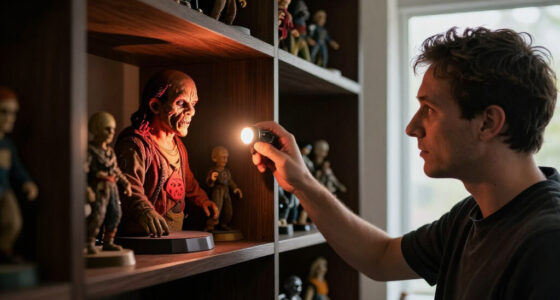
Ask for photographs of the actual item, not only glossy promotional images. Request front, side, and back views, plus close-ups of joints, paintwork, and any weathering. Measurements help you picture scale: a prop that looks life-sized in a tight crop may be much smaller on a shelf. For example, a 30-centimeter display piece and a full-scale object can resemble each other in a listing photo but need entirely different space and support.
Materials matter because they shape both the look and the intended use. A 3D-printed piece can capture a complex silhouette, yet its surface may show fine layer texture unless the maker sands and finishes it carefully. A glossy finish may suit one reference and look wrong for another. Ask whether the object is meant for display, careful handling, or cosplay; a delicate finish or moving part may not stand up to frequent use.
Use collector comparison photos as helpful reference, not final proof of production details. Communities can point out a seam or color difference you missed, while verified production records are a different kind of evidence. Before you buy, match the item against references for the exact version you want. That simple habit helps you distinguish an attractive piece from one that fits your own idea of accuracy.
Set a price ceiling before limited-edition language pulls you in
A replica’s price reflects a mix of licensing, materials, scale, maker, edition size, condition, and demand; no single factor guarantees that the item is worth its asking price. A limited edition means the maker describes a bounded run, not that the piece will rise in value. Treat future resale as uncertain and buy primarily because you want to own and display the object.
That approach matters when a listing uses a small edition number to create urgency. Imagine two versions of a horror mask: one comes from a documented licensed run with a polished finish, while another is an individual custom commission. The first may carry costs tied to licensing and production; the second may reflect a maker’s time and materials. Neither is automatically the better fit, and neither number alone proves quality.
Set a ceiling that includes more than the listing price. Shipping for a large or fragile piece can be substantial, and an international purchase may add import duties or other charges. If the item arrives damaged, unclear return terms can turn a tempting deal into a costly lesson. Compare the full expected cost with your budget before letting “only a few left” decide for you.
Market interest shifts with releases, nostalgia, and collector taste. Without strong evidence about comparable sales and demand, don’t treat a replica as an investment plan. Ask whether you would still be glad to own it if its resale value never increased. If the answer is yes—and the total cost fits your budget—you’re making a choice based on the object rather than a sales promise.
Use four questions to vet an online prop listing
Before you buy a horror prop replica online, get clear answers about identity, licensing, evidence, and purchase terms. Those four questions cut through dramatic listing copy and help you compare a licensed display piece, a custom commission, and a claimed production-used object on fair terms. Start with the item itself, not the countdown timer or the seller’s rarest-ever language.
- What exactly is this item? Ask whether it is licensed, unlicensed, custom-made, or claimed to be production-used. Get the maker and edition details where available.
- Is it licensed? Ask who authorized it and whether that status appears in the listing or documentation. Remember that a license does not establish screen use.
- What evidence supports the claim? Request actual-item photos, measurements, condition details, and provenance for any production-use claim. Ask what a certificate specifically certifies.
- What are the return and shipping terms? Check who pays return shipping, how the item will be packed, and what happens if it arrives damaged or differs from the description.
For example, a seller may use a stock image that shows the best-looking piece in a run, while the item available to you has a small paint flaw. Ask whether the photos show the exact one you’ll receive. Review seller history and payment protections as well as the written return policy; a friendly message is not a substitute for clear terms.
Make your own notes before checkout. If the reply is vague about condition or the shipping plan, pause and ask again. Clear answers are a better sign than pressure to buy quickly, especially for a fragile object traveling in a large box across state or national borders.
Protect your replica from sunlight, moisture, and a bad display setup
A replica’s condition depends partly on where and how you display it: heat, moisture, direct sunlight, rough handling, and poor support can damage finishes or parts. Before purchasing, ask whether the piece has fragile details, electronics, moving components, or maker-specific care instructions. A display object and a cosplay prop may look similar in photos but suit very different routines.
For instance, a painted mask beside a sunny window may fade or change over time, while a heavy wall-mounted piece needs appropriate hardware and secure installation. Think about the spot before the parcel arrives: will the shelf hold the weight, and can you keep the object away from damp air or a radiator? Safe display is part of the buying decision, not a problem to solve after a cracked mount appears.
Check the listing for damage, missing parts, repairs, and original packaging. Packaging can matter when you move house or resell the item, but its absence is not automatically a deal-breaker; it simply affects what you are getting. If you buy secondhand, ask for close-ups of existing wear and confirm whether any repair has been made.
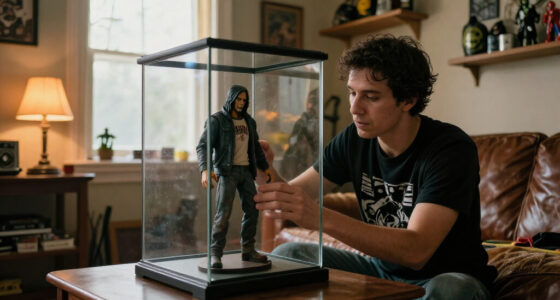
Care does not need to be complicated. Follow the maker’s guidance, handle the piece only when needed, and avoid placing it where it can be knocked over by a passing sleeve or a curious pet. A small display cabinet can keep dust and accidental bumps away, much like a glass case protects a treasured paperback from a crowded coffee table. Match the care plan to the materials and intended use rather than assuming every replica can take the same treatment.
Choose custom work with a written design brief
A custom replica can give you more control over size, finish, and reference details, but you and the maker need a shared description of the finished piece. Custom work is not necessarily licensed, and it is not automatically more screen accurate than a mass-produced item. Its value rests on the agreed design, the maker’s execution, and honest communication about what the piece represents.
Before paying a deposit, discuss the exact reference: which film installment, scene, or character version should guide the work? Agree on dimensions, materials, color, finish, visible seams, and whether the piece will be handled or displayed. A maker may interpret an old reference image differently from you; a few annotated pictures can prevent a mismatch that neither person intended.
Put practical details in writing too: deadline, payment schedule, shipping, packaging, and how you will handle a result that differs from the agreed specification. For example, if you expect a matte finish but the maker plans a glossy coat, catching that difference before construction saves time and frustration. Ask how many progress photos you’ll receive and which changes count as revisions.
Digital fabrication, including 3D printing, has made complex shapes and small-run work more accessible. The method alone does not tell you how smooth, durable, or carefully finished a piece will be. Ask for photos of previous work at close range, especially painted surfaces and joints. A clear brief turns a commission from a vague wish into a project you can evaluate step by step.
Keep personal collecting separate from commercial use
Buying a replica for your own collection is different from making or selling copies, using protected film artwork on merchandise, or presenting an unauthorized object as official. Licensing and intellectual-property rules vary by country, so don’t assume that a purchase automatically grants permission for commercial use. If you plan to sell or promote products based on a film design, get advice suited to your location and activity.
This distinction can matter even in a small side project. A collector might display a custom mask at home, then decide to make matching versions for sale at a convention. Those are different uses, with different questions about authorization and how the items are described. Calling a custom piece “official” when it is not can mislead buyers and create avoidable problems.
Be just as careful when you resell. Describe the item accurately: say “custom-made,” “licensed replica,” or “production-used” only when the label fits and you can support the relevant claim. If you inherited a piece with an uncertain history, say what you know and what remains unverified. Transparency helps the next collector make an informed choice, just as it helped you when you bought it.
Community reference images and collector discussions can help you spot design differences, but they are not a substitute for authorization records or production documentation. Enjoy the craft and the film history without turning uncertainty into a stronger claim than the evidence supports. That honest approach makes your shelf—and any future listing—more trustworthy.
Frequently Asked Questions
What is the difference between a screen-used prop and a replica?
A screen-used prop is claimed to have been used during production and should come with credible supporting provenance. A replica is a reproduction or interpretation made later, even if it closely resembles the filmed object.
Does “official” mean a replica is screen accurate?
No. Official generally refers to authorization or licensing, not exact construction or production use. Check the specific design, dimensions, finish, and reference film or scene to judge accuracy.
Are certificates of authenticity reliable?
A certificate can be useful, but its value depends on who issued it and what evidence it records. Read the wording carefully: a certificate may confirm an edition number without proving an item was used on set.
What should I check before buying a replica online?
Ask for actual-item photos, measurements, materials, condition, licensing status, and edition details. Review the seller’s history, return policy, payment protections, shipping plan, and whether the listing uses stock photos.
Will a limited-edition replica increase in value?
Not necessarily. Edition size is only one factor, and future demand can change. Buy primarily because you want the piece, rather than relying on a future resale price.
Can I use a replica for cosplay or frequent handling?
It depends on the design, materials, weight, and finish. Some pieces are intended for display and contain fragile details or moving parts, so ask the maker whether the item is suitable for wear, handling, or display only.
Conclusion
Before you buy, get four answers: what the item is, whether it is licensed, what evidence supports its claims, and what the condition and return terms are. Then decide whether its scale, finish, price, and display needs suit your collection. Clear facts beat dramatic rarity language.
Choose the piece you’ll be glad to see in your room years from now. Let it earn its place under the light—not through a promise of what it might be worth, but through the craft and story it brings to your shelf.