
TL;DR
The best display cases for horror action figures keep dust and casual handling away while giving each figure enough space to show its sculpt, pose, and accessories. Measure the figure as displayed, choose acrylic or glass to suit the location, and keep every case out of direct sunlight—even UV-filtering acrylic cannot make a sunny shelf safe.
A tiny gap between a figure’s raised arm and the case wall can turn a dramatic pose into a cramped silhouette. For horror collectibles, that space matters: you want the stitched coat, weathered paint, or dangling chain to catch the light without brushing another figure or collecting a coat of dust.
This guide helps you choose the best display cases for horror action figures by matching case style to collection size, figure height, room, and how often you handle your pieces. You’ll learn what acrylic and glass each do well, when modular cubes make sense, and how to arrange a display that feels moody without putting delicate paint or accessories at risk.
The goal is practical: protect the figures you care about, make them easy to enjoy, and leave enough room for the collection to grow. Think of the case as a small stage. The figures bring the story; the case controls the dust, light, and space around it.
Measure the figure in its intended pose, including its base, widest accessory, and the case opening.
Use acrylic for a lighter, flexible setup or glass when scratch resistance and a stationary cabinet matter more.
Keep cases out of direct sunlight; UV-filtering panels can reduce some exposure but cannot eliminate fading risk.
Leave room between figures and props so painted surfaces do not rub and silhouettes remain easy to read.
Choose stable modular units, check stacking limits, and clean acrylic with a soft cloth and a cleaner labeled safe for acrylic.
Collector’s field guide · Display edition
Best Display Cases for Horror Action Figures
Build a small stage for every sculpt, pose, and prop. Choose a case that keeps dust and casual handling at bay while leaving enough room to enjoy the details and grow your collection.
01 / Before you buy
Measure the scene, not just the figure
A case should protect a figure without squeezing its pose. A raised arm, long weapon, base, or dangling chain can change the space you need—and a narrow opening can make placement awkward even when the interior looks roomy.
The clearance rule
Give the silhouette breathing room.Leave space on every side so details read clearly, painted surfaces do not rub, and you can lift the figure out without knocking a neighbor.
02 / Pick your format
Match the case to your collection
Choose based on how many pieces you own, how much room they need, and whether the display will stay put. Enclosed cases reduce dust and accidental bumps, though most are dust resistant rather than airtight.
Centerpiece
Single-figure case
Give a prized figure, custom scene, or dramatic pose its own stage with room to show sculpt and accessories.
Expandable
Stackable cubes
Build a flexible display as the collection grows. Check stacking limits, level surfaces, stability, and opening size.
Room to gather
Glass-door cabinet
Fit several figures into a furniture-style display. Plan for weight, stable placement, door gaps, and careful handling.
Small footprint
Wall-mounted shelf
Save floor space and keep a collection visible. Mount securely and respect the shelf and wall weight limits.
Unusual scale
Custom case
Make room for oversized figures, unusual poses, dioramas, or large props that standard cubes cannot accommodate.
Useful details
Adjustable shelves
Reposition shelves for mixed figure heights. Easy assembly and cleaning make a display simpler to maintain.
03 / Material guide
Acrylic or glass?
Both give a clear view and can reflect windows or lamps. Choose for the room, surface, and amount of rearranging you expect to do.
| Material | Useful for | Tradeoff to keep in mind |
|---|---|---|
| Acrylic | Lightweight cubes, modular displays, frequent rearranging | Needs gentle cleaning to avoid scratches |
| Glass | Larger cabinets and displays that stay in one location | Heavier and more fragile if struck |
| Either | Clear viewing and an enclosed barrier from dust and casual handling | Reflections can obscure details; angle the case or lamp to improve the view |
04 / Light & atmosphere
Make it moody. Keep it shaded.
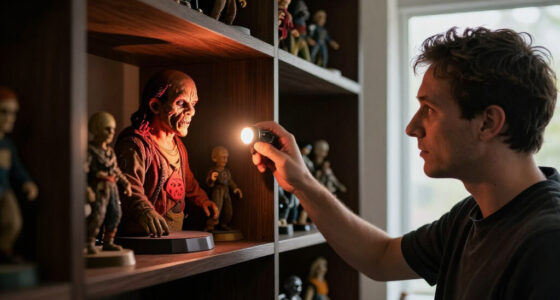
Dark backdrops and restrained accent lighting can bring out a horror figure’s silhouette, weathered paint, and costume details. Keep the display away from direct sunlight and strong lights; a UV-filtering panel is only one helpful layer.
Placement
Find the shaded wall
Watch where sunlight lands in the morning and afternoon. Move valuable figures and packaging away from those bright spots.
Lighting
Use moderate LEDs
LEDs usually produce less heat than many other lighting types, but prolonged light exposure can still affect materials. Switch lights off when the room is empty.
Scene design
Let details read
Use a darker backdrop and a restrained accent light. Leave room around weapons, chains, and dramatic silhouettes.
Safe styling
Support delicate props
Keep accessories from pressing against painted surfaces. Choose archival-safe materials for labels, risers, and printed backdrops.
Aim for shade; no case eliminates fading risk.
05 / A display you can maintain
Set it up. Keep it easy.
A useful display stays stable, opens without a struggle, and can be cleaned without risking a fall or scratch. Treat an enclosure like a raincoat: it takes the brunt of everyday exposure, but occasional careful cleaning still matters.
Measure
Include the posed figure, base, widest prop, and access opening.
Choose
Pick acrylic or glass for the location, weight, and handling routine.
Place
Use a stable surface, secure wall mounts, and keep the display shaded.
Maintain
Clean gently, check stacked units, and leave room as the collection grows.
Acrylic care
Soft cloth only
Use a soft microfiber cloth and a cleaner labeled safe for acrylic. Rough cloths or unsuitable cleaners can scratch the panel.
Stability check
Load with care
Follow maker stacking limits, use a level surface, and avoid tall stacks that could tip. Secure large cases where needed; lockable doors help in shared spaces.
Quick answers
What collectors ask
Are cases dustproof?
Most are dust resistant, not fully airtight. Door gaps and openings can still let dust in.
Will a case prevent fading?
It can reduce dust and some UV exposure when filtered, but it cannot eliminate fading risk. Avoid direct sun and strong lights.
Are LEDs safe?
They usually emit less heat than many other lighting types, but light exposure still adds up over time.
Can acrylic cubes be stacked?
Some are designed for stacking. Follow the maker’s limits and use a level, stable surface.
Choose a case that blocks dust without hiding the details
The best display cases for horror action figures are enclosed, stable, and roomy enough to protect a figure without squeezing its pose. A door or lid keeps down dust and reduces accidental bumps, while clear panels let you see details such as dry-brushed fabric or a tiny painted buckle. Most cases are dust resistant rather than airtight, so even a closed cabinet may need an occasional careful cleaning.
Think of an enclosure as a raincoat, not a sealed vault: it takes the brunt of everyday exposure, but it does not make the environment disappear. A tight-fitting door is especially useful if your shelf sits beside a busy desk or hallway. If you often reposition figures, a case also keeps curious hands and passing sleeves from catching a loose accessory.
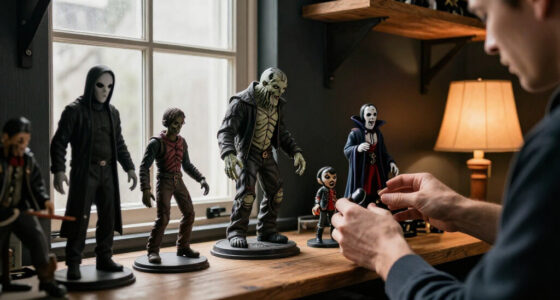
For example, a 7-inch figure posed with a long prop may fit neatly in a cube when standing straight, then feel crowded when you angle its arms into a scene. Measure the pose you plan to display, including the base and accessories, and leave clearance around the figure for visibility and safe handling. That margin also makes it easier to lift a piece out without knocking a neighboring collectible.
Before buying, check the opening size as well as the case’s exterior dimensions. A tall figure may fit inside but fail to pass through a narrow door or lid opening. For boxed figures, measure the package rather than the toy; a sharp cardboard corner can catch on a tight opening. These small checks save you from finding out that your carefully chosen centerpiece cannot enter its own stage.
- Measure the displayed pose, base, and largest accessory.
- Leave visible clearance on every side, especially above raised arms.
- Check whether the door or lid opens wide enough for safe placement.
Popular right now

Bose QuietComfort True Wireless Earbuds with Active Noise Cancellation, Black

Vitamix Propel Series 510 Professional-Grade Blender, 3 Programs, Black

Ninja CREAMi 7-in-1 Ice Cream Maker, NC301
As an affiliate, we earn on qualifying purchases.
Pick acrylic or glass for the room you actually have
Acrylic is lighter and less prone to shattering, while glass generally resists scratches better; the right material depends on where the display will sit and how often you move it. Acrylic can work well for a desktop cube or a shelf you rearrange. Glass can suit a larger, furniture-style cabinet that stays in one place, provided you have a stable floor and are comfortable moving heavier panels.
Each material has a small catch. Acrylic can scratch if you wipe it with a rough cloth or use an unsuitable cleaner. Glass is heavier and more fragile if struck, and both surfaces can reflect windows or lamps. If glare hides the face of a figure, try changing the case angle or moving the lamp before assuming you need a different case. Anti-glare panels may help, but room placement still shapes the view.
Picture a narrow bedroom shelf that you dust and reorganize every few months. A small acrylic cube may make handling easier because it is light; use a soft microfiber cloth and a cleaner labeled safe for acrylic. In a living room, a glass-door cabinet can give a bigger collection a cohesive, furniture-like presence. It still needs careful setup, sensible loading, and attention to dust around its doors.
When you compare options, what matters most is the tradeoff you’ll notice every week: weight, scratch resistance, visibility, or flexibility. There is no material that wins in every room. Consider what you need to clean, how stable the surface is, and whether the case will stay put once you build the display.
| Material | Useful for | Tradeoff to keep in mind |
|---|---|---|
| Acrylic | Lightweight cubes, modular displays, frequent rearranging | Needs gentle cleaning to avoid scratches |
| Glass | Larger cabinets and displays that stay in one location | Heavier and more fragile if struck |
Keep paint and plastic out of the sun
A display case can reduce dust, and UV-filtering acrylic can cut some ultraviolet exposure, but neither makes direct sunlight safe for a figure. Sunlight and some indoor lighting can fade paint, discolor plastic, and affect packaging over time. Place a case away from bright windows and strong lamps; the glass or acrylic between the window and the figure does not erase the exposure.
Think of UV filtering as a curtain, not a time machine. It may lower one part of the risk, but it cannot restore a faded coat or guarantee that a figure will keep its original color. If your only available shelf gets a bright afternoon beam, shift the display to a shaded wall or rotate what you show there. A darker corner can make a horror display feel atmospheric, too.
For instance, a boxed figure on a sunny windowsill may look striking in morning light, but the same spot exposes both the figure and its printed packaging to repeated brightness. Move it to an interior shelf and use a nearby, moderate LED when you want to see the sculpt. Keep lights off when the room is empty; LEDs usually produce less heat than many other lighting types, but light exposure still adds up.
A practical placement check takes only a day: notice where a stripe of sunlight lands in the morning and afternoon, then mark those spots as poor homes for long-term display. Light control starts with placement, not a special label on a case. Treat UV-filtering panels as one helpful layer, alongside shade, moderate lighting, and sensible display habits.
UV filtering lowers exposure; it does not cancel it. Keep valuable figures and packaging out of direct sun, even when the case advertises UV protection.
Match the case style to the size of your collection
Choose a single-figure case for a prized centerpiece, modular cubes when your collection may grow, and a cabinet when you need room for several figures. Wall-mounted shelves save floor space, while custom cases can handle oversized poses or detailed dioramas. The best format depends on how many pieces you own, how much room they need, and how securely you can support the display.
A single case turns one figure into the lead actor. It works well for a limited edition or a favorite sculpt with a distinctive silhouette. Stackable cubes give you more flexibility: you can add units as the collection grows or arrange a few at different heights. Check that each opening fits the intended figure, follow the maker’s stacking limits, and use a level, steady surface. A tall stack can become unstable if you build it carelessly.
If you live in a small apartment, a wall-mounted shelf or cabinet can free up desk and floor space, but mounting and load limits matter. Locate the supports and follow the mounting instructions for the wall and cabinet; a shelf filled with figures weighs more than an empty one. A glass-door cabinet often suits a room with several figures because it groups them behind a shared enclosure, though doors can still let some dust in around the edges.
Custom cases make sense when an unusual pose, oversized prop, or miniature setting will not fit a standard cube. Imagine a figure holding a wide scythe: a narrow case may force the accessory against a panel, while a custom enclosure can give it room to breathe. For a small starter collection, one cube or a single-figure case often lets you learn what fits before committing to a larger cabinet.
- Single centerpiece: choose a fitted case with enough clearance for pose and base.
- Growing collection: consider modular cubes and plan for stable stacking.
- Several figures: compare cabinet capacity, door clearance, and shelf support.
- Oversized scene: look at custom dimensions before settling for a cramped pose.
Build a moody scene without crowding your figures
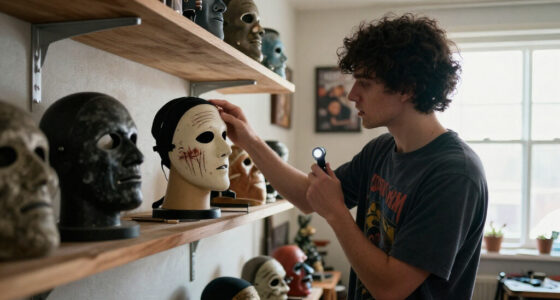
A horror display looks strongest when each figure has room for its silhouette and accessories to read clearly. Dark backdrops and restrained accent lighting can add atmosphere, but overcrowding blurs the details that make each sculpt distinct. Leave breathing room between figures, support delicate props, and keep painted surfaces from pressing against another object.
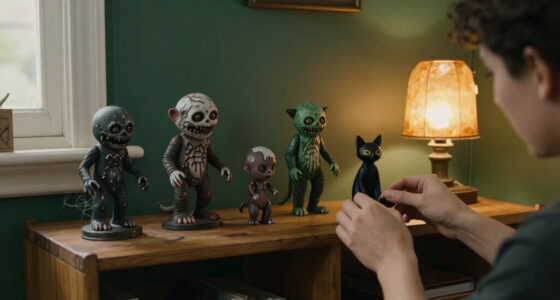
Think of your shelf as a stage after the house lights dim. A charcoal backdrop can make a pale mask stand out; one low-level LED can catch the edge of a jacket or the shine of a painted buckle. Too many colored lights compete with the figure, and an accessory wedged against the panel can bend or rub. The scene should frame the sculpt, not swallow it.
Suppose you want to pair a figure with a miniature doorway and a loose lantern accessory. Place the doorway at the back, set the figure slightly forward, and use a stable stand or riser if the feet do not sit securely. Give the lantern a safe resting spot where it cannot tumble when you open the case. If you add a printed backdrop or label, use archival-safe materials so decorative choices do not create a new problem for the collection.
Lighting adds another layer. LEDs usually emit less heat than many other types of lighting, which can make them a practical choice for display accents. Still, moderate brightness and shorter display periods help limit light exposure. If the sculpt looks washed out, dim the LED or aim it from the side; a narrow highlight often reveals more texture than a bright wash across the whole case.
Before closing the door, look at the scene from your usual viewing spot. Can you see the face, hands, and distinctive costume details? Does anything lean against painted plastic? That quick check helps your display feel composed and keeps the props from behaving like tiny wrecking balls when the case moves.
Set up a display you can maintain without a fuss
A good setup is easy to open, clean, and adjust without risking a fall or scratch. Before arranging figures, confirm that the case stands level, its panels fit securely, and any shelves can support the pieces you plan to display. If you need a step stool or a complicated lift just to reach the top shelf, that height may make routine care harder than it needs to be.
Try this order when setting up a new case:
- Measure and plan: note each figure’s height, pose, base, and widest accessory, then sketch the shelf arrangement.
- Choose the location: avoid direct sun, bright heat-producing lamps, and unstable furniture.
- Build and check the case: follow the maker’s assembly directions and make sure doors, shelves, and panels sit properly.
- Place the figures: start with the largest piece, then leave room for accessories and safe removal.
- Set the lighting: use moderate LED illumination, check for reflections, and switch lights off when you do not need them.
- Clean carefully: use a soft microfiber cloth; for acrylic, choose a cleaner labeled safe for the material.
This sequence keeps you from discovering that the biggest figure blocks the cabinet door after all the smaller pieces are in place. If you clean acrylic with a paper towel or abrasive cloth, you can leave fine scratches that catch the light like a fog over the display. Gentle cleaning and a little planning preserve the clear view you paid for.
For a shared living space or a valuable collection, look for a stable cabinet and consider lockable doors. A lock does not replace good placement or careful assembly, but it can discourage casual handling. If the display sits on a table, test that the surface does not wobble when you open the door; a little movement can send a loose accessory sliding across a shelf.
Make your first case choice fit the next figure, too
The most useful first case is one sized for your current figure with a little room for a future pose or companion piece. A single-figure enclosure can protect a centerpiece, while a modular cube gives you a path to expand. The key is to buy for the actual figure and location rather than the number printed on a product description.
Imagine your first case holds a standard standing figure today, but next month you add a wide-armed creature or a figure on a tall base. A little extra height and width may let both display naturally; a tight enclosure can force you to change the pose or leave the new piece boxed. That is why measuring accessories and bases matters as much as checking the figure’s stated height.
For boxed collectors, the box itself becomes part of the display. Measure the full package and allow room for corners, since cardboard edges can catch at the opening. If you prefer unboxed display, decide whether you want room for a stand, a small backdrop, or a second accessory. Either approach is valid; your choice depends on condition, space, and the pleasure you get from seeing the figure out of its packaging.
Before you buy, write down the dimensions of the tallest and widest pieces you expect to display, then compare those figures with the usable interior dimensions. Confirm shelf adjustability, door clearance, and whether a modular unit is designed to stack. These key points for choosing a case will help you avoid a purchase that fits one pose but makes the rest of your collection feel like it is waiting in the wings.
Frequently Asked Questions
Is acrylic or glass better for action figures?
Acrylic is lighter and less prone to shattering, which suits modular cubes and cases you may move. Glass generally resists scratches better and can work well in a larger cabinet that will stay put. Choose based on the case’s location, weight, and how often you plan to rearrange it.
Do display cases prevent figures from fading?
Cases can reduce dust and handling, and UV-filtering acrylic can cut some ultraviolet exposure. They cannot eliminate fading risk or make a case safe in direct sunlight. Keep figures away from sunny windows and strong lights, even when the case has UV-filtering panels.
How much extra space should I leave around a figure?
Measure the figure in its display pose, including the base and largest accessory, then allow clearance on every side. Extra room helps the pose read clearly and makes it safer to place or remove the figure. Check the door opening too: the figure must pass through it, not just fit inside the case.
Are display cases dustproof?
Most cases are dust resistant rather than fully airtight. Gaps around doors, lids, and openings can still let dust in, so expect to clean the case and figure gently from time to time. A closer-fitting door can help when the display sits in a busy room.
Can I stack acrylic display cubes?
Some acrylic cubes are designed to stack, but check the maker’s limits and use a level, stable surface. Keep stacks low enough to avoid tipping, especially where people might bump the furniture. A modular setup is flexible, but stability matters more as it grows.
Are LEDs safe to use in a display case?
LEDs usually produce less heat than many other lighting types, making them a practical option for accents. Light exposure can still affect materials over time, so keep illumination moderate and switch it off when you do not need it. If glare hides a sculpt, reposition or dim the light instead of turning it brighter.
How do I clean an acrylic display case without scratching it?
Use a soft microfiber cloth and a cleaner labeled safe for acrylic. Avoid abrasive cloths and harsh solvents, which can damage or scratch the surface. A light, gentle wipe is better than scrubbing at a stubborn mark.
Should I display horror figures in or out of the box?
That choice comes down to your collecting preference, condition priorities, and available space. A case can display a boxed figure while reducing dust exposure, but you should measure the package and its corners. Unboxed figures need room for their pose, base, and loose accessories.
Conclusion
Choose the case that gives your figure space, keeps daily dust and bumps at bay, and fits the room where you’ll actually display it. Measure first, place it out of direct sun, and let lighting and backdrop support the sculpt instead of competing with it.
Then step back and look at the finished shelf. If the figure’s silhouette emerges from the shadows and every accessory has a safe place, the display is doing its job.