
TL;DR
The best horror TTRPGs for beginners include Dread for a tense one-shot, Cthulhu Dark for stripped-down investigation, Call of Cthulhu for a longer mystery campaign, Monster of the Week for action-horror, Mothership for science-fiction survival, and Ten Candles for a tragic one-session story. Choose by the kind of fear your group enjoys, agree on content boundaries, and start with a short scenario rather than a sprawling campaign.
A horror game can make a quiet table feel louder than a battlefield. In Dread, a player reaches for a block; in Call of Cthulhu, an investigator notices the clue nobody wanted to find. The rules matter, but the best beginner game is the one that makes your group eager to take the next uncertain step.
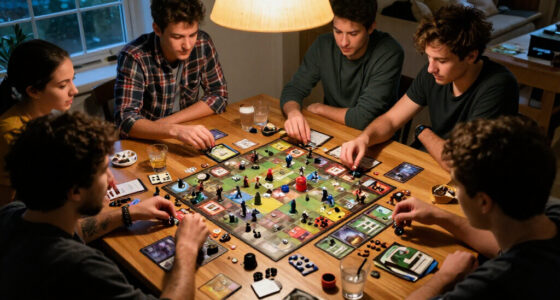
This guide compares six approachable horror TTRPGs by rules load, scare style, and the kind of session they support. You’ll also get a practical way to choose, tips for a first game, and answers to common questions about online play, group size, and content boundaries. Horror tabletop games combine collaborative storytelling with tension and uncertainty; they work best when everyone knows what kind of story they’re helping to tell.
Pick the scare style first: investigation, action-horror, physical suspense, or science-fiction survival.
Choose Dread or Cthulhu Dark for a focused, low-rules introduction; choose Call of Cthulhu or Monster of the Week for ongoing play.
Read a sample scenario and check current publisher materials before committing to a game or edition.
For a first session, prepare a short scenario, a few flexible clues, and clear content boundaries.
Use atmosphere, uncertainty, and player choices to create fear without relying on graphic detail.
Choose a horror game by the kind of fear you want
The best horror TTRPGs for beginners are the ones that match your group’s preferred scare: a creeping mystery, a sudden monster attack, or a desperate fight to survive. Before you compare rulebooks, decide whether you want to investigate, improvise, or feel the pressure of danger closing in. That choice narrows the field faster than counting pages.
Think of the game’s rules as a lighting rig. They direct attention toward particular things: a clue hidden in a familiar room, a monster stalking the group, or a dwindling supply of air aboard a ship. If your friends love detective stories, an investigative game can make every note and locked drawer feel charged. If they want a quick, eerie evening, a one-shot with a strong central mechanic may be a better fit.
Rules load matters, but “light” does not automatically mean “easy for everyone.” A sparse game gives players freedom, which can feel exciting to confident improvisers and awkward to someone who wants clear prompts. A more structured game can help a new GM by spelling out skills, roles, or procedures, though it asks the group to learn more first.
Make a quick group check before you choose: slow-burn or immediate danger, one night or ongoing story, and minimal rules or more character detail. For example, a group with one free Friday and a love of suspense may choose Dread, while friends who want a mystery to unfold over several sessions may prefer Call of Cthulhu. That conversation turns “What’s the best?” into “What will our table enjoy?”
Popular right now

eufy C28 Robot Vacuum Cleaner and Mop for Pet Hair, 15,000 Pa

Hisense 65-inch U6 Pro Mini-LED 4K UHD Smart Fire TV

Shark AI Ultra Robot Vacuum, Black/Silver, AV2511AE
As an affiliate, we earn on qualifying purchases.
Compare six beginner-friendly horror games at a glance
These six games offer distinct entry points: Dread and Ten Candles suit focused one-shots, while Call of Cthulhu and Monster of the Week can support continuing play. Cthulhu Dark keeps investigation lean, and Mothership centers science-fiction danger and survival. The right pick depends on the mood you want to build together.
| Game | Best fit | What beginners should know |
|---|---|---|
| Dread | Suspenseful one-shot | A Jenga tower replaces dice; its physical tension is memorable, but the format naturally suits shorter play. |
| Call of Cthulhu | Investigative horror campaign | Percentile skills offer structure and a large tradition of scenarios; investigators can be fragile, and the tone often involves danger and strain. |
| Monster of the Week | Action-horror adventures | Playbooks help players make characters quickly; the default pace is closer to monster-hunting television than slow-burn dread. |
| Cthulhu Dark | Minimalist investigation | Few rules keep attention on discovery, but players who want detailed builds or tactical combat may want more structure. |
| Mothership | Science-fiction survival horror | Procedures support dangerous exploration; its space-horror setting may not suit a group seeking contemporary supernatural mysteries. |
| Ten Candles | Collaborative tragic one-shot | A darkened room and candles shape the session; follow the game’s safety and fire precautions. |
Use the table as a first filter, not a verdict. A group that enjoys moving a physical tower may find Dread’s central mechanic instantly legible, while another group may prefer the familiar rhythm of rolling dice and comparing a skill result. These differences affect how players experience risk: a tower makes it visible and tactile, while a roll leaves more room for suspense before the result is known. Likewise, “horror” does not mean “combat.” A mystery-focused session can create plenty of dread through a locked door, an unreliable account, and a clue that changes what players thought they knew.
Consider what your group wants to do between frightening moments, too. A game built around investigation asks players to take notes, connect evidence, and decide how far to pursue answers. A monster-hunting structure gives them clearer roles and forward motion, which can help a new group get unstuck, but it may leave less room for slow uncertainty. One-shot games reduce the commitment and make a strong fit for a trial evening; campaign games reward investment in characters and mysteries, while asking everyone to return and remember what happened.
Products, editions, and availability can change, so check current publisher materials before buying or planning around a particular starter product. If you’re choosing for beginners when your group has mixed experience, start with the game whose basic action you can explain in a sentence, then read a sample scenario. That reveals not only whether the rules feel manageable, but whether the GM will have clear material to run and the players will get the kind of choices they enjoy.
Pick Dread or Cthulhu Dark for a fast, low-rules first game
Dread is a strong first one-shot when your group wants a simple rule that creates visible suspense, while Cthulhu Dark suits players who want a compact framework for investigation. Neither asks beginners to master a large toolkit before play. The tradeoff is that each offers less of the detailed character building found in a fuller campaign game, so players seeking advancement options or tactical choices may outgrow the format sooner.
In Dread, risky actions call for a pull from a Jenga tower instead of a die roll. The tower externalizes danger: everyone can see that each successful pull makes the next one less stable, and the player physically decides whether to accept that risk. This can make tension legible even to people who are new to role-playing games. The cost is practical as well as stylistic: the tower needs a stable surface, and its physical suspense may not translate as naturally to every online group. A fall can mark a major turn in the story, so the GM should connect risk to meaningful choices rather than asking for pulls over trivial actions. Imagine a character trying to wedge open a swollen cellar door. The player knows the choice has a physical cost before the GM describes what waits downstairs.
Cthulhu Dark goes in another direction. Its rules are intentionally spare, keeping the focus on clues and the consequences of pursuing them. That can help a first-time GM concentrate on a few strong details—a wet footprint on a dry floor, a radio that repeats a voice from an empty room—rather than juggling a long list of modifiers. The same openness puts more weight on the GM’s judgment and the players’ willingness to interpret what they find. A player who loves tactical combat or detailed character options may find the light structure too bare; a group that likes filling in the gaps may find it freeing.
For either game, prepare a short scenario with a clear opening and a small number of meaningful locations. Ask players to make choices, not to guess a single secret password. For instance, offer three clues pointing toward the same mystery; if one gets missed, the story still moves. This is especially helpful in a lean system, where the GM has fewer procedures to fall back on when the group gets stuck. These games are practical gateways to the horror tabletop role because the group can focus on shared decisions and atmosphere while learning how a scene develops.
Choose Call of Cthulhu or Monster of the Week for ongoing play
Call of Cthulhu is a natural choice for an investigative campaign, while Monster of the Week gives beginners a more direct action-horror structure. Both can carry a story beyond one evening, but they create different expectations: one leans into clues, danger, and cosmic horror; the other makes hunting a new threat feel like a repeatable adventure format. That difference matters over time: campaign play depends on what the group finds satisfying enough to revisit, whether it is solving an accumulating mystery or facing a fresh case with familiar characters.
Call of Cthulhu uses percentile skills, so a character’s chance of success is expressed as a number players can compare with a roll. That structure gives a new GM clear handles for questions like “Can the investigator identify this symbol?” It also makes characters’ specialties visible: the group can decide who should take the lead when research, observation, or another skill matters. The tradeoff is that a failed roll can interrupt momentum if the clue is essential, so a GM should plan more than one way for players to reach important information. The game supports a style where research and careful choices matter. Investigators can be vulnerable, so it often rewards caution and curiosity more than treating every problem as a fight.
Monster of the Week uses playbooks to help players shape characters without starting from a blank page. Those roles can give newcomers a clear contribution to make, while the monster-of-the-week format gives the GM a sturdy episode frame: introduce a threat, follow leads, and face the danger. A group that loves creature features may enjoy how quickly a mystery becomes an active hunt. The structure also makes it easier to run separate cases, though groups wanting one slowly unfolding mystery may find the episode rhythm less compelling. It tends toward action-horror by default, but the GM can slow scenes down and emphasize uncertainty.
Try a short introductory case before committing to a long campaign. Notice what players return to between sessions: if they debate clues and the meaning of discoveries, Call of Cthulhu may be their lane. If they enjoy giving each character a distinctive role and moving quickly from leads to a confrontation, Monster of the Week may click. That small trial shows whether the system’s default rhythm fits the group, before anyone invests in a long arc. Either way, collaborative storytelling works best when players share clues, spotlight, and risk rather than treating the GM as an opponent to defeat.
Go with Mothership or Ten Candles when you want a focused mood
Mothership is the pick for science-fiction survival horror, while Ten Candles is built around a particular kind of tragic, candlelit one-shot. Both make strong first games when the group wants a clear atmosphere instead of a general-purpose fantasy campaign. Their focus is a strength because it gives the GM ready-made sources of pressure, but it is also a limit: groups who want a broad menu of settings or a straightforward path into a long-running story may prefer a more flexible campaign game.
Mothership points the camera toward dangerous exploration, limited resources, and the vulnerability of people in an unforgiving environment. A crew entering an abandoned station might have to weigh a flickering light, a sealed hatch, and the last working communication device. Scarcity makes choices consequential: spending time or equipment to answer one question can leave the crew less prepared for the next danger. This gives the GM concrete pressure points to use, but it also means players should enjoy problem-solving under constraints. Its space-horror setting may not suit a group seeking a modern haunted-house mystery.
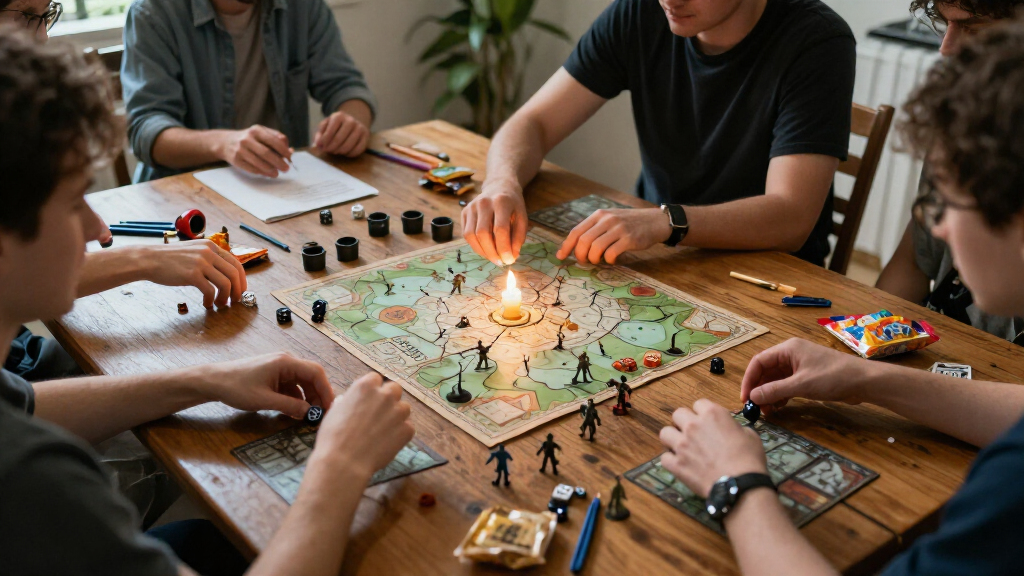
Ten Candles uses a dark room and candles as part of its play experience, making the session’s physical surroundings echo its fiction. As the candles burn down, the setup gives the evening a visible sense of limited time and helps players share the same mood without elaborate props. That strong frame can help a first-time group settle into a story, but it is designed for a specific kind of one-shot, not as a conventional campaign engine. Follow the game’s fire-safety instructions, keep the space appropriate for open flames, and choose a safer lighting alternative if candles are not practical.
Choose by asking what you want players to remember the next morning. If the answer is “the crew’s impossible choices in a silent ship,” look at Mothership. If it is “one intense story whose atmosphere grew around the table,” Ten Candles may fit. The first makes resource decisions and exploration central; the second makes the one-session experience itself central. In both cases, talk about tone beforehand. Focused horror can be powerful without graphic material, using isolation, uncertainty, and the sound of a room going quiet.
Run your first horror session in five manageable steps
A first horror session goes more smoothly when you choose a short scenario, agree on boundaries, learn only the core rules, and leave room for player choices. You do not need a binder of notes or a perfect spooky voice. A few vivid details and a clear sense of what happens when players act will carry more weight than an elaborate plan for every possible outcome.
- Pick the session shape. Decide whether you want a one-shot of a few hours or the first chapter of a campaign. A single-night game is a low-pressure way to learn what your group likes.
- Agree on tone and boundaries. Ask which topics are welcome, which should stay off-screen, and which should not appear. A session-zero conversation can be brief and still useful.
- Learn the core action. Practice the main roll or mechanic before play. In Dread, explain the tower; in Call of Cthulhu, show how a skill roll works.
- Prepare a small set of clues and details. Write three clues, two locations, and a few sensory touches: rain ticking on glass, a room that smells faintly of dust, a phone ringing once and stopping.
- Check in and adjust. Pause if the mood or content stops working for someone. The goal is shared suspense, not pressure to tolerate something uncomfortable.
These steps help the GM keep the story moving without taking choices away from players. If the group misses a clue, let another route reveal it; if they avoid a dangerous basement, let that decision change what happens elsewhere. Horror gains tension from uncertainty, not from trapping players in a single correct path.
Tools such as a session-zero discussion, lines and veils, or an agreed pause signal can make boundaries easier to communicate. Explain how the group will use them before the story starts, and respect requests to change or skip content. For a first online session, a voice or video call and shared notes may be enough; clear audio and deliberate pauses do more for suspense than a complicated virtual tabletop.
Make horror work for your actual table, not an imaginary one
Horror works best for beginners when the group’s expectations, player count, and practical setup match the chosen game. You can adapt many games for a small group or online play, but a scenario written for several investigators may need adjustment for one player and one GM. Think of the published adventure as a sturdy frame, not a locked door.
For a two-person game, give the player a useful ally, reduce the number of simultaneous leads, or let one character cover more than one skill. For example, a solo investigator entering a closed museum might receive help from a remote archivist who can identify a symbol but cannot enter the building. The ally adds options without removing the player’s sense of responsibility.
Online games can work with a basic call, a shared document, and digital character sheets. A virtual tabletop helps when you need maps or tokens, but it is not a requirement for atmosphere. The GM can create a striking pause by letting a line of audio hang for a moment, then describing a sound from the character’s end of the call. Simple, reliable technology is often better than a room full of tools that need troubleshooting.
Age suitability depends on the game’s themes, how the GM presents them, and the participants’ comfort—not on the word “horror” alone. Review the rules and scenario, then agree on age-appropriate boundaries with the group. Fear does not require graphic detail: an unanswered knock, a familiar voice from an empty hallway, or a clue that changes the meaning of an earlier scene can do the work. Game editions and starter materials also change, so check current publisher information before planning around a specific product.
Frequently Asked Questions
What is the easiest horror TTRPG for complete beginners?
Dread is easy to explain for a one-shot because its Jenga tower replaces dice with a physical, visible suspense mechanic. Cthulhu Dark is another good option if your group prefers minimal rules and investigation. The easiest choice depends on whether players want a tactile tension tool or a very lean rules system.
Can you play a horror TTRPG with only two people?
Many games can work with one GM and one player, though some scenarios expect a larger team. Give the character a helpful contact, trim the number of leads, or adjust challenges so one person is not expected to cover every role. Check the game’s guidance when available.
How long does a horror TTRPG session take?
A one-shot often takes a few hours, while an investigation or campaign can span multiple sessions. The scenario, number of players, and amount of role-play all affect the length. For a first game, choose a short scenario and agree on an end time before play.
Do horror tabletop games need a Game Master?
Many traditional horror TTRPGs use a GM to present the world, portray characters, and respond to player choices. Some narrative games distribute storytelling or rely on structured prompts instead. Check the specific game’s format before choosing it for your group.
How can you make a horror game scary without graphic content?
Use uncertainty, isolation, strange clues, and consequences rather than explicit violence. A familiar voice coming through an unplugged radio can unsettle players without showing anything graphic. Agree on boundaries in advance and keep checking that the group is enjoying the tone.
Can you play horror TTRPGs online?
Usually, yes. A voice or video call and shared notes are enough for many games; a virtual tabletop can help with maps, sheets, or dice if you need those tools. Clear audio and deliberate pacing matter more to suspense than a complicated setup.
Conclusion
Pick the game that suits the story your group wants to tell, then start with one short session. Dread makes suspense visible, Cthulhu Dark keeps investigation lean, and the campaign-friendly options offer more structure for stories that last. Agree on boundaries, keep the first mystery small, and let the players’ choices shape the fear.
A good horror game does not need a perfect monster reveal. Sometimes all you need is one clue, one quiet pause, and a door your group has to decide whether to open.