
TL;DR
The best horror board games for game night create tension in different ways: Horrified offers approachable cooperation, Betrayal at House on the Hill brings exploration and possible betrayal, and The Thing puts trust under pressure. Choose by group size, session length, complexity, and whether you want a campaign, an app, or a game that works well in one sitting.
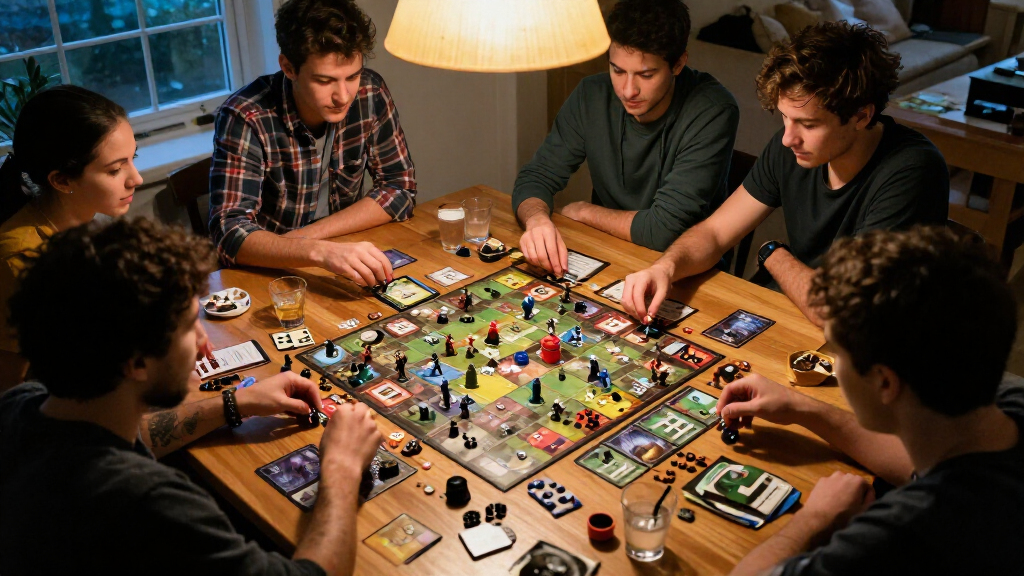
A horror game can make a quiet living room feel like a mansion with one light left on. The trick is choosing the right kind of fear: teamwork under pressure, secrets between friends, or a story that unfolds like a late-night film.
This guide matches well-known horror board games to the way your group actually plays. You’ll find options for newcomers, bluff-loving friends, campaign regulars, solo nights, and families, plus practical notes about time, rules, apps, and replay value.
There is no universal winner, and a game does not need graphic content or complicated rules to feel eerie. Think of the choice like setting the lighting for a scene: the right atmosphere depends on who is around the table and what kind of night you want to make.
Choose the game by its main source of tension: teamwork, hidden roles, investigation, campaign storytelling, or solo survival.
Horrified is a practical starting point for approachable cooperative play; check age guidance and adjust the monster mix to the group.
The Thing suits players who enjoy bluffing, while Mansions of Madness: Second Edition uses an app to support guided investigation.
Allow time for setup and rules, especially with campaign or strategy games; printed playtime may not include a first-game teach.
Check player count, edition details, app requirements, and expansion needs before buying or inviting the group.
Choose a game by the kind of fear your group enjoys
The best horror board game for your group is the one whose tension matches how your friends like to play: cooperative problem-solving, hidden-role suspicion, story-driven investigation, or solo survival. Start with that choice before you compare boxes, because a brilliant bluffing game can fall flat when nobody enjoys deceiving friends.
Horrified gives a group a common problem to solve against classic monsters, while The Thing: The Boardgame makes players question who they can trust. Mansions of Madness: Second Edition builds atmosphere around a guided investigation, and Final Girl turns the slasher-film setup into a solo challenge. These games may all wear horror on the box, but they ask for very different social energy.
Picture a group of five friends meeting after work. If they want to talk, plan, and help one another, cooperation will probably feel better than hidden roles. If they love bluffing games and can laugh after a tense accusation, suspicion may be the evening’s main event.
Use these questions to settle the mood before you set up:
- Do you want to win together, or wonder whether someone is working against the group?
- Will people enjoy learning a larger rule set, or do they want to start playing quickly?
- Do you meet regularly enough for a linked campaign, or should one session tell a complete story?
- Would an app add atmosphere, or would your group rather keep every part of the game on the table?
This quick conversation can save more time than reading ten back-of-box descriptions. “Do we want teamwork or suspicion tonight?” is often all you need to choose a direction.
Popular right now

TCL 65-Inch QM6K QLED Mini-LED 4K HDR Smart Google TV, 144Hz

Ninja Foodi 10-Qt DualZone Air Fryer, 6-in-1, Black (DZ302)

eufy C28 Robot Vacuum Cleaner and Mop for Pet Hair, 15,000 Pa
As an affiliate, we earn on qualifying purchases.
Find a strong first horror game without overwhelming new players
For a first horror game, choose a title with a clear shared goal and rules your group can learn without stopping every few minutes. Horrified is a useful starting point for approachable cooperation, while Betrayal at House on the Hill suits groups that want exploration and a surprise shift in the story.
In Horrified, players work together against classic movie monsters, and the challenge can change with the monster mix. That gives you a simple way to adjust a first session: use a lighter combination for a family night, then bring in a tougher mix when the group knows how turns work. Check the edition’s age guidance, too; a monster theme may feel playful to one child and unsettling to another.
Betrayal at House on the Hill starts with players exploring a haunted mansion together. Later, a scenario may turn one player into a traitor, changing the group’s goal and the feel of the game. That reveal can be a terrific table moment, like a friendly tour suddenly turning into a locked-room mystery. The tradeoff is that scenario-specific rules and balance can vary, so first-timers benefit from patient rule-checking.
| Game | Good fit for | What to expect |
|---|---|---|
| Horrified | Newcomers and casual groups | Cooperative monster challenges with adjustable difficulty |
| Betrayal at House on the Hill | Exploration and surprise | A shared mansion crawl that may turn into a traitor scenario |
| The Night Cage | A compact eerie challenge | Cooperative navigation through a shifting maze in the dark |
For example, if your guests arrive at different times, a game with a direct shared goal is easier to teach as people settle in. A surprise-heavy scenario may work better once everyone has a seat and attention to spare.
Pick the right game for suspicion, investigation, or big-story drama
The Thing: The Boardgame is a strong choice when your group enjoys hidden roles, Mansions of Madness: Second Edition suits guided investigation, and Eldritch Horror offers a broader cooperative adventure. These games produce suspense differently, so match the mechanism to the kind of conversation you want around the table.
In The Thing, players try to survive at an Antarctic base while working out whether someone has been infected. The game’s dramatic engine is uncertainty: a useful action can still make you wonder about another player’s motives. It fits a group that enjoys bluffing, but it is a poor match for friends who dislike being suspected or put on the spot.
Mansions of Madness: Second Edition uses a companion app to handle much of the scenario and enemy management. That lets players focus on exploring, discussing clues, and deciding what to do next, though it also means you need a compatible device and should check the current app and edition information before buying. Eldritch Horror stretches the scale outward, sending investigators around the world to confront supernatural threats. It offers a rich sense of adventure, but expect more rules and a longer session than a quick party game.
| If your group wants… | Try | Why it fits |
|---|---|---|
| Player suspicion and bluffing | The Thing: The Boardgame | Trust is part of the challenge |
| A guided haunted-house investigation | Mansions of Madness: Second Edition | The app supports scenario flow and atmosphere |
| A large cooperative adventure | Eldritch Horror | Players travel widely to face a supernatural threat |
Imagine your group likes pausing to debate every clue. Mansions may give those discussions room to breathe. If the same friends prefer a fast round of accusations and clever bluffs, The Thing is more likely to give them the memorable table talk they want.
Match session length and commitment to your real game night
The best horror game for a particular evening fits the time and attention your players can give it, not just the mood they want. A compact session works well when guests have other plans, while a campaign is more rewarding when the same group can return and carry the story forward.
Arkham Horror: The Card Game is a cooperative, scenario-based campaign in which consequences can carry into later sessions. That ongoing structure can make character choices feel weighty, much like chapters in a television series, but it asks for a group willing to remember what happened last time. If your friends rarely meet, a one-session game may offer more satisfying closure.
Games with more rules also need breathing room for setup, teaching, and first-play pauses. A printed playtime is a planning clue, not a promise: new players often take longer as they read cards and check rules. When your group has a fixed two-hour window, do not plan the night around an unfamiliar, involved game without checking its current instructions and expected session length.
Use this four-step check before choosing:
- Count the players and confirm that the specific edition supports them.
- Set the time limit, including setup, teaching, snacks, and cleanup.
- Choose the commitment: one complete night, or connected sessions with returning players.
- Check extra requirements, such as a companion app, campaign content, or additional boxes.
For example, a group that meets every other month may enjoy a self-contained investigation more than a campaign they will struggle to resume. A weekly group that likes recurring characters can get more from a story that remembers past decisions.
Keep the scares atmospheric without making the night uncomfortable
A horror game can create a strong mood through uncertainty, artwork, sound, and difficult choices without relying on graphic content. The best atmosphere for your table is one that feels exciting to the players, not one that leaves someone wishing they had known the themes in advance.
The Night Cage offers a striking premise: players navigate a shifting maze in the dark. Its table presence can make even a small game night feel hushed, as everyone watches the available paths change. Final Girl, by contrast, is designed for solo play and evokes a slasher-film structure: survive, rescue victims, and face the killer. That format may suit someone who wants a tense personal challenge, but it is not a group game in the same way as a cooperative party title.
Before you make game night, tell your guests what the game asks them to do. A friend may enjoy spooky monsters but dislike betrayal mechanics; another may want an eerie investigation but prefer to avoid a slasher setup. Age guidance on a box can help families start a conversation, though each player’s comfort with themes such as peril, death, or deception differs.
- Say what the tension involves: monsters, hidden roles, investigation, or survival.
- Let the group know if players may need to bluff, accuse, or keep secrets.
- Offer a different choice if someone would rather skip a theme or mechanic.
- Keep the room comfortable: clear lighting for reading cards can support atmosphere without making play difficult.
A practical example: for a mixed-age family table, explain the monster theme and choose a manageable Horrified setup. For a late-night group that enjoys social deduction, introduce The Thing as a game about suspicion—not as a test of anyone’s real trustworthiness.
Get more replay value without buying every expansion
Replay value comes from meaningful variation, not simply from having the most boxes on your shelf. Look for changing scenarios, different threats, modular setups, or decisions that alter later play; then ask whether your group will actually use those options.
Betrayal at House on the Hill draws replay appeal from its many scenarios, though a group that has seen a particular reveal may find a repeat less surprising. Horrified changes the challenge through its monster mix, making a different combination a straightforward way to vary a session. Arkham Horror: The Card Game offers a different kind of replay experience: continuity between scenarios rather than a fresh, isolated puzzle each time.
Expansions can add settings, threats, or campaign material, but they also take shelf space and may increase the total cost of a hobby. An app-supported game can supply scenario guidance through a device, while creating its own dependency: you need a compatible device and current access to the relevant software. Those tradeoffs matter more than a promise of endless variety.
Try this simple shelf test before adding another box:
- Have you played the base game enough to know what feels repetitive?
- Will your regular group use the new content, or will it remain sealed between occasional visits?
- Does the extra material change how you play, or mostly add more of the same?
- Can you store and set it up without making game night feel like a chore?
For example, if your group has only played Horrified once, try a different monster mix before buying more content. If a campaign group has finished its available story and wants to meet again, an expansion may serve a clearer purpose.
Use a simple checklist to choose a game tonight
Choose a horror board game by checking four things in order: group size, preferred tension, time, and play requirements. This quick filter turns a shelf full of spooky boxes into a practical choice, even when the group has only ten minutes to decide.
Start with the people at the table rather than the game’s reputation. A game that one friend calls terrifying may feel fun to another and stressful to someone else; suspense can mean story, uncertainty, or social pressure. Once you know which kind your group enjoys, match it to a session you can actually finish.
- Count the players. Check the player count for the exact edition, especially if you plan a two-player night or a large gathering.
- Name the mood. Pick cooperation for a shared challenge, hidden roles for bluffing, investigation for clues, or solo play for a personal survival story.
- Set a time budget. Include setup and rule teaching, not just the playtime printed on the box.
- Check the extras. Look for an app, campaign commitment, expansion, or other requirement before you invite everyone over.
- Choose a backup. Keep a simpler game ready in case the group wants a quicker start.
Say your group has four players, two hours, and a preference for teamwork. Horrified is a natural first check; a campaign game is a better fit only if you want connected sessions. If five friends arrive eager to bluff and accuse one another, The Thing may better match the room’s energy.
This checklist is more useful than asking which title is objectively the best horror board. It helps you make game night feel intentional: the right box, the right people, and enough time to enjoy the story rather than race through the rules.
Frequently Asked Questions
What is a good horror board game for beginners?
Horrified is a good starting point for many groups because players cooperate against classic monsters and can adjust the challenge by changing the monster mix. Betrayal at House on the Hill is another option if your group wants exploration and a surprise scenario, though it can involve rules that vary by scenario.
Which horror board game is best for two players?
Check the player count on the specific edition before choosing, since recommendations and balance can vary. Final Girl is designed for solo play, while some cooperative investigation games can work with two players. Hidden-role games usually need more people to make suspicion and bluffing feel lively.
Are horror board games suitable for children?
Some games, including Horrified, may suit family groups, but the right choice depends on a child’s age and sensitivity. Read the box’s age guidance and explain the themes first; monsters, danger, betrayal, and peril affect players differently.
Do horror board games need a traitor mechanic to feel scary?
No. Hidden roles are one way to create suspense, but cooperative games can feel tense through limited resources, time pressure, uncertain outcomes, and hard choices. Choose a traitor game only if your group enjoys bluffing and suspicion as part of the fun.
Do app-supported horror board games still count as board games?
Yes. In a game such as Mansions of Madness: Second Edition, the app supports scenario events and enemy management while players use physical game components. The tradeoff is needing a compatible device and current access to the required software.
Conclusion
Choose the game that gives your group the kind of tension it enjoys, then match it to the time, player count, and comfort level you actually have. Horrified can bring newcomers together, The Thing can turn friendly chatter into playful suspicion, and a campaign can reward a group that keeps coming back.
Set the box on the table, dim the lights only as much as everyone can still read, and let the first strange clue—or sudden accusation—do the rest.