
TL;DR
The best gothic home decor for year-round style combines dark accents, tactile materials, warm layered lighting, and personal objects without relying on Halloween motifs. Start with a restrained palette and a few lasting pieces, then adapt the look to your room, budget, and rental limits.
A room can feel gothic without a single bat, skull, or black-painted wall. The difference between a lasting interior and a Halloween set often comes down to contrast, materials, and light—not how many spooky objects you can fit on a shelf.
This guide shows you how to build year-round gothic style with a palette you can live with, useful lighting, comfortable furniture, and decorations that feel personal. You’ll also find practical ideas for renters, small rooms, and secondhand finds, plus a simple way to keep the whole look from turning gloomy or cluttered.
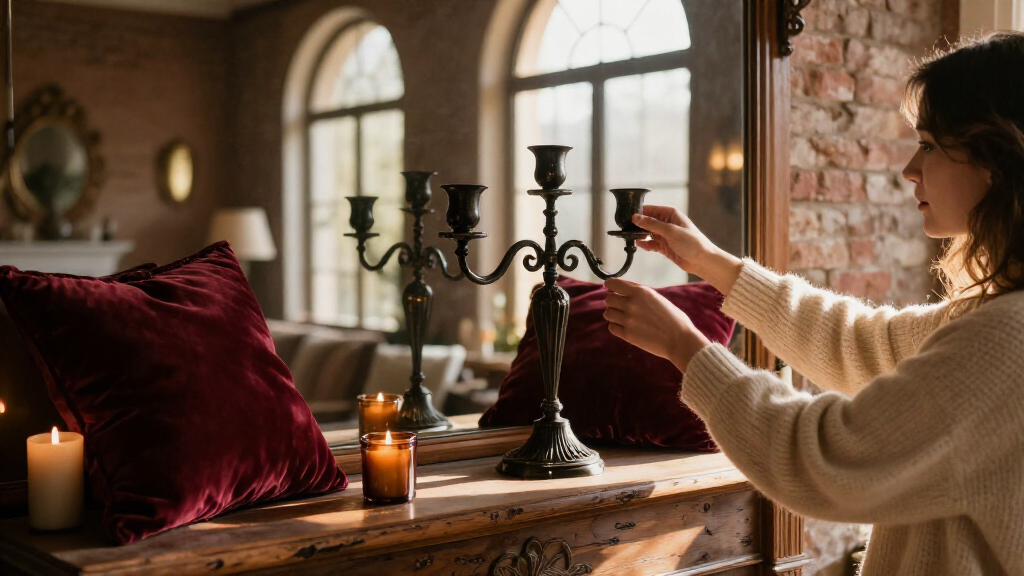
Think of the room as a candlelit library rather than a haunted attraction: shadows at the edges, warm wood under your hand, and one striking object that gives your eye somewhere to land. You can make gothic decor feel dramatic without making every surface dark or every choice permanent.
Use dark accents and rich materials; black walls are not required for a gothic mood.
Balance charcoal, burgundy, or jewel tones with warm wood, light textiles, brass, or glass.
Layer general, task, and accent lighting so the room stays useful as well as atmospheric.
Adapt textiles and accessories to each room’s use, and keep walkways and surfaces practical.
Build gradually with personal or secondhand pieces, and have vintage electrical fixtures inspected before use.
Choose Gothic Details That Still Feel Right in July
Best Gothic home decor for year-round style uses dramatic shapes, rich materials, and thoughtful contrast rather than seasonal Halloween props. A carved mirror, dark floral artwork, or iron-finish lamp can bring gothic character to a room every month, while bats and novelty cobwebs tend to read as holiday decorations.
That distinction matters when you want a room to feel like your home, not a set waiting for October. Gothic style has a broad visual vocabulary: pointed arches, ornate frames, dark wood, botanical motifs, jewel tones, and a little theatrical shadow. You can borrow just a few of those cues and still keep a sofa comfortable, a dining table usable, and a walkway clear.
Try starting with one expressive focal point. In a living room with plain cream walls, a tall dark-framed mirror above a walnut console can set the tone without crowding the space. Add a small stack of books and a ceramic vessel, then stop before every surface becomes a display shelf.
Seasonal motifs are optional. If you love a more overtly macabre accent, make it easy to put away: a small print or removable decoration can come out in October and return to storage afterward. The lasting foundation should be materials and atmosphere, not a calendar-specific theme.
Popular right now

Ninja Crispi Glass Air Fryer (Stone) – 4‑in‑1

Vitamix Propel Series 510 Professional-Grade Blender, 3 Programs, Black

Samsung 75-Inch M80H Series Mini LED 4K Smart TV (2026)
As an affiliate, we earn on qualifying purchases.
Build a Dark Palette That Doesn’t Swallow the Room
Best Gothic home decor for year-round style relies on a focused palette, not a rule that every wall must be black. Charcoal, forest green, burgundy, midnight blue, and plum can all create depth, especially when you set them against warm wood, ivory, muted brass, or stone-colored surfaces.
A useful starting point is to choose one main dark color, one lighter counterpoint, and one material or metal that adds warmth. For example, pair charcoal cushions with a cream throw and a brass-finish lamp. That small shift keeps the room legible: your eye can distinguish the sofa, the textiles, and the light instead of seeing one large dark mass.
In a compact apartment, use concentrated color rather than treating every surface alike. A deep green accent wall behind the bed, paired with pale side walls and dark bedding, can feel intimate without making the entire room seem smaller. If painting isn’t allowed, try a large framed print, a removable wallpaper panel, or a dark curtain as a portable focal point.
Use this simple palette check before you add more pieces:
- Dark foundation: Pick one anchor, such as a charcoal chair or walnut bookcase.
- Soft contrast: Add cream, dusty rose, warm gray, or natural linen.
- Accent color: Choose one jewel tone, such as burgundy or emerald, and repeat it in two or three places.
- Warm finish: Bring in wood, aged-looking brass, or reflective glass to catch the light.
Black is a useful tool, not a requirement. A navy velvet cushion or a forest-green lampshade can look just as moody, and may sit more comfortably with the colors you already own.
Layer Materials and Furniture for a Richer, More Livable Room
Best Gothic home decor for year-round style gets much of its character from texture: velvet beside linen, carved wood beside glass, or smooth metal against a nubby wool throw. A mix of finishes creates depth even when your palette stays restrained, much like the difference between a flat photograph and a room you want to reach out and touch.
You don’t need a matching suite of ornate furniture. In fact, one substantial piece often works better than a room full of elaborate reproductions. Picture a simple modern sofa beside a carved vintage side table, with a dark floral cushion linking the two. The contrast feels collected and individual rather than themed.
When shopping secondhand, check the piece’s condition, size, and intended use. A narrow side table may suit a small apartment better than a heavy cabinet, while a chair with worn upholstery might need more repair than you want to take on. Describe pieces accurately: antique, vintage, reproduction, and contemporary are not interchangeable labels.
Let practical needs guide your fabric choices. Velvet can add a soft, saturated patch of color, but washable cotton or durable upholstery may make more sense where pets or everyday meals are part of the picture. Use delicate brocade on a cushion or runner instead of a high-traffic seat, and let durable materials do the hard work.
Personal objects keep the room from feeling like a catalogue. A framed botanical print, a favorite hardback, a handmade ceramic, or a family heirloom can sit comfortably with dramatic decor. Choose fewer pieces with meaning, and leave some space around them so their shapes and textures can register.
Use Warm, Layered Lighting to Keep Dark Rooms Cozy
Best Gothic home decor for year-round style needs layered lighting because one bright ceiling fixture can flatten the shadows, while one dim bulb can make everyday tasks frustrating. Combine general room light with a task lamp and a softer accent source so you can read, work, and relax without losing the atmosphere.
For example, put a shaded table lamp beside a reading chair, use a second lamp on the opposite side of the room, and reserve a small accent light for art or a bookcase. Warm-toned bulbs and fabric shades soften the light on dark walls. The result feels like a pool of amber on a rainy evening, not a room where you have to squint to find your keys.
Choose fixtures that suit how you live. A wall sconce can create a strong period-inspired silhouette, but a plug-in lamp may work better if you rent or don’t want electrical work. If you buy a vintage light, don’t assume its wiring is safe because the shade looks beautiful; have vintage electrical fixtures inspected by a qualified professional before use.
Candles can add a gentle flicker, but they need careful placement and supervision. Keep open flames away from curtains, paper, and busy walkways; flameless candles offer a practical alternative for shelves or homes with pets. A small group of warm lights will usually do more for the mood than piling on extra dark accessories.
Let light do some of the decorating. A shaded lamp can reveal velvet, wood grain, and a framed print in ways a single overhead bulb cannot.
Match the Gothic Look to Your Room and Your Routine
Best Gothic home decor for year-round style works when you adapt the details to the room’s job. A bedroom can handle softer fabrics and lower light, while a busy living room needs durable seating, clear paths, and surfaces that don’t require constant careful handling.
In a bedroom, try dark bedding against lighter walls, a warm bedside lamp, and one botanical print above the dresser. That gives you a moody focal point without turning the bed into an uncomfortable pile of decorative layers. For a living room, use a patterned throw and a dark-framed mirror, then keep the coffee table open enough for a mug and a book.
Bathrooms need different choices. Moisture can damage some fabrics, prints, and finishes, so keep delicate decor away from splashes and choose accessories suited to the room’s conditions. A dark soap dish, a framed print placed away from direct moisture, or a small metal-framed mirror can bring in the style without creating a maintenance headache.
Renters can make the look portable. Use freestanding furniture, removable wallpaper or decals where permitted, curtains, lamps, and framed art. For instance, a rental with white walls can still feel distinctly gothic with a dark bookcase, a deep red runner, and a sculptural mirror—no paint or permanent fixtures required.
Before buying anything, ask whether you can use, clean, and move it easily. Clear walkways and comfortable seating matter more than a dramatic object that blocks a door or collects dust where you can’t reach it.
Shop Slowly and Keep the Look Collected, Not Cluttered
Best Gothic home decor for year-round style grows more naturally when you add pieces in stages instead of buying a complete themed set. Start with what you own, identify what the room needs, and add one useful detail at a time; the result often feels more personal and costs less than replacing everything at once.
Try this four-step approach:
- Choose a room and a purpose. Decide whether you want a cozier reading corner, a more dramatic entry, or a bedroom with richer color.
- Pick one anchor. Use a dark chair, a mirror, a bookcase, or a large artwork as the visual starting point.
- Add contrast and light. Bring in a lighter textile, warm wood, or a shaded lamp before adding more dark objects.
- Edit after a week. Notice what you actually use and remove anything that crowds the room or feels like a prop.
A secondhand hunt can turn up an unusual frame or a small carved table, but check stability, finish, and scale before bringing it home. Reusing and repairing furniture can also help you buy fewer, longer-lasting pieces. A wobbly table may need a simple repair; an upholstered chair with extensive damage may demand more time and expense than you planned.
Set a practical budget by deciding which item deserves the most attention. You might save for a durable reading chair while making your own framed botanical prints, or use existing furniture and spend nothing until you find a lamp you genuinely like. There is no single price point for a gothic interior; taste, patience, and a clear plan matter more than buying luxury objects.
Keep surfaces from becoming miniature museums. Group a few related items—a framed print, a small vase, and two books—then leave space beside them. Editing creates drama: one striking object stands out more clearly when it isn’t competing with a dozen smaller ones.
Frequently Asked Questions
Do all the walls need to be black for a gothic room?
No. Black walls are optional; dark furniture, textiles, artwork, or lighting can establish the mood against pale walls. Try a charcoal chair and burgundy throw in a light room before committing to paint.
How can I make gothic decor feel elegant instead of Halloween-themed?
Use a restrained palette, tactile materials, and a few intentional motifs rather than filling the room with seasonal props. A carved mirror, dark floral art, and warm lamps can create a lasting atmosphere, while bats and novelty cobwebs are easy to reserve for October.
Can gothic decor work in a small apartment or rental?
Yes. Portable choices such as lamps, framed art, curtains, freestanding shelves, and reversible textiles can give a small room a strong identity without renovation. A dark bookcase against light walls often creates more impact with less commitment than painting the whole room.
What colors work well with gothic decor besides black?
Forest green, burgundy, navy, plum, and charcoal all create a rich foundation. Pair them with warm wood, cream, muted brass, or stone-like tones so the room has contrast and doesn’t read as one solid dark mass.
How do I make a gothic room cozy rather than gloomy?
Use several warm light sources, comfortable seating, and soft materials such as linen, velvet, or wool. A shaded lamp beside a chair and a lighter throw across a dark sofa can make the room feel inviting without removing its dramatic character.
Are candles and vintage lamps safe to use?
Open flames need careful placement and supervision, so keep candles away from curtains, paper, and busy walkways; flameless versions are an alternative. Have vintage electrical fixtures checked by a qualified professional before use rather than assuming the wiring is safe.
Conclusion
Start with one anchor piece, then balance it with warm light, a softer material, and enough open space to let the room breathe. That simple approach makes gothic decor feel like a lasting expression of your taste, not a seasonal costume.
Keep what you love and use every day. Let the shadows gather around a comfortable chair, a well-read book, and the one object that makes the room unmistakably yours.