Content note: This article describes grave robbing, the murders committed by William Burke and William Hare in 1828, and the dissection of human bodies. It names the victims recorded in the trial.
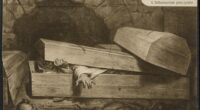
In early 19th-century Britain, a medical student who wanted to learn anatomy needed a human body, and the law supplied almost none. The gap between what anatomy schools needed and what they could legally obtain created a trade: men who dug up the newly buried and sold them, families who guarded graves at night, and in Edinburgh in 1828 two men who decided that killing was easier than digging.
The scandal ended with an act of Parliament. The Anatomy Act of 1832 solved the anatomists’ problem by giving them a new legal supply, mostly the unclaimed bodies of people who died poor.
At a glance
- The law: under the Murder Act of 1752, the bodies of executed murderers could be dissected. For most of the period that was the only legal supply in England.
- The trade: “resurrection men” stole recently buried bodies and sold them to anatomy teachers.
- The crime: in Edinburgh in 1828 William Burke and William Hare killed at least 16 people and sold their bodies to the anatomist Robert Knox.
- The answer: the Anatomy Act 1832 licensed anatomy schools and allowed unclaimed bodies to be used for dissection.
A punishment as a supply
The Murder Act of 1752 added dissection to the death sentence for murder, as “a further terror and peculiar mark of infamy”. The historian Elizabeth T. Hurren has shown how the bodies of executed murderers passed from the gallows to surgeons for public dissection. The law made dissection a punishment, which is one reason why ordinary people feared and hated it.
It also meant that the legal supply was tiny. As private anatomy schools grew in London and Edinburgh in the late 18th and early 19th centuries, teachers competed for every body, and the shortfall was met outside the law.
The resurrection men
Grave robbers worked at night, usually soon after a funeral, when the soil over a grave was still loose. In her history of the trade, Ruth Richardson explains a legal quirk that shaped their methods: English law did not treat a dead body as property, so taking a corpse was not theft in the usual sense, while taking the shroud or coffin could be. Resurrection men therefore often left both behind.
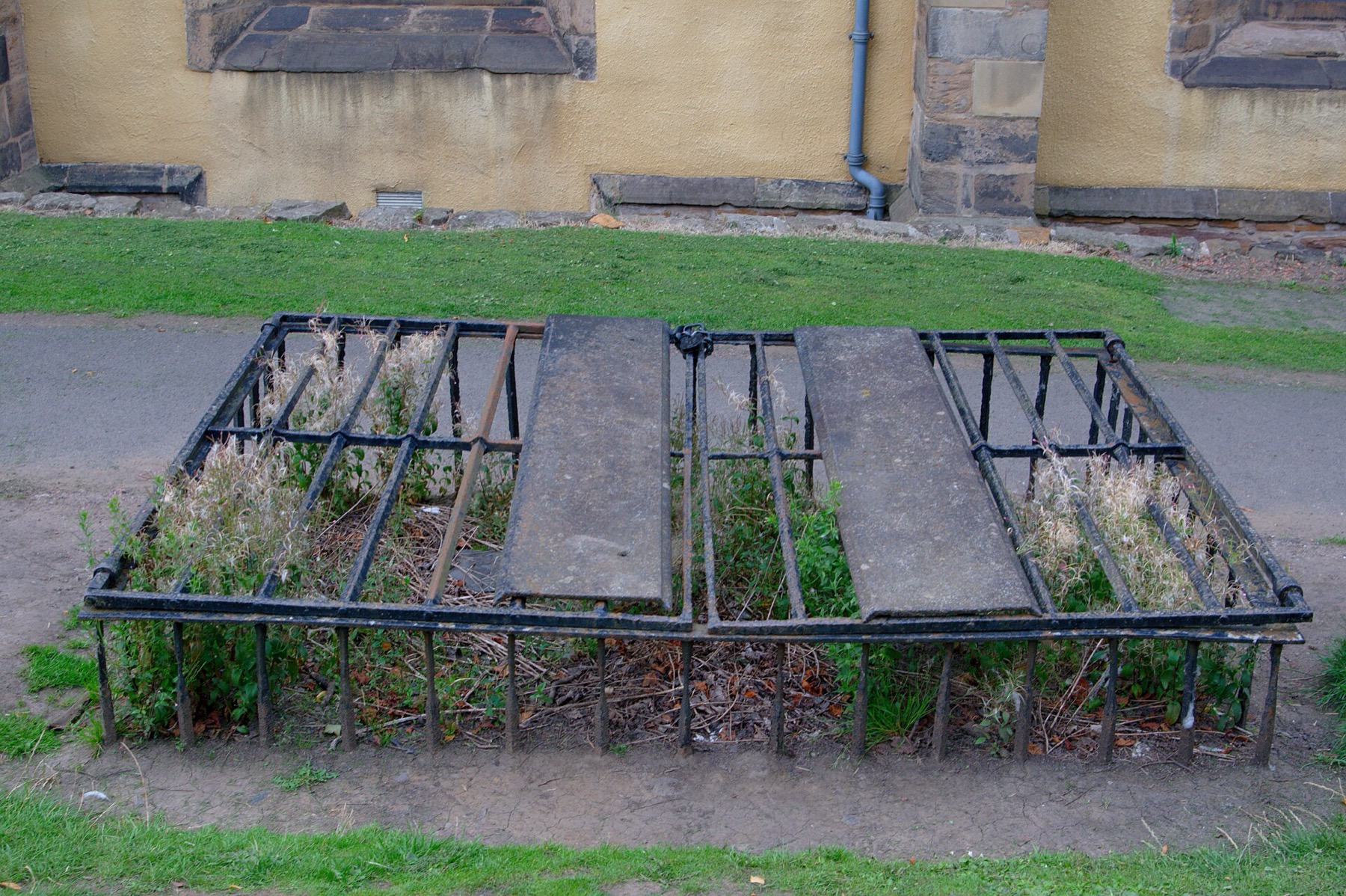
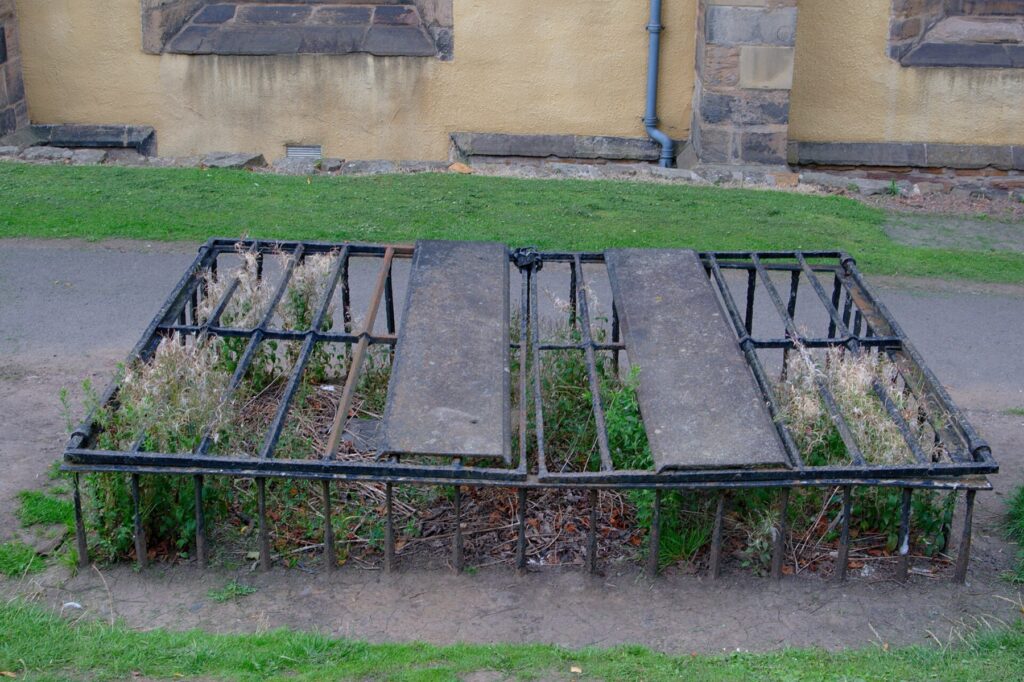
Communities fought back. Families paid for guards and watch-houses, and in Scotland iron cages called mortsafes were placed over fresh graves until the body had decayed too far to be of use to an anatomist. Several still stand in Edinburgh’s Greyfriars Kirkyard.
Edinburgh, 1828: Burke and Hare
William Burke and William Hare did not rob graves. According to the University of Edinburgh’s Anatomical Museum, their trade began when a lodger in Hare’s house died of natural causes while owing rent, and they sold his body to Dr Robert Knox, who ran private anatomy classes in Surgeons’ Square, for about £8. After that they killed. The museum records that they murdered at least 16 people, by lying on the victim’s chest and pinching the nose and mouth shut, a method that left few marks and gave the English language the verb “to burke”.
The killings stopped when their last victim, Margery Campbell or Docherty, was found dead under a bed and the pair were reported to the police. The indictment named three victims: Mary Paterson, James Wilson and Margery Docherty. Hare agreed to give evidence against Burke and was allowed to go free. At the trial, which began on 24 December 1828, Burke was found guilty on 25 December; the charge against his partner Helen M’Dougal was found not proven. Burke was hanged in Edinburgh’s Lawnmarket on 28 January 1829 and, as his sentence required, his body was publicly dissected. His skeleton is still held by the University of Edinburgh’s Anatomical Museum. Knox was never charged.
London, 1831: the “London Burkers”
Three years later London had its own case. In 1831 John Bishop and Thomas Williams were convicted of murdering a boy and trying to sell his body to King’s College; both were hanged that December. The historian Sarah Wise, who reconstructed the case in The Italian Boy, shows how uncertain the victim’s identity remained: he was described as an Italian street performer, but who he really was was never settled.
The Anatomy Act 1832
The Anatomy Act of 1832 opens by saying that “divers great and grievous Crimes have been committed, and lately Murder,” to obtain bodies for sale. It created licences for teachers of anatomy and inspectors to supervise them, and it allowed any “Executor or other Party having lawful Possession of the Body” of a dead person to hand it over for dissection, unless the dead person had objected or a close relative did.
In practice the people who had “lawful possession” of most unclaimed bodies were the masters of workhouses and hospitals. Richardson argues that the Act therefore moved the burden of dissection from the executed to the poor, and that fear of a pauper’s death and dissection shaped working-class attitudes to the workhouse for generations.
The Act also ended dissection as a punishment. The section that had allowed courts to order that a murderer’s body be dissected was repealed; instead, courts were to order that the body be hung in chains or buried within the prison.
Documented / Disputed
Documented
- The Murder Act 1752 made dissection part of the punishment for murder (Hurren).
- Burke and Hare killed at least 16 people in Edinburgh and sold the bodies to Robert Knox (University of Edinburgh Anatomical Museum).
- Burke was convicted on 25 December 1828, hanged on 28 January 1829 and publicly dissected; Hare gave evidence and went free (Anatomical Museum; trial report).
- The Anatomy Act 1832 licensed anatomy, allowed bodies in “lawful possession” to be used unless there was an objection, and repealed dissection of murderers (text of the Act).
Disputed or often repeated
- How many bodies resurrection men took. Nobody kept count; the trade was illegal and secret. Any precise total you see is a guess.
- “Burke and Hare were grave robbers.” No. They murdered their victims instead of digging up the dead.
- How much Knox knew. He was never charged, and whether he suspected murder has been argued over since 1829.
- What happened to Hare. Unknown. Stories that he was blinded and ended his life as a beggar in London are not supported by any record.
- The identity of the London “Italian boy”. Never settled (Wise).
Timeline
- 1752: The Murder Act makes dissection part of the sentence for murder.
- Late 1827: A lodger in Hare’s house dies naturally; his body is sold to Robert Knox.
- 1828: Burke and Hare kill at least 16 people in Edinburgh’s West Port.
- 24–25 December 1828: Burke and Helen M’Dougal are tried; Burke is found guilty, the case against M’Dougal not proven.
- 28 January 1829: Burke is hanged in the Lawnmarket; his body is publicly dissected.
- December 1831: John Bishop and Thomas Williams are hanged in London for the murder of a boy whose body they tried to sell.
- 1832: The Anatomy Act licenses anatomy schools, allows unclaimed bodies to be dissected and ends dissection as a punishment.
Sources
Primary sources
- Trial of William Burke and Helen M’Dougal before the High Court of Justiciary, at Edinburgh, on Wednesday, December 24, 1828, for the murder of Margery Campbell, or Docherty (Edinburgh, 1829). Internet Archive.
- Anatomy Act 1832 (2 & 3 Will. 4 c. 75), original text. legislation.gov.uk.
Secondary sources
- University of Edinburgh, Anatomical Museum, “William Burke”. biomedical-sciences.ed.ac.uk.
- Ruth Richardson, Death, Dissection and the Destitute (1987; 2nd ed., University of Chicago Press, 2000). Catalogue record.
- Elizabeth T. Hurren, Dissecting the Criminal Corpse: Staging Post-Execution Punishment in Early Modern England (Palgrave Macmillan, 2016), open access. doi:10.1057/978-1-137-58249-2.
- Sarah Wise, The Italian Boy: Murder and Grave-Robbery in 1830s London (2004). Catalogue record.
Image credits
- Header image: Mortsafe in Greyfriars Kirkyard, Edinburgh: Mussklprozz, 2013. Licence: CC BY-SA 3.0, via Wikimedia Commons.
Related
- Case page: Burke and Hare, Edinburgh 1828
- Safety Coffins and Burial Bells: The Inventions Against Being Buried Alive
Part of Dark Medicine in Dark History, Documented. How we research and how we use AI: Editorial Standards. Spotted an error? Tell us at contact@macabrechronicle.com; fixes are logged on the Corrections page.
Editor’s note: This article replaces five shorter pieces on body snatchers, the cadaver trade and grave-robbing laws that first appeared in the Macabre Chronicle section of moleopedia.com. It was rewritten from the sources above and published here on 30 October 2026.