
TL;DR
To collect first editions of Shirley Jackson’s novels, verify the printing for each title using its publisher’s conventions and a reliable bibliographic reference; a copyright date alone is not proof. Check that the dust jacket belongs to the book, inspect condition and provenance, and choose a collecting focus before you spend. [1]
A copy of The Haunting of Hill House can look right on the shelf and still raise the wrong question: is it a first printing, and does its jacket belong with it? Those details hide in publisher conventions, small marks, and paper that may have traveled through decades of handling.
Shirley Jackson (1916–1965) is best known for The Haunting of Hill House and “The Lottery,” but her novels range from domestic comedy to psychological suspense and gothic horror. This guide gives you a practical way to check editions of Shirley Jackson’s novels, judge condition, and set a collecting goal before you buy. [1]
You do not need to chase every title at once. Start with what you want to read or display, then learn the evidence that makes a copy a first printing. A calm inspection beats a tempting description every time.
Verify each novel’s printing with title-specific publisher evidence and a reliable reference; copyright dates alone do not establish a first printing.
Check that the dust jacket belongs to the book, and record clipping, fading, damage, or restoration.
Inspect binding, hinges, pages, endpapers, inscriptions, library marks, remainder marks, and repairs before buying.
Use recent completed sales to compare similar copies, since title, condition, jacket, provenance, and demand all affect desirability.
Set a collecting scope and budget that reflect whether you value reading copies, original jackets, signatures, or a complete run.
FIELD GUIDE · RARE BOOKS
Collecting Shirley Jackson’s First Editions
A practical guide to identifying first printings, matching jackets, judging condition, and building a collection around the books you value most.
Does the printing evidence match—and does the jacket belong with this book?
A copyright date is a clue, not a verdict. Verify every title against its publisher’s conventions and a reliable bibliographic reference.
Verify the printing title by title; a copyright date alone does not prove a first printing. Check that the dust jacket belongs to the book, document condition and provenance, compare recent completed sales, and choose your collecting focus before you spend.
Start with the printing
“First edition” and “first printing” can describe different things. A later printing may retain the original copyright date or edition statement, so the evidence must be checked for that specific publisher and title.
Match the edition
Confirm title page, publisher, and publication details for the book you are researching.
Read the copyright page
Look for edition statements, printing numbers, or other publisher indicators.
Compare reliable evidence
Check a recognized bibliography or consult a specialist bookseller familiar with the period.
Ask what “first edition” means
Request the seller’s specific claim: first edition, first printing, or another issue. Ask what evidence supports it and keep the answer with your purchase records.
Copyright date ≠ printing proof
A 1959 copyright page in The Haunting of Hill House is a useful starting point. Publisher conventions and bibliographic evidence supply the rest of the verdict.
Inspect the whole object
The jacket can strongly affect a copy’s appeal. Confirm that it belongs with the book, then describe its state precisely. Printing status and physical condition are separate facts.
Compare the details
Check title, author, publisher details, price, and flap layout against reference copies. A plausible jacket still deserves verification.
Look beyond the cover
Inspect binding, hinges, pages, endpapers, stains, chips, fading, tears, missing sections, and any restoration.
Keep the evidence
Ask for close photos of jacket fronts, backs, spine, flaps, and corners. Save images, receipts, and the seller’s description.
Choose your Jackson shelf
Jackson’s novels move from domestic settings to psychological suspense and gothic horror. Set a scope that reflects how you read, display, and want to collect.
Keep the scope clear
Come Along with Me was published posthumously as a collection, not a novel. It fits a broader Shirley Jackson first-edition collection, but not a checklist limited to her novels.
Write one sentence
“I collect Jackson’s novels in first printings, with original jackets when practical.” A clear focus helps you weigh attractive copies against your priorities and budget.
Compare like with like
Demand and prices vary by title, condition, jacket completeness, provenance, and buyer interest. Use recent completed sales rather than old asking prices. A celebrated title or renewed attention does not guarantee that every copy will rise in value.
RESEARCH CHECKLIST · These bars show comparison priorities, not market values or price forecasts.
A calm final check
Turn a tempting listing into a decision you can explain later. Separate what you know from what needs verification.
- Printing claim verified against title-specific publisher evidence.
- Jacket matched to the book and checked for clipping or restoration.
- Binding, hinges, pages, and endpapers examined.
- Inscriptions, library marks, bookplates, remainder marks, and repairs disclosed.
- Receipts, auction records, photos, and seller descriptions saved.
- Comparable prices drawn from recent completed sales.
- Copy fits your reading, display, signature, jacket, or full-run collecting goal.
Start with the book’s printing, not its copyright date
A first edition of a Shirley Jackson novel must be verified title by title; a copyright date by itself does not prove that a copy is a first printing. Check the publisher, publication date, edition statement, and printing information, then compare those details with a reliable bibliography or specialist description. [1]
This distinction matters because a later printing can retain the original copyright date and sometimes the same edition statement. Imagine finding a 1959 copy of The Haunting of Hill House with the date on its copyright page: that date gives you a clue, not a complete verdict. The publisher’s printing conventions supply the missing evidence.
Use a simple sequence before you decide what a seller’s claim means:
- Match the title page and publisher to the specific edition you are researching.
- Read the copyright page for edition statements, printing numbers, or other publisher indicators.
- Compare those indicators with a dependable bibliography or ask a bookseller who knows the publisher and period.
A listing that says “first edition” may mean the first edition in a broad sense, while you may be seeking the first printing. Ask the seller to state which claim they mean and what evidence supports it. Clear descriptions make comparison easier and give you a record if you later sell or insure the book.
Popular right now

KitchenAid Classic Series 4.5 Quart Tilt-Head Stand Mixer K45SS, Onyx Black

Bose QuietComfort Wireless Noise-Cancelling Over-Ear Headphones, Black

Dyson V8 Cyclone Cordless Vacuum
As an affiliate, we earn on qualifying purchases.
Check the jacket as carefully as the pages
An original dust jacket can shape a first edition’s appeal, so check that it is the jacket intended for that particular book and inspect every edge for damage or repair. A jacket that looks striking across a room may have clipped flaps, faded color, stains, chips, missing sections, or restoration that changes how a collector views the copy. [1]
Hold the book and jacket together as a pair, then compare the title, author name, publisher details, and any price or descriptive text with reference copies. For example, a jacket with the right title but a different flap layout may have been supplied from another copy. A plausible match deserves verification rather than an assumption.
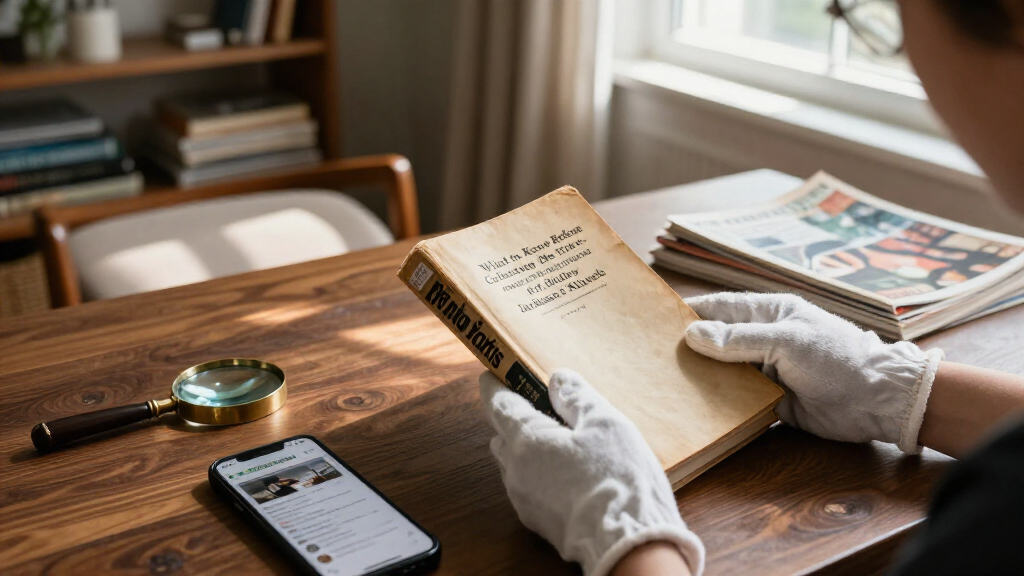
Condition is a description, not a single label. A small chip at the jacket’s top edge is different from a large missing panel; careful, disclosed repair is different from undisclosed restoration. Ask for close photographs of the front, back, spine, flaps, and corners, especially if you are buying remotely. Keep those images with the receipt and seller description.
When you compare two copies, make the comparison fair: a book with a complete, well-preserved jacket may suit a display-focused collection, while a reader may prefer a sound book with visible wear. Your choice depends on the reason you are collecting, but an accurate account of the jacket helps you know what you are choosing.
Use a condition checklist before you commit
A useful condition check covers the binding, hinges, pages, endpapers, jacket, and any marks that affect the copy’s history or appearance. A genuine first printing can still be a poor fit for your collection if it has a loose hinge, extensive writing, library markings, or major repairs; the printing claim and the physical condition are separate facts. [1]
Open the book gently and look for a binding that holds its shape, hinges that remain attached, and pages free from major stains or tears. Check the front and back endpapers, where bookplates, ownership notes, or traces of removed labels can appear. Look for remainder marks and repairs too. For instance, an inscription on a title page may matter to a collector who values ownership history, while another buyer may prefer an unmarked reading copy.
Ask the seller to describe anything not obvious in the main photographs. “Very good” is less useful than “jacket has a short tear at the top of the spine, no known restoration; pages clean with a previous owner’s name on the front endpaper.” The second description gives you something concrete to compare and preserves an honest record of the book’s state.
Set your own condition priorities before browsing. If you want to read the novel, a sturdy binding may matter most; if you want a display copy, jacket completeness and color may carry more weight. Either way, decide whether the actual wear feels acceptable before you make the purchase.
Choose which Jackson books belong in your collection
Shirley Jackson’s novel checklist includes The Road Through the Wall (1948), Hangsaman (1951), The Bird’s Nest (1954), The Sundial (1958), The Haunting of Hill House (1959), and We Have Always Lived in the Castle (1962). Her posthumous Come Along with Me (1968) is a collection, not a novel, so include it only if your collecting scope reaches beyond novels. [1]
Many collectors begin with Hill House or We Have Always Lived in the Castle, two of Jackson’s most celebrated works. But a collection does not need to follow the most familiar titles. You might focus on her earlier fiction, seek original jackets across the novels, or build around books you return to as a reader.
A narrow focus gives you a useful way to make decisions when a tempting copy appears. For example, if your plan is “first printings of the six novels,” you can compare a copy of The Sundial against that goal. If you instead collect notable Jackson books across genres, Come Along with Me may fit without changing the facts about its form.
Write your scope down in one sentence. “I collect Jackson’s novels in first printings, with jackets when practical” leaves room for tradeoffs while keeping the purpose clear. You can broaden the plan later; a thoughtful start makes the shelf feel like a collection rather than a row of impulse buys.
Set a collecting budget around your priorities
There is no single price rule for Jackson first editions: demand and desirability vary with title, printing, condition, jacket completeness, provenance, and buyer interest. A famous title may attract attention, but a clean copy of a less frequently sought book can still be appealing to the right collector. Use recent completed sales and established dealer records to understand the market rather than treating old asking prices as proof of value. [1]
Think through a realistic purchase before you browse. If you have set aside a budget for a copy of Hangsaman, decide whether you would rather buy a sound book without its jacket or wait for one with a complete jacket. The answer depends on your goal, and seeing that tradeoff in advance helps you avoid paying for features you do not care about.
Compare like with like: a signed or inscribed copy, a restored jacket, or a book with strong provenance is not directly comparable to an ordinary unsigned copy in a different condition. When you check sales records, note the date and the details of the copy. Asking prices show what a seller hopes to receive; completed sales give a clearer record of what a buyer paid, though neither guarantees what a future copy will cost.
Set a ceiling, keep notes on the copies you have considered, and give yourself time to learn. A small notebook with title, printing evidence, jacket condition, and sale date can show patterns that a quick search misses. The goal is an informed purchase you can enjoy, not a prediction that every book will rise in value.
Keep provenance and seller claims easy to verify
Provenance is the documented history of a copy, while authenticity and printing claims depend on evidence you can check. Save receipts, auction records, catalog descriptions, seller correspondence, and clear photographs together so you can explain what you bought and why you believe the edition is correctly described. [1]
Suppose you find a copy advertised as a first printing with a handwritten inscription. Ask what supports both claims: the seller should describe the printing evidence and provide a clear image of the inscription. A signature may add interest, but signatures and inscriptions deserve careful authentication, especially when the price makes the claim a major part of the purchase.
For a costly copy or a disputed bibliographic detail, seek an independent opinion from a dealer or bibliographer familiar with the publisher and period. Ask focused questions: Does this printing statement match the known convention? Does the jacket appear to belong with this book? Are repairs or restoration visible in the photographs? Specific questions are easier to answer than a general request to certify that a copy is “rare.”
Favor sellers who give detailed descriptions, show multiple clear images, answer direct questions, and explain return terms. Reputable rare-book dealers and auction houses can be useful places to compare cataloging styles, but you still need to read each listing carefully. Keep the paperwork even for a modest purchase; good records make it easier to revisit your research later.
Build a collection that matches how you read
A focused collection gives you more control over what you buy, whether you care most about the novels, original jackets, signatures, or books in especially strong condition. Collecting every novel in first printing can become costly, so a narrower aim can keep the hobby connected to the books you actually want to own. [1]
Try a simple plan before you make the first purchase:
- Choose a scope, such as first printings of the six novels or copies with original jackets.
- Pick one title you want to own and read, rather than buying only because a listing sounds scarce.
- Write down your budget and the condition features you will prioritize.
- Compare several cataloged copies and save their descriptions, photographs, and sale information.
For example, a reader drawn to Jackson’s domestic comedy and social tension may start with The Sundial, while someone building a gothic shelf may begin with Hill House. Those choices can both make sense. Your first book becomes a reference point: you can learn how a particular jacket looks, how the publisher presents the printing, and what condition you enjoy living with.
Let the collection grow at a pace that leaves room for reading and research. A shelf of carefully chosen books tells a richer story than a hurried checklist, especially when each copy comes with a clear record of what it is. Decide what you want to see when you look at the shelf, then buy toward that picture.
Frequently Asked Questions
How can I tell whether my copy is a Shirley Jackson first edition?
Start with the title page and copyright page, then check the publisher’s edition and printing conventions for that particular title. Compare the evidence with a recognized bibliography or ask a specialist bookseller; the copyright date alone does not establish a first printing. [1]
Does an original dust jacket make a big difference?
An original jacket can add substantially to a modern first edition’s desirability, especially when it is complete and in good condition. Check that it belongs with the book and describe any clipping, fading, damage, or restoration accurately. [1]
Which Shirley Jackson novels do collectors often seek?
The Haunting of Hill House and We Have Always Lived in the Castle are frequent collector favorites. Rarity, printing, condition, jacket, and provenance all matter, so title alone does not tell you how desirable a particular copy will be. [1]
Are signed Shirley Jackson copies available?
Signed or inscribed copies do appear, but you should check the handwriting against credible examples and ask for supporting documentation when the signature is central to the purchase. Keep the seller’s description and photographs with your records. [1]
Is a later printing still worth collecting?
It may suit your collection, particularly if it has an appealing jacket, an interesting ownership history, or strong condition. Describe it as a later printing unless the evidence supports a first-printing claim. [1]
What makes a sensible first purchase?
Choose a Jackson book you want to own, set a budget, and prioritize a clearly described copy whose printing and condition you understand. Comparing several cataloged copies can help you learn how jackets, marks, and printing evidence vary before you spend more. [1]
Conclusion
Before you buy, verify the printing, inspect the jacket and book, and make sure the copy fits the collection you actually want. Those three checks turn a promising listing into an informed choice.
Then keep the record with the book. Years later, when the shelf catches the lamplight and Jackson’s jackets line up like small windows into different houses, you will know exactly what you found.
Halloween Picks

Haunted Hill Farm 2-Ft. Zombie Raccoon Halloween Animatronic

8.5 Foot Halloween Inflatable Haunted House Castle with Skeleton, Ghost & Skulls

MGparty 14.5 ft Halloween Inflatable Walk-In Pumpkin House with LED Lights
As an affiliate, we earn on qualifying purchases.