
TL;DR
To compare hardcover and paperback horror editions, check the exact ISBN, publication details, contents, dimensions, cover design, and condition of each copy. Hardcovers usually offer sturdier protection and a stronger display presence; paperbacks are typically lighter, more flexible, and less costly. Your reading habits and the specific editions matter more than format alone.
You find two copies of the same horror novel: one has a heavy board cover under a shadowy dust jacket, the other slips into your coat pocket. Which one belongs in your hands? The answer depends on more than the price printed on the tag.
When you compare hardcover and paperback horror editions, you are choosing how the book will feel during a long night of reading, how well it will handle repeat visits, and what it will look like on your shelf. The cover, paper, layout, bonus material, and condition can all vary between editions. A useful comparison starts with the exact copies in front of you.
This guide shows you how to check those details and weigh the tradeoffs. Whether you want a sturdy copy for a themed shelf or a lighter book for the train, you can make a choice that fits your habits instead of assuming one format always wins.
Match the ISBN, publisher, date, and contents before treating two copies as the same edition.
Hardcover boards usually offer more protection, while paperbacks are generally lighter and easier to carry.
Compare trim size, type, margins, and paper; page count alone does not measure how much text an edition contains.
Inspect the full cover design, including the boards beneath a dust jacket, and judge collectibility by more than format.
For used copies, ask about condition, annotations, dust jackets, and any included inserts.
A reader’s field guide · Horror editions
How to Compare Hardcover and Paperback Horror Editions
The same chilling story can feel different in your hands. Compare the exact copies for content, comfort, protection, cover design, and condition before you choose.
The best edition is the one that fits the way you read.
The choice behind the cover01 / Make a fair match
Compare the exact editions first
Format alone cannot tell you whether two copies share the same text, artwork, or bonus material. Retail listings can blend details from different printings, so verify the book in front of you.
Key insight: page count is shaped by trim size, type, margins, and typesetting—not just how much story is inside.
Identify
Match ISBN, publisher, publication date, and edition statement.
Confirm contents
Look for introductions, afterwords, illustrations, revisions, or bonus stories.
Inspect the copy
Check the copyright page and compare condition with the listing.
View the whole cover
Check jacket, spine, back, and the boards beneath a dust jacket.
02 / Format tradeoffs
What each format brings to the night
These are common tendencies, not guarantees. Publisher, age, demand, size, and the specific copy all affect the result.
Choose for your routine: repeated handling may reward sturdier construction; travel may reward low weight and flexibility.
| What to weigh | Hardcover | Paperback |
|---|---|---|
| Protection | ✓ Rigid boards usually protect pages and spine during frequent handling. | ~ Flexible covers and spines can crease or show wear sooner. |
| Portability | ~ Often bulkier, especially in large formats; can feel awkward to hold. | ✓ Usually lighter and easier to carry or fit in a bag. |
| Cost & access | ~ Typically costs more, though prices vary by title and availability. | ✓ Generally less costly and often easy to find in shops. |
| Display | ✓ Dust jackets and substantial shelf presence may appeal to display readers. | ✓ Updated or graphic cover art can suit a collection or discreet reading. |
Condition still counts. A hardcover can have a torn jacket or damaged binding; a paperback can be in excellent shape. Inspect the actual copy before paying more for perceived durability.
03 / The reading experience
Test the feel, layout, and light
A format affects comfort in ways that become clear when you hold the book open. Try each copy with the way you actually read in mind.
Weight & grip
Hold each copy open with one hand. A firm hardcover may suit a shelf and sofa; a flexible paperback may be easier on a train or during a long session.
Type & trim
Compare trim size, font size, margins, and paper under ordinary light. Notice cramped text, glare, or a spine that fights your grip.
Visual extras
A larger edition may make illustrations or maps easier to see. Check contents: introductions, afterwords, and bonus material can differ by edition.
Page count is a clue, not a measurement of the story. A higher total may come from a smaller page, larger type, or wider margins. Compare the text and contents directly.
04 / Cover & collectibility
Look beneath the dust jacket
Horror cover art sets a mood before the first page. The jacket, boards, and paperback cover can feature different designs, so a thumbnail may not show the whole edition.
Inspect every surface
View the jacket front and back, spine, and boards underneath. The hardcover case may hide a second design; a paperback may use updated artwork.
Match your setting
Pick an atmospheric display cover, or a more discreet design for reading in public. The edition’s presentation is part of your experience.
Judge the specifics
Format alone does not make a book rare or valuable. Demand, scarcity, edition details, and condition matter; signed or limited editions may draw interest.
05 / Choose for your routine
Let your reading habits decide
The right copy is the one whose tradeoffs fit what you will do with it.
Before you buy: verify ISBN and contents, inspect condition, then hold the book and read a middle page. Your habits and the specific edition matter more than the format label.
Compare the Exact Editions Before You Choose
To compare hardcover and paperback horror editions, start with their publication details and ISBNs; the format label alone cannot tell you whether two copies share the same text, artwork, or bonus material. Check the publisher, publication date, edition statement, and contents for each copy. These details help you match the listing to the book you will actually receive.
Imagine you are buying a novel for a reading group. One listing says paperback, but its description may have been combined with a hardcover edition that includes an author introduction. If that introduction matters to your discussion, verify the paperback’s ISBN against the publisher’s description or a library catalog instead of trusting the listing title.
Retail listings sometimes blend details from multiple formats or printings. A clear description of one edition can sit beside a cover image from another. If you are shopping in a used-book store, check the copyright page inside the book and compare it with the listing before you decide.
Keep a short checklist as you look at both copies:
- Match the ISBN, publisher, and publication date.
- Check the edition’s contents for introductions, afterwords, illustrations, or bonus stories.
- Compare the physical book’s condition with its description.
- Look at the exact cover art, including the boards beneath any dust jacket.
This first pass keeps you from comparing one edition’s price with another edition’s features. It also gives you a fair way to judge what goes beyond price: the book’s contents and condition may be the reason one copy suits you better.
Popular right now

Dyson Ball Animal 3 Corded Upright Vacuum

TCL T7 Series 85-Inch 4K 144Hz QLED Smart Google TV

KitchenAid Classic Series 4.5 Quart Tilt-Head Stand Mixer K45SS, Onyx Black
As an affiliate, we earn on qualifying purchases.
See What You Gain from a Hardcover’s Extra Protection
A hardcover usually protects its pages and spine better during frequent reading because rigid boards hold their shape around the book block. That protection can matter if you reread a favorite horror novel, lend it to friends, or keep it in a busy household where books travel from shelf to sofa. It does not make the book indestructible: a dust jacket can still scuff or tear, and poor storage can damage the binding.
Think of a well-loved copy that leaves your shelf every October. You carry it to the couch, set it beside a mug, and pass it to a friend after the last page. A sturdy hardcover may stand up better to that routine than a paperback whose flexible cover can crease and whose spine can show wear sooner.
That protection comes with weight and size. A large-format hardcover can feel awkward to hold in one hand, especially when you are reading in bed or balancing the book on a crowded bus. A paperback bends more easily around your grip, so it may feel more comfortable through a long reading session.
Compare the specific books, not just the format names. Open each one, inspect the spine, and see how it rests in your hands. If the hardcover feels like a small brick and you read during a daily commute, its stronger boards may not make up for the extra bulk. If you expect years of rereading, they might.
Durability is useful when the book’s likely to see regular handling. Pick the construction that matches your reading routine and storage, and remember that condition still matters.
Choose a Format That Feels Right for Long Reading Sessions
Paperbacks are usually lighter and more flexible, while hardcovers tend to be bulkier and firmer to hold. That difference can affect how comfortably you read for an hour, whether you can carry the book easily, and whether it fits in the bag you use every day. For horror readers who like to take a novel on a trip, portability can matter as much as sturdiness.
Picture a paperback tucked beside your headphones on a train. Its flexible cover may slide into a tote without taking up much room, and its lighter weight can make it easier to hold while you wait for your stop. A large hardcover may be a pleasure at home but a nuisance when you are standing in a crowded carriage.
Page layout shapes the experience, too. Compare trim size, type size, margins, and paper under ordinary light. A larger edition might make a map or illustration easier to see, while a compact paperback could have smaller print. Page count alone is a poor guide: a book with more pages might use a smaller page size or wider margins rather than contain more story.
Try a simple test at the bookstore: hold each copy open with one hand, then read a page from the middle. Notice whether the spine fights you, whether the text feels cramped, and whether the paper reflects the light. Those small details affect how a book feels in your hands on a quiet evening, long after you have left the shop.
Compare Cover Art and Shelf Presence Without Guessing
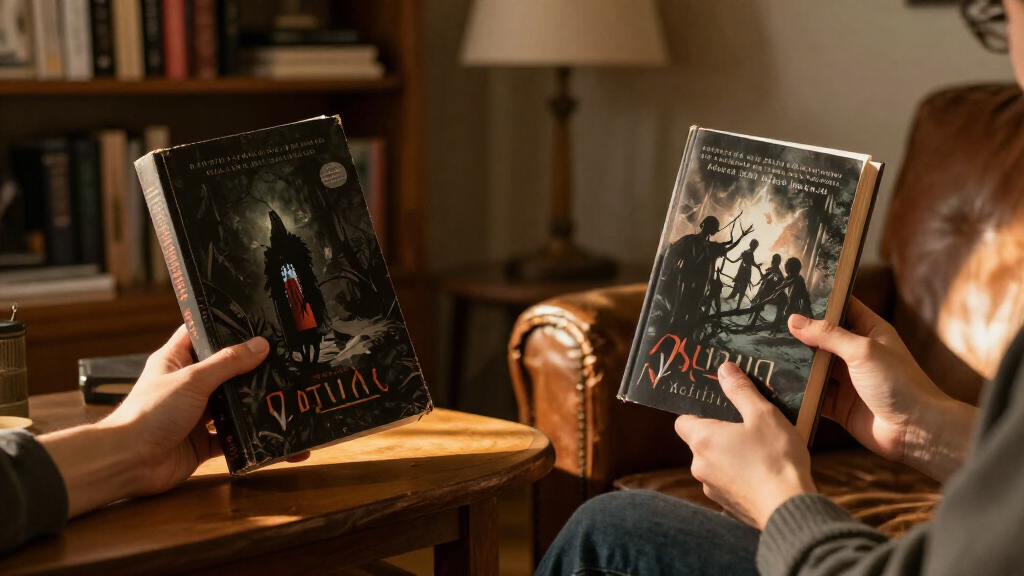
A hardcover’s dust jacket, the boards beneath it, and a paperback’s printed cover can all carry different designs, so inspect the exact editions if artwork matters to you. A book’s visual presentation can set the mood before you read a single page, and it can change how a title looks on a shelf. A hardcover is not automatically rare or more collectible just because it looks substantial.
You might find a hardcover with a muted, fog-colored jacket and a striking design printed directly on its boards. The paperback of the same title could use brighter, more graphic artwork. One may fit your dark, restrained shelf; the other may be the cover you want to display face-out beside a stack of autumn reads.
Presentation also affects where you feel comfortable reading. Some readers enjoy showing an eerie cover on the coffee table. Others prefer a discreet design on a bus or in a waiting room. If you want to make that choice, view the full jacket and the boards underneath it; a retailer’s front-cover thumbnail may hide a different back, spine, or case design.
Collectors should distinguish appearance from scarcity. Special, signed, or limited editions may attract interest, but an ordinary hardcover can be common, and a paperback can be sought after. Collectibility depends on specifics such as demand, condition, printing, signatures, and provenance. For your own shelf, the most satisfying edition may simply be the one whose artwork you still enjoy seeing after the novelty wears off.
Use This Side-by-Side Check to Make a Fair Choice
A side-by-side comparison works best when you record the same details for both copies: cost, size, weight, condition, design, and edition-specific contents. This gives you a practical way to compare the exact books rather than relying on assumptions about hardcover or paperback. The results can point in different directions, and that is useful information.
Suppose you are choosing between a hardcover for your home shelf and a paperback for a weekend trip. The hardcover may offer sturdier boards and a dust jacket you love. The paperback might be lighter, easier to carry, and less costly to replace if it gets bent in your bag. Which tradeoff matters depends on what you plan to do with the book.
| What to compare | Hardcover often offers | Paperback often offers |
|---|---|---|
| Protection | Rigid boards that help protect pages and spine | Flexible cover that can crease or show wear sooner |
| Portability | More weight and bulk, especially in large formats | Lighter handling and easier carrying |
| Display | Dust jacket or substantial shelf presence | Often a compact profile; art varies by edition |
| Cost and access | Can cost more; varies by title and availability | Often costs less and may be easier to find |
| Contents | May have edition-specific extras | May have different extras or text; verify details |
Use the table as a prompt, not a verdict. A well-kept paperback with the text and art you want can be a better fit than a damaged hardcover. For a title you expect to reread and display, the balance may tip the other way.
Check the Details That Change an Edition’s Contents
Hardcover and paperback versions usually share a book’s main text, but revisions, bonus material, and editorial changes can vary by edition. Check each copy’s contents and publication details before assuming the formats are identical. An introduction, afterword, illustrations, or bonus story may change what you get from a familiar title.
For example, you may have read a paperback years ago and want a hardcover for a collection. The new hardcover could add an introduction that discusses the book’s history, while the paperback might contain a bonus story absent from that printing. The title on the front cover will not tell you which extras are inside.
Use the publisher’s description or a reliable catalog to verify the contents, then check that the ISBN matches the physical book or listing. If you are buying used, ask whether any inserts or extras remain with the copy. A missing insert can matter if it is part of what attracted you to that edition.
Recent publishing patterns include paperback releases following hardcover launches, refreshed covers for new editions, and special editions aimed at collectors. Timing and availability vary by publisher and title, so you cannot assume that every paperback arrives on the same schedule or reproduces every hardcover feature. If the added material matters, make the contents list part of your comparison before you buy.
Match the Book to Your Budget, Routine, and Collection
Choose a paperback when light handling, easy carrying, and a lower purchase cost fit your plans; choose a hardcover when its protection, design, or specific contents justify the extra bulk and cost for you. Prices vary with publisher, age, demand, and availability, so format alone cannot predict the cost. Your own use is the clearest guide.
If you are trying a new author and do not know whether you will keep the book, a paperback can be a sensible first read. You can carry it to a café, lend it to a friend, and decide later whether the story deserves a place in your permanent collection. If a particular edition has artwork you love or an introduction you want to read, a hardcover may be worth its extra shelf space.
Think about where the book will spend most of its time. A copy that stays at home on a display shelf has different demands from one that rides in your backpack every day. If you reread a title each winter, sturdy construction may pay off in fewer visible creases; if you mostly read once and pass it along, a lighter edition may suit you better.
Used copies add another practical question: condition. Ask about spine damage, missing dust jackets, annotations, and included inserts. A clean paperback can be a more satisfying purchase than a hardcover with a torn jacket and loose pages, while a carefully preserved hardcover may be the right keepsake for your collection.
Frequently Asked Questions
Is the text different in hardcover and paperback?
The main text is usually the same, but revisions, editorial changes, and bonus material can vary by edition. Check the contents and ISBN for the specific copies you are comparing.
Which format lasts longer?
A well-made hardcover usually gives the pages and spine more protection because its boards are rigid. A dust jacket can still scuff or tear, and storage conditions can damage any book.
Is a hardcover worth the extra cost?
It may be if you value sturdy construction, a particular design, or edition-specific extras. A paperback often makes more sense when you want a lighter book or a lower-cost copy to carry and read.
Are hardcovers always more collectible?
No. Format alone does not establish scarcity or value; demand, condition, printing, signatures, and provenance can matter. A standard hardcover may be common, while a paperback can be sought after.
How can I check whether an edition includes extra material?
Look for an edition-specific contents list or publisher description and verify the ISBN. Retail listings can combine details from different formats, so check a catalog or the book’s copyright page if the distinction matters.
Conclusion
When you compare hardcover and paperback horror editions, start with the exact copies, then weigh how you will read, carry, and keep them. Choose for the book’s real job in your life: a travel companion, a reread-ready favorite, or a striking piece on the shelf.
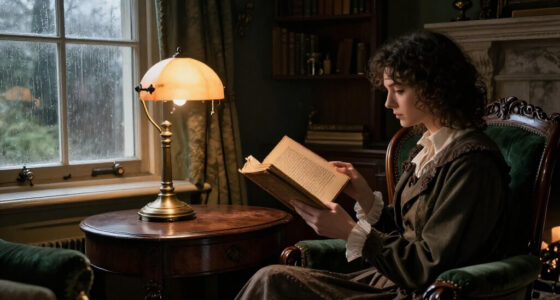
The right edition is the one you will want to open again when the house grows quiet and the last lamp throws a long shadow across the page.
Halloween Picks

Thuodo 8 FT Tall Halloween Inflatable Three-Headed Dragon with LEDs

HOPOCO Halloween Pumpkin Fog Machine with 12 LED Colors and 4 Light Modes

Panefright Halloween Window Projector – Scary Projector for Spooky Decor
As an affiliate, we earn on qualifying purchases.