
TL;DR
Horror anthologies are a natural fit for readers who enjoy short stories because each piece offers a complete encounter with a new fear, voice, or setting. Start with a broad survey such as The Dark Descent, a strange and literary mix such as The Weird, or a single-author collection such as Skeleton Crew, depending on whether you want history, variety, or one writer’s style.
A short horror story can turn an ordinary hallway into a place you hesitate to enter. That compact jolt is part of the pleasure: you get a complete atmosphere, a sharp turn, and an image that may follow you after you close the book.
Horror anthologies make that pleasure easy to revisit. They move between writers, eras, and kinds of fear, so you can read one story before bed or spend an afternoon following a theme. This guide pairs multi-author anthologies with single-author collections, explains what each offers, and helps you choose a book that fits your appetite for the eerie, the literary, the classic, or the graphic.
For readers who love short stories, these books are a natural fit: you can enjoy short fiction in deliberate, bite-sized sessions without losing the atmosphere of a longer reading experience. The right collection feels like a cabinet of curiosities, with each drawer opening onto a different shadow.
Choose a multi-author anthology for a wider range of voices and a single-author collection for one writer’s changing styles.
Start with The Dark Descent for a broad survey, The Weird for uncanny variety, or Skeleton Crew for a varied single-author introduction.
Match the collection to your mood: eerie, literary, surreal, gothic, or graphic horror offer different reading experiences.
Check edition contents and publication years, especially for annual best-of collections.
Use descriptions and content notes to find an intensity level that suits you, then pause between stories to let their endings linger.
Best Horror Anthologies for Readers Who Love Short Stories
One story, one complete encounter with fear. Move between writers, eras, and eerie worlds at your own pace, then follow the image that stays with you after the book closes.
Pick the kind of variety you want
A collection feels cohesive when its stories share an editorial thread: a theme, a historical moment, a mood, or one writer’s evolving voice.
Anthology
Several writers offer distinct styles and fears. Ideal for discovery, contrast, and sampling a wider corner of horror.
Single-author collection
Follow one writer through different settings and forms, noticing how a familiar voice changes the rules from story to story.
Theme or place
Separate stories gain a shape through a recurring setting, subject, or unease—even without a continuous plot.
-
01
Choose a mood
Uncanny, classic, literary, or graphic?
-
02
Match the scope
Many writers, one writer, or one shared world?
-
03
Let it linger
Pause between stories and follow the voice you remember.
Eight collections, eight different doors
Use this mood check to find a promising starting point, then confirm the contents of the edition you plan to read.
| Book | What you get | Good fit if you want |
|---|---|---|
| The Weird Ann & Jeff VanderMeer, editors | Wide-ranging weird fiction where horror meets the uncanny and surreal. | Ambiguity and strangeness alongside scares |
| The Dark Descent David G. Hartwell, editor | A substantial survey arranged to show forms and traditions of horror. | A broad introduction to genre history |
| The Mammoth Book of Best New Horror Stephen Jones, editor | Annual volumes gathering notable short fiction from their publication periods. | A snapshot of horror at a particular time |
| Her Body and Other Parties Carmen Maria Machado | Literary and speculative experiments exploring bodies, relationships, and power. | Contemporary, idea-rich fiction |
| North American Lake Monsters Nathan Ballingrud | Dark, atmospheric stories place monstrous elements beside human hardship. | Unease rooted in difficult lives |
| The Books of Blood Clive Barker | Multi-volume horror known for graphic imagery and inventive transformations. | Visceral, imaginative horror |
| Skeleton Crew Stephen King | A varied mix of supernatural horror, suspense, and speculative stories. | One author’s range and several entry points |
| The October Country Ray Bradbury | Classic stories with gothic atmosphere, fantasy, nostalgia, and unease. | A quieter, autumnal chill |
Contents, introductions, and publication details can vary by edition. Annual best-of volumes change over time; check current publisher catalogs and award lists before calling any volume the latest.
Three reliable routes into horror
Choose the book whose promise fits tonight’s mood. A memorable story can lead you toward an author or subgenre you want to explore next.
The Dark Descent
A substantial survey of horror forms and traditions—a useful map for readers exploring the genre.
The Weird
Horror, surreal fiction, and the uncanny meet in a broad collection for readers who enjoy ambiguity.
Skeleton Crew
Move among supernatural unease, suspense, and speculative stories while staying with one distinctive voice.
The October Country
Gothic atmosphere, fantasy, nostalgia, and a quieter chill make this a fitting seasonal companion.
Her Body and Other Parties
Horror and speculative forms open questions about bodies, relationships, and power.
North American Lake Monsters
Monstrous elements sit beside difficult human lives in dark, atmospheric stories.
The Books of Blood
Graphic imagery and inventive changes to ordinary settings shape a more intense experience.
The Mammoth Book of Best New Horror
Explore individual volumes for notable short fiction from a particular publication period.
Let mood set the pace
These are reading directions, not a universal scare score. Descriptions and content notes can help you find an intensity and subject matter that feel right for you.
New voices, changing landscapes
Recent anthologies, specialist presses, magazines, and award shortlists keep short horror in view.
More lived experience
Collections increasingly foreground stories shaped by race, gender, sexuality, migration, and place.
Fear in familiar spaces
Folk horror, climate anxiety, and domestic unease continue to shape the kinds of stories readers seek.
Horror keeps expanding
Literary and speculative fiction meet horror, opening fresh forms for uncanny and unsettling ideas.
Choose the kind of variety you want from a horror collection
A good horror collection gives you complete stories with distinct moods, while a good anthology also creates a reason for those stories to sit together. That thread might be a shared theme, a historical moment, or a particular kind of strangeness. If you want to explore how many shapes horror can take, a multi-author book can feel like a walk through rooms designed by different architects.
“Anthology” usually means a book selected or edited from several writers. A single-author collection gathers one writer’s stories, even when the stories vary in subject and tone. Usage can blur, but the distinction helps when you are deciding whether you want many voices or a sustained encounter with one writer’s habits.
Consider a reader who enjoys a quick, unsettling story on the train but has no patience for a novel’s long setup. An anthology lets that reader finish a piece at one stop and meet a completely different voice the next day. Stories usually stand alone, though a book with a frame or carefully built sequence may reward reading in order.
Before choosing, ask what kind of variety sounds appealing: different authors, different styles from one author, or a shared setting that makes separate stories feel connected. The editorial thread matters because it turns a stack of stories into a reading experience with shape. A theme can be as subtle as a recurring unease; it does not need a single plot to hold the book together.
Popular right now

KitchenAid Classic Series 4.5 Quart Tilt-Head Stand Mixer K45SS, Onyx Black

Ninja Flip Toaster Oven and Air Fryer, 8-in-1, Stainless Steel, SP151

Vitamix Propel Series 510 Professional-Grade Blender, 3 Programs, Black
As an affiliate, we earn on qualifying purchases.
Find a starting point that matches your mood
The best horror anthologies depend on what you want from a story: a historical overview, an uncanny puzzle, a strong single-author voice, or a more visceral shock. Start by matching the book’s range and intensity to your reading mood, then let one especially memorable story lead you to a writer or subgenre you want to follow.
- For genre history: David G. Hartwell’s The Dark Descent is a substantial survey arranged to show different forms and traditions of horror.
- For the strange and surreal: Ann and Jeff VanderMeer’s The Weird: A Compendium of Strange and Dark Stories mixes horror with uncanny and surreal fiction.
- For one writer’s range: Stephen King’s Skeleton Crew moves through supernatural horror, suspense, and speculative stories.
- For a classic autumn mood: Ray Bradbury’s The October Country blends gothic atmosphere, fantasy, nostalgia, and unease.
- For contemporary literary experimentation: Carmen Maria Machado’s Her Body and Other Parties brings horror and speculative forms into questions of bodies, relationships, and power.
Imagine browsing in a library with only ten minutes to choose. A broad survey suits you if you want a map; a single-author book suits you if you prefer to settle into one voice. Your best entry point is the book whose promise you actually want to read tonight, not the title that sounds most complete or canonical.
Compare these collections by the reading experience they offer
These books differ in scope, voice, and intensity, so a quick comparison can help you choose. Multi-author anthologies give you more stylistic range; single-author collections let you notice how one writer keeps changing the rules of their own fiction.
| Book | What you get | Good fit if you want |
|---|---|---|
| The Weird, edited by Ann and Jeff VanderMeer | A wide-ranging mix of weird fiction, the uncanny, and the surreal | Ambiguity and strangeness alongside horror |
| The Dark Descent, edited by David G. Hartwell | A substantial survey of horror traditions and forms | A broad introduction to the genre’s history |
| The Mammoth Book of Best New Horror, edited by Stephen Jones | Annual volumes collecting notable horror short fiction from their publication periods | A snapshot of genre fiction around a particular time |
| North American Lake Monsters, by Nathan Ballingrud | Dark, atmospheric stories where monstrous elements meet human hardship | Unease rooted in difficult human lives |
| The Books of Blood, by Clive Barker | Multi-volume short horror fiction known for graphic imagery and inventive transformations | Visceral, imaginative horror |
| The October Country, by Ray Bradbury | Classic stories with an autumnal, gothic edge | Fantasy, nostalgia, and a quieter chill |
For example, someone who enjoys leaving a story slightly puzzled may find The Weird more satisfying than a collection built around direct scares. A reader seeking an overview can use The Dark Descent as a broad shelf companion. Use the table as a mood check, then look at the publisher’s description for a particular edition: collections can vary in contents, introductions, and publication details.
Follow a single writer when you want a steadier voice
A single-author collection is the better choice when you want range within one recognizable voice. Instead of adjusting to a new writer with every story, you can watch one author test different forms, settings, and kinds of dread. It is like hearing one musician move from a spare piano piece to a storm of percussion without leaving the same album.
Skeleton Crew is a practical example: its mix of supernatural horror, suspense, and speculative fiction gives readers several routes into Stephen King’s short fiction. You might read one story for its familiar supernatural unease, then keep going because the next one changes the pace. The Books of Blood offers another kind of continuity, with Clive Barker’s inventive transformations and graphic imagery shaping a more intense experience.
For a different atmosphere, Nathan Ballingrud’s North American Lake Monsters places supernatural or monstrous elements beside human hardship. That combination can make a strange presence feel less like a puzzle to solve and more like part of a difficult landscape. If you prefer literary experimentation, Carmen Maria Machado’s Her Body and Other Parties blends horror and speculative fiction with attention to bodies, relationships, and power.
Think of how you choose music for a long drive: sometimes you want a sampler; sometimes you want to stay with one album long enough to recognize its recurring motifs. Choose a single-author collection when the writer’s sensibility is part of the appeal, and check descriptions for intensity if graphic material changes your enjoyment.
Use short stories to sample horror’s changing traditions
Anthologies can show you how horror changes across styles and eras, because each story offers a compact meeting with its own voice and concerns. A historical survey such as The Dark Descent helps readers see different forms and traditions side by side. Annual volumes in Stephen Jones’s The Mammoth Book of Best New Horror offer another kind of record: each volume gathers notable short fiction from the period it covers.
Older collections can still be rewarding, especially when you want to trace the genre’s atmosphere and storytelling choices. They can also contain dated language or assumptions, so reading them with attention to their context helps. Think of an old house in a ghost story: its creaking beams tell you about the place’s history, even as you notice what a modern renovation might change.
Contemporary horror collections and publishing have drawn attention to voices and experiences less visible in older genre surveys, including stories shaped by race, gender, sexuality, migration, and place. Interests such as folk horror, climate anxiety, domestic unease, and overlaps with literary or speculative fiction also appear in recent conversations around the genre. That is a broad publishing trend, not a claim that every new collection shares the same themes.
When you see an annual “best of” label, check the volume’s year and the period its selections cover. Publication context helps you read the book accurately; it also makes the collection a useful time capsule rather than a timeless ranking. For a gift, pairing an older survey with a newer book can show how horror’s concerns and voices continue to shift.
Build a reading ritual that lets each story linger
Short horror fiction works especially well when you give each story a little breathing room. A ten-page tale can carry a full atmosphere, but its final image may need a few quiet minutes before you turn to the next one. Reading several stories in a row can be satisfying; pausing between them helps you notice how sharply the mood changes.
Try this simple approach when you open a new collection:
- Read the introduction and contents page. Check whether the editor explains a theme, sequence, or historical frame.
- Pick a story by its promise. If you want folklore, look for a setting or description that points that way; if you want a quick chill, choose a shorter piece.
- Pause after the ending. Give the last image a moment before another writer’s voice replaces it.
- Mark the stories that stay with you. A note in the margin or a bookmark can point you toward a writer to explore later.
- Check content descriptions when needed. Horror ranges from suggestive and eerie to graphic and disturbing.
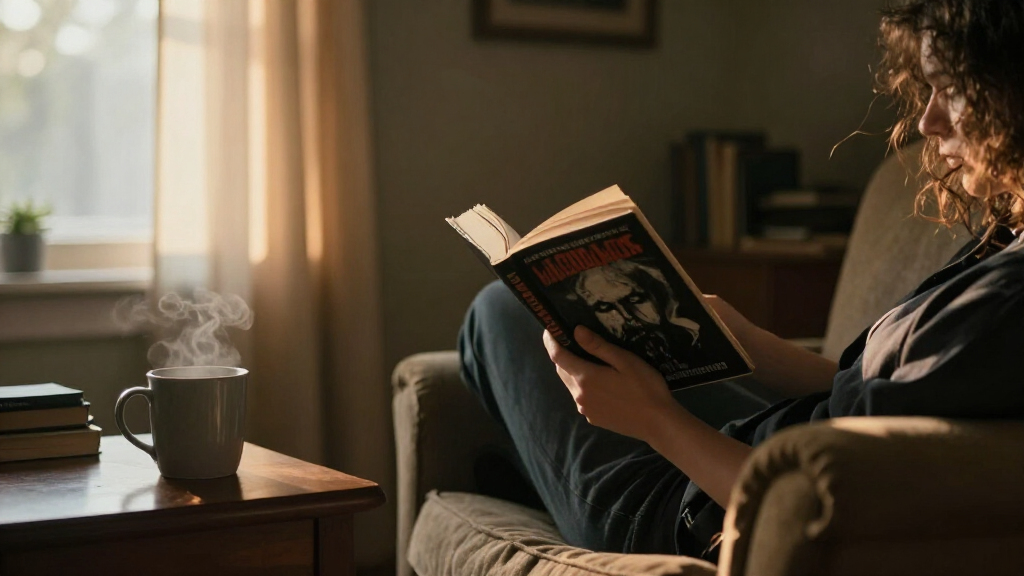
Picture a rainy evening, one lamp on, and a collection open beside a mug that has gone cool. You read one story, close the book, and let the wind at the window belong to the room again. That pause is part of the form: a short story gives you permission to stop while the unease is still humming.
Check intensity and edition details before you buy or borrow
The word “horror” covers a wide range, so check descriptions and content notes if particular subjects or levels of graphic detail affect your reading choices. Some stories rely on suggestion and atmosphere; others use more visceral imagery. A book’s reputation or title alone may not tell you which experience you will get from every story.
For instance, someone who likes eerie stories before bed but avoids graphic scenes might start with Bradbury’s autumnal blend of fantasy and unease, then check descriptions before choosing a more visceral collection such as The Books of Blood. A reader looking for a more literary or uncanny mood might sample Machado or the VanderMeers. These are starting points, not guarantees that every story will match one neat label.
Edition details matter too. Multi-author anthologies may change between editions, and introductions, contents, or selection periods can differ. Annual series such as The Mammoth Book of Best New Horror are especially tied to the years they represent. If you are browsing a used-book shelf, compare the contents page and publication information rather than assuming every volume in a series is interchangeable.
For a gift, match the recipient’s preferred tone and reading habits. A themed anthology may make the choice easier than a book known for intense material, while a single-author collection can be a thoughtful pick if you know the writer they enjoy. Let the reader’s comfort and curiosity guide the choice; a well-matched book is more inviting than the most intimidating title on the shelf.
Frequently Asked Questions
What is a horror anthology?
A horror anthology is a book containing multiple short stories, commonly selected or edited from several writers. The stories may share a theme, setting, mood, or historical period. A single-author collection is closely related but gathers stories by one writer.
Are anthology stories connected, or can I read them out of order?
Most anthology stories stand alone, so you can usually read them in any order. Some books use a framing story or a deliberate sequence, and an introduction or contents page may explain that structure. If the collection has a clear theme, reading in order can make the connections easier to notice.
Which horror collection is a good starting point for a beginner?
It depends on what kind of horror you like. The Dark Descent offers breadth across horror traditions, while The Weird suits readers who enjoy uncanny and surreal fiction. If you would rather get to know one writer’s style, try a collection such as Skeleton Crew.
Are there horror collections that are more literary than frightening?
Yes. Her Body and Other Parties blends horror and speculative fiction with literary experimentation, while The Weird includes uncanny and surreal stories alongside horror. These books can emphasize voice, symbolism, and strangeness as much as direct scares.
How can I find a collection with the right level of intensity?
Read publisher descriptions and content notes, and look for reviews that describe tone and material. Horror spans quiet unease through graphic or disturbing imagery, and a single collection can vary from story to story. If you are uncertain, borrow a copy or sample a story before committing to the whole book.
Are older horror anthologies still worth reading?
Often, yes: older surveys can reveal how horror’s styles and concerns have changed. You may also encounter dated language or assumptions, so it helps to read with the book’s historical context in mind. Comparing an older survey with a contemporary collection can make those shifts more visible.
Conclusion
Choose your next horror collection by the experience you want: a map of the genre, a cabinet of strange ideas, or a sustained visit with one writer’s imagination. Then read one story at a time and let the silence after its last line do some of the work.
A good anthology does not ask you to stay in one nightmare all night. It leaves a door ajar, and lets you decide when to look inside again.