
TL;DR
A small-press horror special edition is worth judging by the book inside, the physical materials, the artwork, and the publisher’s specific claims about quantity and fulfillment. Check exactly what you’ll receive, what the total cost will be, and whether you want the edition for reading, collecting, or both; “limited,” “signed,” and “deluxe” do not guarantee quality or future value.
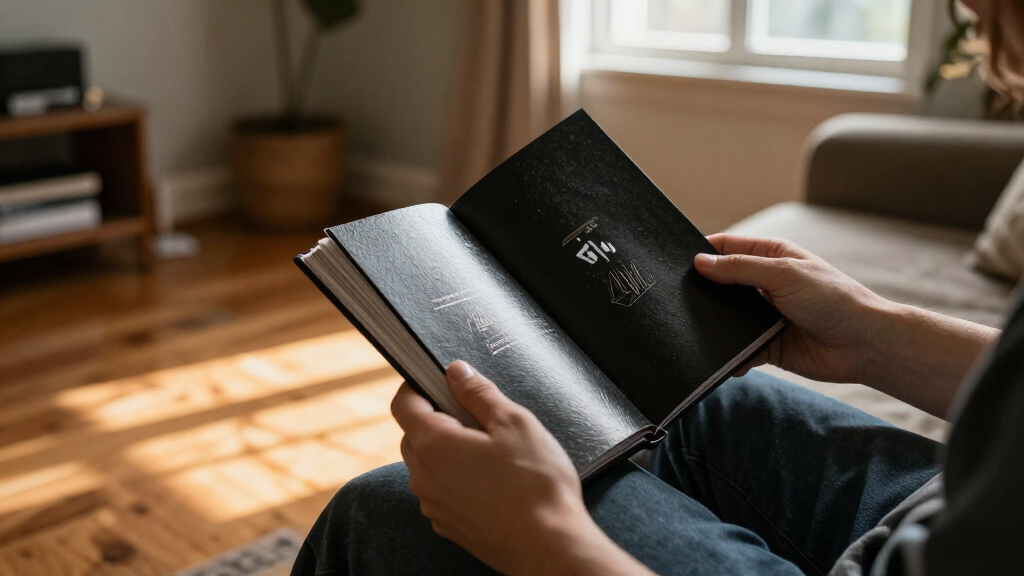
A black-foil cover can stop you mid-scroll, but it cannot tell you whether the stories are complete, the illustrations are original, or “limited” applies to this printing alone. That gap between atmospheric packaging and useful information is where a thoughtful buying decision begins.
Small-press horror editions can be much more than books with a striking cover. You might find a revised text, a credited artist’s interior work, a signed limitation page, or paper chosen to suit the design. You’ll learn what to look for in the contents, production, artwork, print-run language, publisher’s track record, and full cost—and how to decide whether a special edition fits the way you read and collect.
Verify the exact text and complete contents before judging bonus features.
Use binding, paper, size, printing, and included parts—not “deluxe” alone—to assess production.
Check what a stated print limit applies to; limited does not mean every format will disappear.
For a preorder, confirm production status, estimated delivery, and damage or refund policies.
Compare the full cost with what you personally value: reading comfort, art, display, or collecting.
Check the story before you fall for the cover
What to look for in a small-press horror special edition begins with the text: confirm which work you’re buying, what version it is, and whether the listed contents are complete. A special edition can add a revised text, new stories, an introduction, or appendices, but the words “collector’s edition” alone don’t tell you which. Start with the contents page or publisher’s detailed description.
Imagine you’re considering a handsome collection with a red-and-black jacket and an illustrated endpaper. The listing calls it a new edition, but doesn’t say whether it includes every story from the earlier collection or adds previously uncollected work. Before you place an order, look for a table of contents, a clear statement about revisions, and names for the editor, translator, and other contributors where applicable.
Then ask the more personal question: is this the kind of horror you want to read? A beautifully designed folk-horror anthology won’t satisfy you if you’re in the mood for quiet ghost stories. A useful edition description gives enough detail for you to judge both the book’s contents and its fit for your taste.
- Check whether the text is standard, revised, or newly collected.
- For an omnibus, anthology, or collection, verify the full contents.
- Look for credits for editors, translators, illustrators, and other contributors.
Those checks can save you from buying an impressive object that duplicates what you own—or leaves out the story you wanted to read.
Popular right now

Philips Café Aromis Automatic Espresso Machine with LatteGo Pro Milk System

KitchenAid Artisan 5-Qt Tilt-Head Stand Mixer – Dried Rose (KSM150PS)

De'Longhi Rivelia Fully Automatic Espresso Machine with Milk Frother, White
As an affiliate, we earn on qualifying purchases.
Judge the book by its actual materials and build
What to look for in a small-press horror special edition’s physical production is a list of concrete specifications, not a cloud of words such as “premium” or “deluxe.” Check the binding, covering, jacket or slipcase, paper, page count, trim size, printing, and any inserts. The more exact the description, the easier it is to picture the book before it arrives.
For example, “hardcover” tells you less than “clothbound hardcover with printed boards, a dust jacket, and a 6-by-9-inch trim.” Those details suggest how the book may feel in your hands and whether it fits your shelf. If the listing gives a page count but says nothing about paper or interior color, don’t assume every illustration appears in full color.
Photographs help, but check what they show. A mock-up may use shiny foil or vivid color that differs from the final printed object. Look for images of an actual copy, or a comparable title from the same press, especially when the edition includes a slipcase, tipped-in art, or unusual finishes. A publisher’s past books can give you a practical sense of its design and production choices, though one release cannot guarantee another will match.
| Feature | What to check | Why it matters |
|---|---|---|
| Binding and cover | Hardcover, paperback, cloth, paper, or faux leather | Shows what the book is made to feel and withstand |
| Jacket or case | Dust jacket, printed boards, slipcase | Clarifies which protective or display pieces are included |
| Paper and printing | Color, finish, and printing method when stated | Sets expectations for text and image reproduction |
| Size and contents | Trim size, page count, inserts, and endpapers | Helps you judge shelf fit and what arrives in the package |
A crisp, small-format paperback may suit a reader who actually carries a book around; a large illustrated hardcover may make more sense as a display piece. Neither is automatically better. Match the build and materials to how you plan to use the book.
See whether the artwork adds more than atmosphere
What to look for in a small-press horror special edition’s artwork is whether the design has clear credits, a defined purpose, and a connection to the book—not just a dramatic cover. Find out who created the cover and interior art, whether the work is original or reused, and how many illustrations the edition includes. A few precise details beat a vague promise of “exclusive art.”
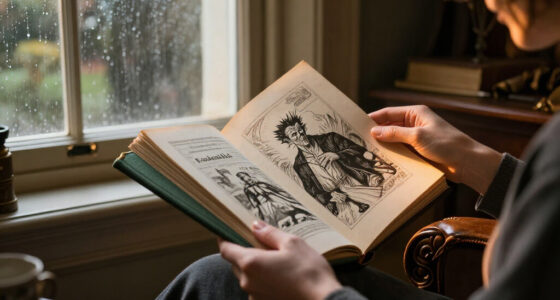
Say a listing advertises an illustrated edition of a haunted-house novel. Does that mean one new cover image, six black-and-white interior plates, or a full suite of color illustrations? Those are very different experiences. If the publisher shows sample pages, notice how images sit beside the text: an illustration that echoes a recurring image in the story can deepen the reading, while an unrelated insert may function mainly as a collectible extra.
Design includes more than pictures. Type choices, chapter headings, margins, and the way a jacket opens can build a consistent mood without making the text hard to read. A blood-red title against charcoal boards may look striking on a shelf; cramped type or low-contrast pages may frustrate you by chapter three.
Good design serves the story and the reader. If an edition celebrates an artist’s work, look for the artist’s name, the number and format of the images, and examples of how they appear in the book.
When details are scarce, ask the publisher a direct question before ordering: “How many interior illustrations are included, and are they color or black and white?” A clear reply helps you understand what you’re paying for, especially if artwork is the feature that drew you to the edition.
Translate “limited,” “signed,” and “numbered” into facts
What to look for in a small-press horror special edition’s scarcity claims is the exact limit, what it applies to, and whether the publisher explains the edition’s variants. “Limited” might refer to one cover, one print run, a signed batch, or a bundle—not every version of the book. A stated number gives you a fact to check; it does not, by itself, prove quality or future resale value.
Imagine a press offers a numbered run of 300 copies with a black cover, plus a separate standard hardcover. The numbered edition may be limited while the title remains available in another format. Ask whether the figure refers to copies produced, copies in that particular state, or a preorder tier. If a signed edition and a numbered edition are separate options, check whether copies are both signed and numbered or only one of those things.
It’s also worth checking how the publisher handles practical snags. Does the listing explain replacements for damaged copies or what happens if an order is canceled? Are multiple cover variants shown clearly? A small press may change production plans because demand or manufacturing conditions change, so a specific statement about what is planned is more useful than an impression of scarcity created by a countdown clock.
- Find the stated quantity and the exact version it describes.
- Check whether the copy is signed, numbered, both, or neither.
- Look for separate covers, bundles, later formats, or planned reprints.
- Read the policy for cancellations, damaged books, and replacements.
Scarcity can make an edition exciting to collect. It cannot promise that the book will rise in value. Buy because you want the story, the design, or the particular edition—not because a limited number sounds like a guaranteed investment.
Check the press’s track record before you preorder
What to look for in a small-press horror special edition’s publisher is a record of clear descriptions, useful updates, and responsive handling of problems. Review earlier releases, production notes, customer-service information, shipping terms, and refund or replacement policies. You’re looking for evidence that the press communicates what it is making and tells buyers what to expect.
Preorders and crowdfunding can help a small press gauge demand and offer unusual design features. They also mean the book may not be printed yet. If you’re looking at a campaign for an illustrated hardcover, check whether the pages are finished, whether production is underway, and what delivery window the publisher gives. A book that is in stock is a different purchase from a project still moving through editing, printing, or binding.
A delay alone does not tell you how a project will turn out. Printing schedules can shift, and a publisher’s occasional update may explain a real production issue. Vague promises, repeated changes to promised specifications, or long gaps without useful information are reasons to pause and ask a question. A straightforward reply about the current stage of production gives you more to work with than a polished promotional image.
- Read the listing for the current status: in stock, preorder, or still in production.
- Review the press’s previous releases and recent updates.
- Confirm the estimated delivery window and any shipping restrictions.
- Save the listing and order confirmation so you can compare promised details later.
- Check how the publisher handles refunds, damage claims, and replacements.
For instance, if you order from outside the publisher’s country, a delivery estimate may not include extra time for international shipping. The press’s policies and updates help you understand that uncertainty before you pay, rather than after you start checking the mailbox each morning.
Work out the full cost—and what you personally value
What to look for in a small-press horror special edition’s price is the complete cost beside the features you actually want. Add shipping, taxes, and possible import charges to the listed price, then compare that total with other formats. The price may cover the text, custom materials, artwork, a signature, or a bundle of extras, but you should be able to identify what you’re choosing to pay for.
Picture two options: a standard paperback you can read on the train and a large signed hardcover with a slipcase that will sit on a shelf. If you want a portable copy, the hardcover’s extras may matter less than a durable paperback you’ll happily carry. If you collect illustrated editions, the jacket, paper, and credited art may justify a higher total for you. The right choice depends on your priorities, not on which tier the publisher presents as most exclusive.
Readers and collectors can value the same book differently. A reader may care most about a complete text and comfortable type; a collector may also care about condition, matching editions, or a limitation page. Neither approach is more valid. The useful question is whether the edition gives you the things you value at a cost you accept.
- Reading: prioritize text, legibility, size, and a binding you’ll use.
- Display: look closely at the cover, slipcase, and how the finished object is photographed.
- Collecting: verify condition expectations, edition details, and what is included in the set.
- International orders: include shipping and possible import costs in your comparison.
Resale prices are unpredictable, and signatures or numbering do not guarantee that a copy will become more valuable. A special edition is easiest to enjoy when the book would still appeal to you even if its secondary-market price never changed.
Use this seven-question checklist before you buy
What to look for in a small-press horror special edition before you buy is easiest to remember as seven questions: what text is included, what the book is made of, who created the art, what “limited” means, whether it is ready to ship, what the full cost is, and why you want this version. Answering those questions turns a glossy listing into a practical decision.
Try the checklist on a hypothetical preorder: a press offers a clothbound ghost-story collection with a numbered run, an illustrated slipcase, and estimated delivery later in the year. You’d check the complete story list, ask how many copies are in the numbered run, confirm whether the illustrations are inside the book or only on the case, and see whether the book is already printed. Then calculate shipping and decide whether the display features matter enough to you.
- What text, stories, and bonus material are included?
- What are the binding, size, paper, page count, and included parts?
- Is the artwork original, credited, and described clearly?
- What exact version or quantity does “limited,” “signed,” or “numbered” describe?
- Is the book in stock, in production, or still a preorder?
- What will shipping, taxes, and other charges add to the total?
- Do you want the edition for reading, collecting, display, or a mix?
Keep a copy of the listing or save the product details at checkout, especially for a preorder whose specifications may change. If one answer is missing, ask the press before placing the order. A short, specific question can clear up whether an appealing listing matches the book you actually expect to receive.
Frequently Asked Questions
What makes a small-press horror edition special?
There’s no single definition. A special edition may include a revised text, bonus stories, original art, an unusual binding, or a signed or numbered printing. Check the listing for the specific features rather than relying on the label.
Does “limited edition” mean the book will never be reprinted?
No. The limit may apply to one print run, cover, bundle, or format while another edition appears later. Check which version the quantity describes, and ask the publisher if the wording is unclear.
Does a signed or numbered copy guarantee higher value?
No. A signature or number may matter to you as a collector, but neither guarantees resale demand or a higher future price. Buy the copy because you value the book and its features.
How can I tell if a small press is communicating clearly?
Look at the press’s previous releases, specific production updates, product details, and policies for shipping, refunds, and damaged books. For a preorder, check whether the book is printed or still in production and whether the delivery estimate is explained.
What should I check before preordering a special edition?
Confirm the text and physical specifications, any stated print limit, current production status, delivery estimate, full shipping cost, and refund or replacement policy. Save the listing and confirmation so you can refer to the promised details if plans change.
Conclusion
Before you buy, make sure the book inside, the craft you can verify, and the total cost all make sense to you. A limited number or dramatic cover can add appeal, but neither replaces a clear contents list or a publisher willing to explain the details.
Choose the edition you’ll be glad to read, display, or keep—not the one that merely sounds rare. The best horror book on your shelf is the one whose shadows still draw you back after the foil has caught the light.