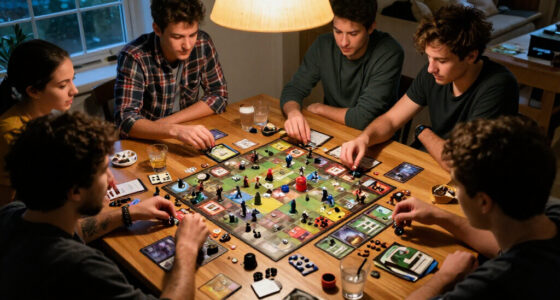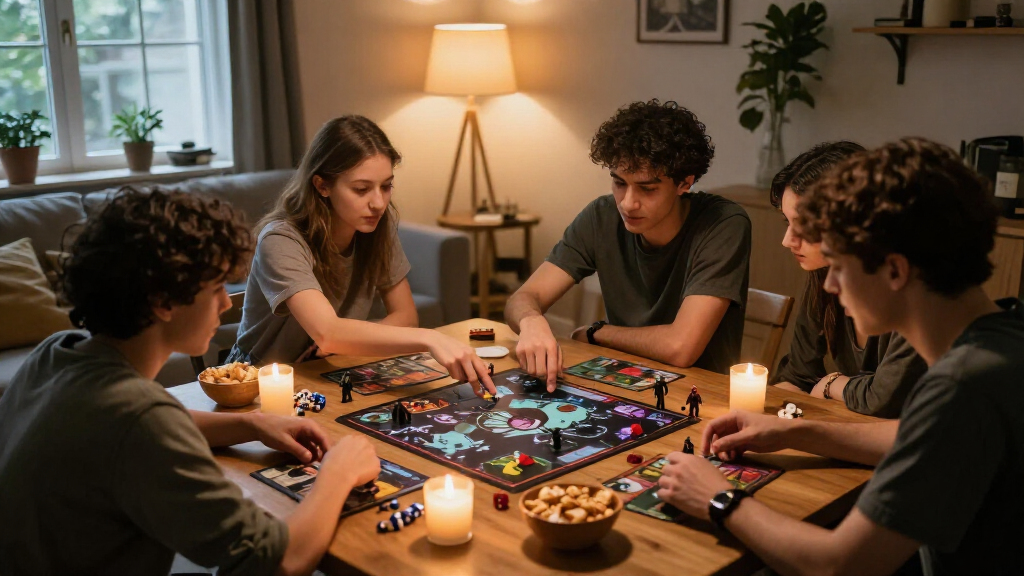

TL;DR
To choose a horror board game for your group, match its theme and tension to the players, then check its player count, complexity, length, and commitment. A cooperative mystery can suit a casual screen-free evening, while hidden roles or a campaign may work better for a group that enjoys suspicion or can meet regularly.
A horror board game can turn an ordinary table into a room full of whispered theories, rattling dice, and one suspicious glance across the map. But a game that thrills one group can leave another bored, frustrated, or uneasy. The best choice comes from matching the experience to the people who will actually play.
This guide helps you weigh theme, tension, player count, and commitment before you buy or borrow. You’ll see how to check content, choose between cooperative and hidden-role play, and spot practical snags such as long setup or app requirements. The goal is simple: find a game that makes your group want to gather around the table again.
There isn’t one perfect horror board game for every group. A cozy night of deduction calls for a different kind of dread than a loud, competitive party game, and your choice depends on what your players find fun.
Check the theme and content notes against what every player is comfortable with.
Use player count, rules complexity, and playing time to match a game to your actual schedule.
Ask whether your group enjoys pressure, player elimination, bluffing, or shared teamwork.
Choose a campaign only if your group can return for the sessions it needs; check whether components can be reset.
Review table space, setup, and app requirements before game night.
Choose horror for your group
The right game matches its theme, tension, and mechanics to the people around the table. Check practical fit before game night so everyone can enjoy the suspense.
Start with the group
Ask what kind of horror feels fun and how your friends like to play.
Find the right dread
Choose from gothic mystery, supernatural investigation, cosmic horror, or survival. Check content notes for themes players would rather avoid.
Teamwork or suspicion?
Cooperative games bring players together against a threat. Hidden roles add bluffing and social deduction for groups that enjoy suspicion.
Keep everyone involved
Timers and scarce resources can raise pressure. Check whether setbacks or early elimination leave players with meaningful choices.
Fit the night you have
Player count is a starting point; more players can mean richer discussion and longer waits between turns.
Compare playtime with your evening, including setup and learning the rules.
A clear standalone mystery can suit a casual night; a campaign takes repeat sessions.
Review space, setup demands, app requirements, and whether campaign components can be reset.
Know the tradeoffs
Extra features can shape the experience as much as the horror theme.
- Cooperative play makes the threat a group challenge.
- A standalone game is easier to bring to a casual gathering.
- Fewer ongoing commitments between sessions.
- Hidden roles add bluffing and suspicion.
- Campaigns can build an evolving story over repeat sessions.
- Apps can add audio or timed events, but require a screen.
Before you choose
Use this quick check to match the game to the people and the evening.
- Confirm the theme and content notes work for everyone.
- Check recommended player count, playtime, age guidance, and rules complexity.
- Ask whether the group likes pressure, elimination, bluffing, or teamwork.
- Consider how often the group can meet and whether the game can be replayed.
- Use reviews or playthroughs to assess the table feel; check the edition and player count.
Choose the kind of horror your group actually enjoys
Choose a horror theme your players can enjoy discussing and inhabiting, not just one that sounds spooky on the box. Horror board games range from gothic mysteries and supernatural investigations to cosmic dread and survival stories; the mood and subject matter shape the whole evening. Read the game description and content notes before you decide.
For example, a group that likes old mansions, creaking doors, and solving clues may enjoy a gothic investigation. Friends who prefer strange creatures and impossible choices may want cosmic horror. A slasher premise or a story with character deaths can feel like a different night altogether, so check that everyone is comfortable with those themes.
Horror is personal. One player may love an eerie soundtrack but dislike sudden shocks; another may enjoy a monster hunt but want to avoid graphic subject matter. Ask the group what sounds fun and what they would rather skip. A quick chat before game night works like checking the weather before a hike: you can pick the right coat before you’re caught in the rain.
Look for content notes from the publisher and consult reviews or playthroughs when the description leaves questions. A video can help you judge whether a game’s atmosphere feels moody, startling, or intense. Check that the coverage concerns the edition you’re considering, since features and content can vary between editions.
- Ask about themes before choosing a scenario.
- Check content notes for subjects your players want to avoid.
- Match the mood to the evening, from eerie investigation to high-pressure survival.
Popular right now

De'Longhi Rivelia Fully Automatic Espresso Machine with Milk Frother, White

iRobot Roomba 105 Robot Vacuum with LiDAR Navigation

TCL 65-Inch QM6K QLED Mini-LED 4K HDR Smart Google TV, 144Hz
As an affiliate, we earn on qualifying purchases.
Match the game’s length and rules to your game night
How to choose a horror board game for your group starts with the kind of evening you can actually schedule: check the player count, playing time, age guidance, and rules complexity. These details shape how much of the night is spent learning and waiting versus making tense decisions together. A one-shot game can fit a casual gathering, while a campaign asks people to return for more sessions.
Imagine six friends meeting after work, with two people new to tabletop games and a hard stop at 10 p.m. A sprawling campaign with a lengthy rules explanation may leave little time for the story to unfold. A standalone mystery with a clear objective gives them more time to plan, argue over clues, and enjoy the reveal. The tradeoff is that a simpler game may offer fewer systems to explore over repeated plays.
Read the recommended player count as a guide, then consider how the group likes to take turns. Some games give every player a meaningful decision each round; others grow slower as more people weigh in. With a crowded table, discussion can become richer, but each person may have less time to act and longer waits between turns. A game for your regular four-person group might feel very different with seven players, even if the box allows that number.
Pay attention to the stated playtime, but leave room for teaching and setup. First-time players often need extra minutes to learn the rules and choose their actions, and a rushed ending can undercut the suspense the game spent hours building. If your group has a short window, look for a game with a quick start, or learn the basics before friends arrive. That preparation trades a little organizer time for more play time together.
- Count your players and check the recommended range.
- Set a time limit for the whole evening, including setup and rules.
- Choose the right weight: lighter rules for new players, more depth if your group enjoys learning systems.
- Ask how often you can meet before choosing a multi-session campaign.
Pick a tension level that keeps everyone in the game
Pick a horror board game whose pressure feels exciting rather than punishing for your group. Some designs let players plan carefully and recover from setbacks; others turn each decision into a race against time, scarce resources, or an unseen threat. Pressure can make ordinary choices feel dramatic, but it also narrows the space for discussion. The right tension level depends on whether your friends enjoy scrambling or want room to think.
Picture a group that loves talking through every move. A game with a timer can sharpen that conversation into quick, nervous whispers, which may be thrilling for them. The same timer might feel miserable to players who want to compare options or who are still learning the rules. Before choosing, ask whether your group enjoys making decisions under pressure or prefers to build a plan together; the answer affects whether a timer heightens suspense or simply makes people feel rushed.
Player elimination changes the mood, too. If someone is removed early, they might spend a long stretch watching instead of playing. That can make a setback feel consequential, but the cost is that one person loses the shared experience while everyone else continues. A game that keeps eliminated characters involved—or avoids elimination—can suit a group that wants everyone active until the end, especially when the evening is short.
Some horror board games create suspense through limited supplies, hidden information, and uncertain outcomes without forcing players out of the story. That gives your group tension with room to respond: losing a resource may make the next choice harder without ending someone’s participation. Check reviews and playthroughs for how setbacks affect the table, and remember that the same mechanic can feel dramatic to one group and frustrating to another.
A useful test: if a player loses a character or resource early, do they still get meaningful choices for the rest of the game?
For instance, a group that enjoys comeback stories may relish a desperate final turn after a setback. A group that values everyone’s participation may prefer a design where a mistake costs time or supplies but leaves all players making decisions. Think about what your players will experience during the quiet stretches, not just how thrilling the final reveal sounds.
Decide whether you want teamwork or suspicion
Choose cooperative play when your group wants to face the threat together, and hidden-role play when people enjoy bluffing and social deduction. Both styles can bring horror to life, but they create different kinds of table talk. In a cooperative game, players share clues and plans; in a hidden-role game, every helpful offer might prompt a raised eyebrow. That shift affects whether the main challenge is solving the game’s puzzle or reading the people around the table.
Consider four friends investigating a haunted house. In a cooperative game, they may divide up rooms, manage shared resources, and debate where to search next. This gives the group a common problem to solve, though a confident player can start directing everyone. Check whether the design gives each person clear choices or useful information to contribute; otherwise, the team may technically act together while one person makes most of the decisions.
A hidden traitor can make an ordinary discussion feel charged. If someone argues that the group should split up, is that a smart plan or a trap? That uncertainty is great for players who like bluffing, because even familiar friends get to perform a role and test each other’s claims. It can feel awkward among friends who prefer straightforward teamwork, though, especially if suspicion carries into personal feelings. Agreeing that deception belongs to the game can help keep the tension playful.
Cooperation doesn’t guarantee equal voices, and hidden roles don’t mean every player has to be an expert liar. Check how teams make decisions and whether the game offers useful roles or individual objectives. If your group includes shy players, a game that rewards listening and clue-sharing may help them join in without having to perform a dramatic accusation. A hidden-role game can also work when objectives give players concrete reasons for their actions, so bluffing is only one part of the experience.
When choosing, ask what you want to remember afterward: the shared relief of a narrow escape, or the reveal that one player quietly fed the monster false directions. Either can make an excellent horror night, but the best fit depends on whether your group finds trust or doubt more fun to play with.
Check whether a campaign is worth the commitment
A campaign can build a stronger story over repeated sessions, while a standalone game is easier to bring out whenever the group happens to meet. Campaigns often connect scenarios and carry choices forward, so your players may care more about what happens next: a decision in one session can change the risks or relationships in another. That continuity makes missed sessions more consequential, though, and some games permanently change components as you play.
For example, a group that meets every other Friday could enjoy following the same characters through an unfolding mystery. If half the players travel often, the campaign may stall whenever someone misses a session, or the story may move on without them. A standalone game lets the table experience a complete story in one evening, then choose a new adventure next time. It gives up some long-term character development in exchange for easier scheduling.
Replayability also varies. Randomized scenarios, modular setups, or changing objectives can help a game feel fresh on a return visit because players face different clues or choices. Campaign or legacy-style formats may deliver more surprise as the story changes, but permanent changes can limit replay or resetting. Look at the game’s instructions and reviews to learn what happens to its components before opening the box; that tells you whether a single playthrough is a feature you welcome or a cost you want to avoid.
If you’re unsure, try the commitment with a short campaign or borrow a copy before buying. A quick conversation can help: “Can everyone make three Friday nights this month?” is more useful than assuming the group will work it out later. Choose a format that fits your calendar, and the fictional haunt will feel more inviting than the real scheduling headache.
Make sure the box fits your table, schedule, and habits
Check the physical setup, technology, and rules-teaching demands before choosing a game. A sprawling board and a dozen miniatures can look striking, but they need room; when pieces are crowded or hard to reach, players may spend more effort managing the table than reading the story. An app may add audio, timed events, or hidden information, while becoming a drawback for players who want a screen-free evening.
Imagine hosting in a small apartment with room for four place settings and a bowl of popcorn. A large map that covers the whole table might force someone to hold their player board in their lap, making it harder to track resources or follow other players’ choices. Check the game’s components and, when possible, watch a playthrough that shows the table setup. A setup that fits comfortably helps everyone see the clues and stay part of the conversation.
Setup time and rules length change how quickly the game gets going. If one player will teach the game, make sure they have time to read the rules ahead of the gathering. Learning a detailed system together can be part of the fun for some groups, but it uses time and attention before the horror begins. Other groups would rather hear a five-minute explanation and start exploring.
Look for app requirements on the box or publisher’s information. An app-supported game may use sound to create an eerie presence in the room, like a distant knock behind a closed door, or manage hidden information that would be difficult to handle with cards alone. That convenience comes with reliance on a device, its battery, and sometimes a connection or account. Confirm what the app does and whether the game can run without it if your group wants fewer screens. Read reviews and playthroughs for practical details, and check the edition being discussed.
- Measure the table space and consider where cards, boards, and player pieces will sit.
- Check setup and teaching time against your schedule.
- Confirm app needs and whether your group wants audio or screen-free play.
- Verify the edition when using reviews or videos as a guide.
Frequently Asked Questions
What horror board game is best for beginners?
Start with a game whose rules, playing time, and player count match your group, rather than choosing by theme alone. A standalone cooperative game with a clear goal can make it easier for new players to learn together. Check the game description and a playthrough to see how much teaching it needs.
Which horror board games work well for two players or a large group?
Check the recommended player count and look for reviews that discuss the number you plan to play with. A game can allow a wide range of players but feel very different at each end; turns may get slower as the table fills. If you’re hosting six or more, look for evidence that discussion and decision-making stay lively at that count.
How long does a typical horror board game take?
Playing times vary, so check the game’s stated duration and leave extra room for setup and teaching. A first session can take longer while everyone learns the rules. For a weeknight gathering, a standalone game with a shorter playtime may fit better than a campaign session.
Are horror board games actually scary or mostly suspenseful?
Many rely on suspense, uncertainty, and atmosphere rather than startling players. Limited resources, hidden threats, eerie sound, or tough decisions can make a table tense without a jump scare. Watch or read a playthrough if you want a better sense of how a particular game feels.
In cooperative play, players work together against the game’s threat and usually share information. Hidden-role games give some players secret goals or identities, which can bring bluffing and suspicion to the table. Pick cooperation for shared problem-solving and hidden roles for a group that enjoys playful mistrust.
Can you replay a campaign or legacy horror board game?
It depends on how the game handles story progress and components. Some campaigns use scenarios or modular elements that support repeat play, while legacy-style games may include permanent changes that make a reset difficult. Read the game’s instructions before starting if replayability matters to your group.
Conclusion
Choose a game that gives your group the kind of fear it wants to share: a slow mystery, a frantic escape, or a table full of suspicious glances. Check the theme, tension, player count, and commitment before you commit to the box.
When those pieces fit, even a small clue or a quiet roll can make the room feel different. Pick the game your friends will still be talking about when the candles burn low.