
TL;DR
Choose apothecary bottles for gothic decor by matching their color and size to your room, then mix a few distinct shapes for a collected look. Check vintage glass for damage and online listings for dimensions, coating, and condition; style the bottles with restrained labels and props, and only add liquid to bottles confirmed watertight and suitable for it.
A dark glass bottle can make an ordinary bookshelf feel like it holds a story. But a shelf full of matching bottles can look more like a shop display than a cabinet of curiosities.
Apothecary bottles are glass vessels inspired by the storage jars once used in pharmacies and dispensaries. For gothic decor, their old-world silhouettes, deep colors, and carefully chosen labels can set a mood without turning your home into a stage set. The trick is to choose pieces for their shape, scale, condition, and intended use, not just for a dramatic photograph.
This guide walks you through those choices, from comparing antique glass with new reproductions to building a display that feels personal. You’ll also find practical checks for buying online, safe display ideas, and ways to keep a shelf atmospheric without crowding it.
Mix a few bottle silhouettes—such as a square-shouldered bottle, a ribbed jar, and a narrow-necked vessel—for a collected look.
Let one glass color dominate, then use a second shade as an accent that relates to your books, wall, or metal decor.
Treat “antique-inspired” and “vintage-style” as appearance descriptions, not proof of age; inspect condition and ask sellers specific questions.
Measure the shelf before buying, vary bottle heights, and leave room to see and lift each piece.
Use liquid only in bottles confirmed clean, watertight, and suitable for it; decorative glass isn’t automatically safe for food, medicine, or chemicals.
How to Choose Apothecary Bottles for Gothic Decor
Build a cabinet of curiosities with glass chosen for its silhouette, scale, color, and condition. A few thoughtful pieces can make a bookshelf feel like it holds a story.
Start with shape, then fit the shelf
Apothecary bottles are glass vessels inspired by the storage jars once used in pharmacies and dispensaries. Their outlines set the mood before small details or labels come into view.
Give each bottle a role
Pair angular square shoulders with a ribbed jar or narrow-necked vessel. A broad jar anchors; a tall neck draws the eye upward.
Vary height, keep breathing room
Measure the shelf, mantel, or table first. Larger pieces can anchor a display; smaller bottles cluster well. Leave space to see and lift each one.
Choose the mood
A secure matching stopper completes a silhouette. Missing or mismatched stoppers can still suit a relaxed curiosity shelf; they do not guarantee a watertight seal.
Let glass color echo the room
Choose based on the shelf and its actual light. A vivid product photograph can look quite different in a shaded hallway; try a bottle against the wall before building a whole group.
Repeat a shade, add one surprise
Let one glass color dominate and use a second as an accent. Amber can pick up book covers and brass; a single green or cobalt bottle adds contrast without turning the shelf into a rainbow.
Colored throughout or coated?
Black or dark finishes create a strong silhouette, but some are painted or coated. Ask the seller: coatings may need gentler care and can reveal another color at edges or chips.
Vintage character or reproduction consistency?
Vintage glass can bring irregular details and individual history; new reproductions tend to offer predictable condition and easier matching. Compare the piece you want with the checks it requires.
| Choice | What you may like | What to check |
|---|---|---|
| Vintage glass | Bubbles, seams, worn surfaces, and one-of-a-kind character | Chips, cracks, sharp edges, stopper fit, and seller claims |
| New reproduction | Consistent shape, condition, and available colors | Whether dark glass is coated and whether a label is included |
Check the details the photos can hide
Before ordering, compare listed dimensions with your shelf and inspect every photo. Ask specific questions about damage and finish, then review the return policy. Clear answers help prevent surprises.
Atmosphere comes from editing
Pair bottles with books, brass, candleholders, framed prints, or natural curiosities. A consistent label style and a repeated color or material can make varied pieces feel collected.
Measure
Know the usable shelf width and height.
Choose
Pick a few profiles in varied heights.
Connect
Repeat one color, label style, or material.
Edit
Leave room around each bottle and its props.
Start with the bottle shapes that give your display character
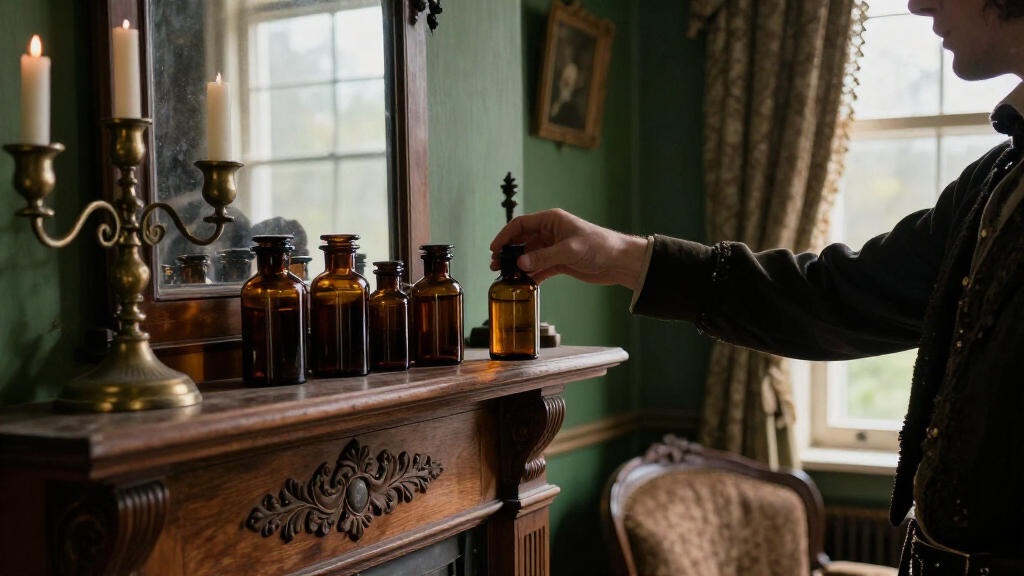
Apothecary bottles are glass vessels inspired by the storage jars once used in pharmacies and dispensaries, and their shapes can help your display feel collected. Look for square shoulders, ribbed sides, narrow necks, or rounded stoppers; mixing two or three profiles usually creates more visual interest than arranging a matching set.
Shape variety matters because the eye reads a group by its outline before it notices small details. Imagine a narrow, amber bottle beside a squat clear jar and a ribbed cobalt vessel. Their outlines break up the shelf like old book spines, while a repeated detail—perhaps dark stoppers—ties them together. For instance, if your mantel is already busy with framed art, choose a small group of three bottles with different heights but a shared color family. A coordinated feature keeps variety from becoming visual noise.
Shape also affects how a bottle reads from across the room. A broad jar can anchor a display, while a tall neck draws the eye upward; a round stopper adds a softer note beside angular shoulders. These distinctions matter most when you can’t fill a shelf with many pieces: each bottle has to contribute a recognizable form. Three distinct silhouettes can feel more considered than a dozen near-identical bottles, while too many unrelated shapes can make a small group seem accidental.
Before buying, check whether the stopper belongs to the bottle and sits securely. A matching stopper completes the silhouette and makes the piece feel more resolved, but it does not make an old bottle watertight. Some vintage pieces have mismatched or missing stoppers, which can still work as decor, especially in a relaxed curiosity shelf, but may look less finished in a formal arrangement. Decide which mood you want before treating a missing part as a flaw or a charming detail.
Popular right now

Shark AI Ultra Robot Vacuum, Black/Silver, AV2511AE

Dyson V8 Cyclone Cordless Vacuum

KitchenAid Classic Series 4.5-Quart Tilt-Head Stand Mixer, Onyx Black
As an affiliate, we earn on qualifying purchases.
Pick glass colors that suit your room and its light
Choose bottle colors by considering both the room’s palette and the light that reaches the display. Clear glass gives you a restrained vintage look, while amber, cobalt, green, and violet bring richer color; black glass or a dark finish creates a stronger silhouette against a pale wall. This choice affects more than decoration: color determines whether a bottle catches attention, blends into its surroundings, or lets its contents become part of the display.
Color changes over the day. A cobalt bottle near a window can catch a blue edge in afternoon light, while amber glass looks warm beside a brass candleholder. In a dim hallway, those subtler shifts may disappear, so a darker bottle may read mostly as a shape. Think about the lighting where the bottle will actually sit; a color that looks vivid in a sunlit product photo can appear nearly black on a shaded shelf. Try holding a candidate bottle against the shelf or wall before you commit to a full group.
One practical approach is to repeat a color rather than use every shade at once. For instance, two amber bottles and one green bottle can echo the brown covers of nearby books without making the display feel like a rainbow. One dominant glass color gives the collection a clear thread; one contrasting bottle can supply the surprise. A narrow palette makes individual differences in shape and texture easier to notice, while too many competing colors can make the bottles read as separate purchases rather than a collection.
Ask whether dark glass is colored throughout or merely painted or coated. That difference changes how light travels through the glass: a coating can look opaque across the surface while leaving a different color at an edge or chip. It also affects cleaning, since abrasive scrubbing may mark or remove a finish. Product descriptions and photographs may not make this clear, especially online, so ask the seller directly. A dramatic finish can be a good choice, but only if you understand the appearance and care it will require.
Compare vintage bottles with new reproductions before you buy
Vintage bottles offer irregular details and a one-of-a-kind history, while reproductions usually offer more consistent condition and easier matching. Your better choice depends on whether you value age and variation or a predictable finish for a coordinated display. Vintage variation can give a shelf a sense of accumulated character, but it also means each piece needs its own inspection; a reproduction set may be easier to arrange, though uniform shapes and labels can feel more like a retail display.
| Choice | What you may like | What to check |
|---|---|---|
| Vintage glass | Bubbles, seams, worn surfaces, and individual character | Chips, cracks, sharp edges, stopper fit, and seller claims |
| New reproduction | Consistent shape, condition, and available colors | Whether dark glass is coated and whether a label is included |
These traits are clues about an object’s appearance and condition, not proof of its age. “Antique-inspired” and “vintage-style” describe a look; they don’t establish that a bottle is genuinely old. That distinction matters if you are paying for age, provenance, or a particular period, but less if you simply want the silhouette and color. For instance, if a listing offers a set of six matching black bottles with identical labels, treat them as reproductions unless the seller provides credible evidence otherwise.
For online purchases, inspect every photo and compare the listed dimensions with your shelf. Ask about damage and whether the glass is colored throughout or coated, and review the return policy before ordering. Clear, specific answers reduce the chance of receiving a bottle that is too large, damaged, or finished differently than expected. Vague wording can leave you guessing whether an attractive irregularity is a bubble, a scratch, or a crack—and those possibilities carry different consequences for display and handling.
Build a bottle group that fits your shelf instead of crowding it
Apothecary bottles for gothic decor work best when their height and spacing suit the surface beneath them. Use a few larger pieces to anchor a mantel or console, then add smaller bottles in a cluster; leave visible breathing room so each silhouette can be seen. Spacing is part of the composition: when pieces touch or overlap, the eye reads them as a mass, and their distinct shapes stop contributing to the display.
Start by measuring the usable width and height of your shelf, especially if it sits under a cabinet or framed print. A tall bottle that nearly touches the frame can make the arrangement feel cramped, even if it looked elegant in a product photo. For instance, a narrow three-foot bookshelf might suit one medium bottle, two small ones, and a stack of books better than eight scattered jars. Measuring also helps you decide whether to buy fewer larger bottles or several smaller ones, since the same number of pieces can occupy very different amounts of visual space.
For a simple setup, use this sequence:
- Choose an anchor: place the tallest or broadest bottle slightly off-center. Its size gives the group a clear starting point.
- Add a counterweight: set a shorter, wider bottle on the opposite side. This balances the anchor without making the arrangement mirror itself.
- Fill one gap: use a small bottle or a book stack to bridge the heights. A limited addition creates a transition; several additions can erase the open space that keeps the display readable.
- Step back: remove any piece that hides another bottle or makes the group feel crowded. Looking from a distance shows whether the shapes still read clearly as a group.
Varying heights adds depth, but too many different scales can look accidental. Repeat one material or color—such as amber glass and brass—to keep the arrangement coherent. A compact group with room around it often feels more atmospheric than a dense line of bottles pressed edge to edge because each piece has room to cast a shadow and catch the light.
Use labels and contents to suggest a story without faking history
Labels and contents can give a bottle group a sense of purpose, but restraint makes the display more convincing. Choose a consistent label style, keep wording brief, and treat Latin-inspired or botanical names as decorative language rather than proof of historical use. A label directs attention and implies a story, so too many precise-looking claims can make a display feel staged or suggest a provenance you cannot support.
A row of labels in the same cream-and-black palette can link bottles of different shapes, much like matching bookplates on unrelated volumes. For instance, you might label one small bottle “Dried Rose” and leave another bare, letting the contrast create a natural pause. Covering every surface in tiny text tends to make the glass hard to see and the arrangement feel like a prop table. Leaving some bottles unmarked also gives the eye a rest and makes the labeled one feel like a deliberate focal point.
For contents, consider dried flowers, beads, colored water, faux specimens, or empty glass. A little dried stem inside a clear bottle adds texture; colored water can make a cobalt vessel glow, though only use liquid if the bottle is clean, watertight, and intended to hold it. Decorative bottles aren’t automatically food-safe, and they shouldn’t store medicine or chemicals unless they are specifically made and labeled for that use. Contents change the bottle’s visual weight too: a filled clear vessel may draw more attention than an empty dark one, so use them to balance the group rather than filling every bottle by default.
Real apothecary history can inform the look without requiring invented claims about a particular bottle. If you don’t know an object’s age or original purpose, let its shape and finish speak for themselves. That honesty suits a personal collection: a reproduction with a carefully chosen label can be beautiful without pretending it came from an old dispensary.
Pair bottles with a few objects that deepen the gothic mood
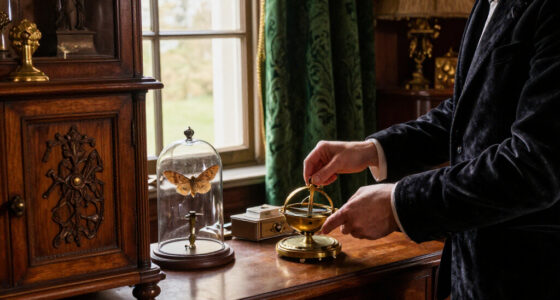
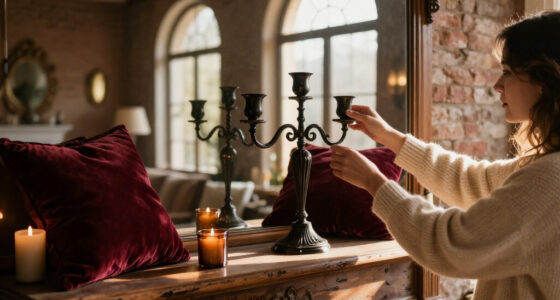
Apothecary bottles look at home beside objects with related materials, colors, or histories. Combine glass with old books, brass, candleholders, framed prints, or natural curiosities, then repeat one detail to connect the group instead of giving every object equal attention. The repeated detail creates continuity; limiting the number of supporting objects keeps the bottles legible as the main subject.
For example, place two amber bottles beside a worn black book and a brass candlestick, with the tallest bottle near the edge of the arrangement. The warm metal and paper soften the dark glass, while the varied heights keep the scene from turning into a flat row. If your room leans toward dark academia, an open book or framed botanical print can blend the bottle display into the rest of the space. Each prop shifts the mood slightly: a book suggests study, while a botanical print gives the bottles a more scientific association.
Keep a practical eye on placement. Bottles near a frequently used doorway or the edge of a narrow mantel can get knocked over; move fragile glass away from busy paths and unstable stacks. If you use candles, give the flame ample clearance and follow the candle maker’s safety directions. A bottle can suggest an old laboratory without sitting so close to a flame that its display becomes an avoidable hazard.
Repeat a material or color to bind a varied collection together. Three mismatched bottles may feel intentional if each catches the same amber tone or sits near dark wood, while five colors and several competing props can make the shelf feel noisy. Choose a focal point, then let the surrounding pieces support it. The focal point gives the viewer somewhere to look first; props that compete for attention weaken that sense of order.
Keep old glass safe, clean, and easy to enjoy
Check every bottle for chips, cracks, sharp edges, and an unstable stopper before placing it on display. Small irregularities may add character, but damage changes how safely a bottle can be handled and where it belongs. A rough rim can cut a hand during dusting, while a crack may worsen if the bottle is moved or filled. Damaged glass may be unsuitable for a shelf near children, pets, or everyday activity.
Look closely at the rim and base in bright, indirect light. A chipped lip can be hard to notice in a dim shop, while a crack may show as a line that catches light differently from the glass around it. If a stopper wobbles, you can display the bottle without it rather than forcing the fit; forcing it risks stressing the neck. For instance, a bottle with a damaged neck might work as a stationary decorative object in a protected cabinet, but it’s a poor choice for a spot where you’ll move it often. The right decision depends on whether the bottle can remain stable and out of reach, not simply on whether the flaw is visible.
Dust glass with a soft cloth and handle it over a stable surface. For a bottle with an unknown history or a fragile finish, avoid aggressive scrubbing and harsh cleaners; ask the seller about its coating and use gentle care suited to that finish. If you plan to rinse a vintage bottle, check that it has no damage and can be safely cleaned before adding water. Old residue or a narrow neck can make cleaning difficult, and not every decorative piece needs to be filled. Cleaning methods that work on plain glass may harm a painted surface or leave moisture where it is hard to remove.
Keep the display enjoyable by leaving enough space to lift each bottle without knocking its neighbor. A little dust on an undisturbed cabinet may suit the atmosphere, but a sticky surface or loose stopper quickly turns charm into inconvenience. Stable placement and gentle handling protect both the glass and your daily routine.
Frequently Asked Questions
What makes a bottle an apothecary bottle?
An apothecary bottle is a glass vessel inspired by the storage containers once used in pharmacies and dispensaries. For decor, the term often describes bottles with distinctive profiles, stoppers, or labels that recall that old-world look.
Which bottle colors suit gothic decor?
Amber, cobalt, green, violet, and black or dark-finished glass all suit gothic displays. Clear glass works too, especially when you want a restrained vintage feel or want dried flowers and other contents to show.
Should I choose antique bottles or reproductions?
Choose vintage glass if you value individual irregularities and a one-of-a-kind appearance, and reproductions if you want more consistent condition or matching pieces. Check for damage either way, and don’t treat “antique-inspired” as proof that a bottle is genuinely old.
What can I safely put inside decorative bottles?
Common display choices include dried flowers, beads, faux specimens, and colored water. Use liquid only if the bottle is clean, watertight, and intended to hold it; don’t store food, medicine, or chemicals in decorative bottles unless they are specifically made and labeled for that use.
How can I style apothecary bottles without cluttering a shelf?
Start with one larger bottle, add a shorter bottle on the other side, then use a small piece to bridge the space if needed. Repeat a color or material to connect the objects, and step back to remove anything that hides a bottle or crowds the arrangement.
Conclusion
Choose bottles that suit your actual shelf, not just the mood of a listing photo. A handful of varied shapes, one clear color thread, and a few honest details can make a display feel personal and atmospheric without crowding the room.
Check the glass, ask what you need to know, and give each piece space to catch the light. Then let the bottles keep a little mystery on your shelf.