
TL;DR
Store horror Blu-rays upright in their original cases in a cool, dry place away from direct sunlight, heat, and moisture. Handle discs by the edges, return them to their cases after viewing, and give steelbooks, slipcovers, and limited editions room to avoid scuffs and dents.
A favorite horror release can look immaculate on the shelf and still skip during the quietest scene if its disc has been left loose or its case has spent a summer beside a sunny window. Good storage protects the film and the edition: the disc, artwork, slipcover, steelbook, and small extras that make a release feel complete.
You do not need a climate-controlled archive to care for a horror Blu-ray collection. You need a steady indoor spot, shelves that support cases upright, and a few careful habits when you watch and clean a disc. Those choices matter whether your shelf holds standard cases or a limited box set with embossed artwork.
This guide explains where to store your discs, how to handle them, and what to do for delicate packaging. You will also get a simple routine for organizing a collection without letting the hunt for one film turn into a shelf full of bent cases.
Store cases upright in a cool, dry indoor location away from direct sunlight, radiators, leaks, and condensation.
Use the original case when its hinge and center hub work; replace cracked cases that let discs move around.
Hold discs by the edge or center hole, then clean with a soft lint-free cloth using straight strokes from center to edge.
Give steelbooks, slipcovers, box sets, and inserts room so they do not scuff, bend, or get crushed.
Use a simple catalog to track special editions and shelf locations, but keep the physical packaging with its release.
Collector’s field guide / Physical media care
How to Store Horror Blu-rays to Protect Their Cases and Discs
Keep the disc, artwork, slipcover, steelbook, and extras in good shape with a stable shelf and a few careful habits.
01 / At a glance
Protect the whole edition
The goal is steady, practical storage—not a climate-controlled archive. Choose a safe shelf, support cases upright, and keep special packaging from rubbing or getting crushed.
A Blu-ray’s original case does two jobs at once: its center hub holds the disc in place, while its closed shell helps keep dust and accidental contact away from the playing surface.
Environment
Choose a steady shelf
Keep cases in a cool, dry indoor room away from direct sun, radiators, condensation, and sharp temperature swings.
Position
Stand cases upright
Support them like books. Avoid hard leaning, heavy stacks, and tightly packed rows that scrape when you pull a title.
Protection
Use a sound case
Keep discs in cases that close properly and grip the center hub. Replace cracked cases or broken hubs.
Handling
Touch only the edge
Hold the outer rim or center hole. Press the hub to release a disc, then lift its edge without bending it.
Cleaning
Wipe center outward
Use a clean, soft, lint-free cloth and straight strokes from the center toward the edge. Skip abrasive cleaners.
Collector care
Give editions room
Leave space for steelbooks, slipcovers, box sets, and inserts so they do not scuff, bend, or get crushed.
02 / Pick the location
Heat, sun, and damp are the real shelf hazards
A normal interior shelf is usually a better choice than a car or an attic. Judge basements and cabinets by their actual conditions: a dry, stable spot can work; a damp corner or trapped moisture cannot.
Better conditions
Move away from
03 / The watch-to-shelf routine
Four small moves that prevent avoidable damage
A consistent routine protects the disc while keeping special editions together and easy to find.
Press the hub
Release the disc from its center and lift the rim. Hold the disc by its edge or center hole.
Keep the surface clear
Avoid touching the playing surface. Do not leave the disc loose beside remotes, snacks, or drinks.
Wipe straight outward
Use a soft, lint-free cloth and gentle strokes from the center to the edge. Avoid circular scrubbing.
Close and shelve
Check the hub holds securely, return inserts to their edition, then put the case back upright.
04 / Choose the right protection
Match the case to the release
Keep each title’s packaging with its release. A replacement case can protect a disc, but it should fit securely and preserve the edition’s identity.
| Storage choice | Protective | Watch for | Best practice |
|---|---|---|---|
| Intact original case | ✓ Good | Hub should grip firmly | Close after every viewing |
| Cracked or loose case | ~ Replace | Disc may rattle or shift | Use a compatible sound case |
| Paper sleeve | ✗ Poor long-term | Dust and repeated rubbing | Return disc to a proper case |
| Steelbook / slipcover | ✓ With room | Scuffs, dents, bent edges | Leave space; lift, don’t drag |
| Box set / digibook | ✓ Keep complete | Crushed corners, lost inserts | Store upright and supported |
05 / Make the shelf easy to use
Organize for quick returns
A simple catalog can record editions, region codes, and shelf locations. Leave a little breathing room so a search does not turn into a row of bent cases.
Cases should stand straight without being squeezed. If a title catches as you remove it, shift the row instead of tugging harder. Keep box sets and delicate finishes from pressing against neighboring cases.
06 / Quick answers
Common storage questions
Vertical or horizontal?
Upright in their cases is practical. Support the row and avoid pressure that could bend or crush cases.
Can I use a basement or attic?
Only if it stays dry and temperature-stable. Damp basements and hot attics are poor choices.
Can sunlight cause damage?
Yes. It can fade cover art and warm packaging, so keep the collection out of direct sun.
Do discs need special cases?
Original cases generally work when they close properly and the hub holds securely. Replace damaged cases.
Choose a cool, dry shelf before heat and sun damage the collection
Store horror Blu-rays in a cool, dry indoor room with a fairly stable temperature, away from direct sunlight, radiators, damp, and sharp temperature swings. Stability matters because repeated heating and cooling can stress discs and cases over time; moisture can also leave packaging musty or encourage damage to paper inserts. A normal interior shelf is usually a better home than an attic or a car, where conditions can change sharply with the weather.
A shelf beside a window may seem convenient for displaying a favorite cover, but afternoon sun can wash out the blacks and reds that give horror artwork its punch. Sun also warms the case repeatedly, so the display choice affects both appearance and the environment around the disc. Move it a few feet into shade, or use a cabinet that blocks direct sun while still letting you access the films. A cabinet trades display visibility for protection from light and dust; make sure it does not trap damp air.
Basements and attics are not automatically off limits; their conditions decide. If your basement stays dry year-round, it may work, but a damp corner near a foundation leak is a poor choice because moisture can affect both cases and paper extras. An attic that bakes in summer and chills in winter creates repeated temperature swings. In a humid room, a dehumidifier can help keep the space comfortable, but it does not replace fixing leaks or moving shelves away from condensation. Check the actual shelf area, since a room that feels comfortable can still have a damp wall or cold corner.
Darkness is not required; protection from direct light and strong heat is the practical goal. If you have a prized edition with a pale slipcover, place it inside the shelf or cabinet rather than on the sunny top row. That small choice keeps the artwork visible when you pull it down while reducing the fading that can make a once-vivid cover look uneven.
Popular right now

Shark Clean & Empty Cordless Stick Vacuum with Auto-Empty System, BU3521

Bose QuietComfort Ultra Wireless Noise-Cancelling Headphones with Spatial Audio, Black

Vitamix Propel Series 510 Professional-Grade Blender, 3 Programs, Black
As an affiliate, we earn on qualifying purchases.
Store cases upright so discs and spines stay supported
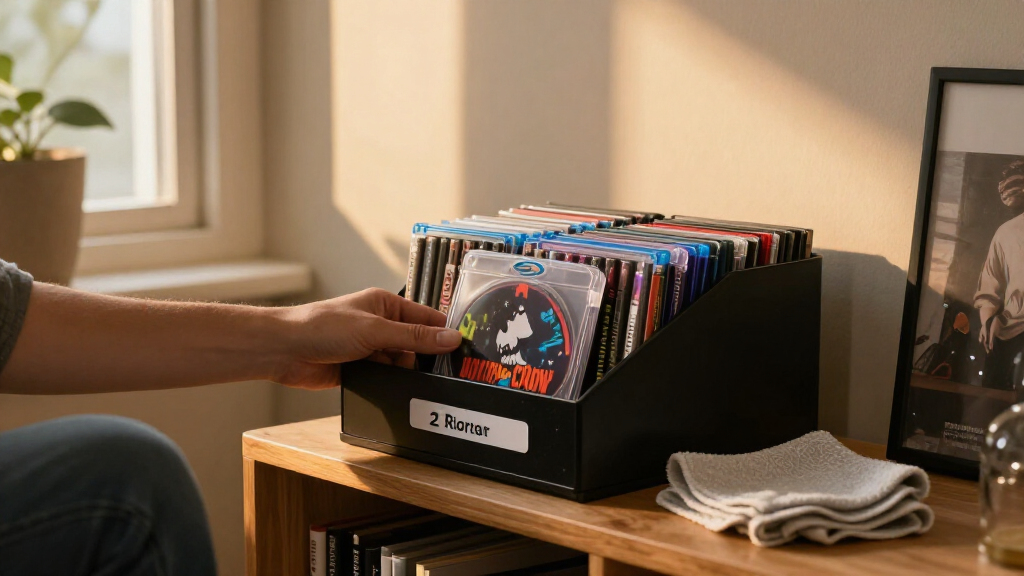
Stand Blu-ray cases upright like books, with enough support that they do not lean hard or bow. Upright storage distributes their weight along the case edges and keeps pressure off the disc and hinge. It also makes spines easy to scan, which reduces the need to pull neighboring titles around when searching. Avoid stacking heavy items on top of cases or cramming a row so tightly that every removal scrapes its neighbors.
Think of a shelf as a row of bookends: the cases should stand straight, but they should not be squeezed into place. If you have only a few discs in a wide shelf, use a bookend or divider to stop them tipping over. A stack of loose cases can shift when one title is removed, cracking corners or knocking discs against damaged hubs. A divider gives a short row support without requiring you to fill the shelf with extra titles.
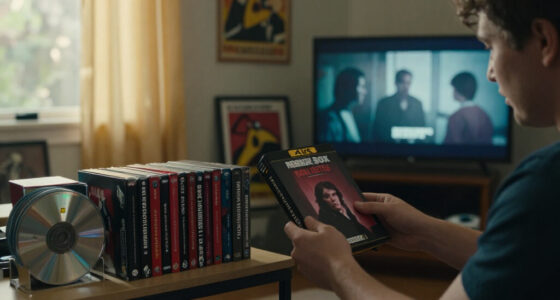
Some collectors prefer to sort by franchise, while others group films by label or subgenre. Either system works if the shelf remains easy to use. For example, keep a run of sequels together and leave a little room at the end of the row; when a new edition arrives, you can add it without forcing cases sideways or leaning them against a box set. The spare space is useful because it prevents organization from becoming pressure on the cases.
Leave a little breathing room between rows and special editions. If a case catches when you pull it out, shift the group rather than tugging harder. A tightly packed shelf may appear tidy, but repeated friction can scuff artwork and stress hinges. A small gap makes access easier and protects delicate finishes, especially on steelbooks and slipcovers.
Use original cases to keep dust and scratches away
Keep each Blu-ray in a case that closes properly and holds the center hub securely. The case shields the disc from dust and casual contact, while the hub stops it sliding around during storage. Both parts matter: a closed shell is less useful if a broken hub lets the disc rattle, and a firm hub cannot protect a disc left exposed on a table. For most everyday releases, the original case is suitable if it is intact and the disc clicks into place without force.
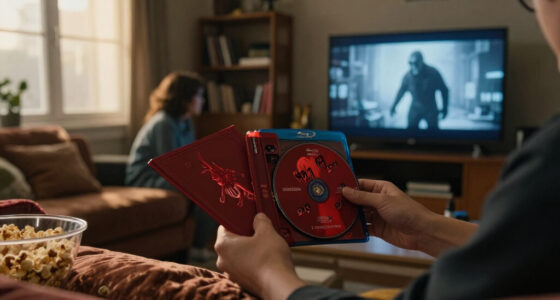
After a late-night double feature, it is tempting to leave the disc on the player or on the coffee table until morning. Put it back in its case as soon as you finish instead. While exposed, the disc shares space with remotes, mugs, and snack bowls, where an ordinary touch or spill can leave residue or scratches. Returning it promptly is a quick habit that removes those risks before you forget it is there.
If a case is cracked, has a broken hinge, or no longer grips the disc, replace it with a compatible case rather than leaving the disc loose. Check that the replacement hub holds firmly and that the case closes without pinching the disc. A horror Blu-ray collection can include standard cases, digibooks, steelbooks, slipcovers, and box sets; preserve the components that belong to each edition, including inserts and booklets. A replacement should protect the disc without separating it from the packaging that gives the edition its identity.
Paper sleeves are not a good long-term stand-in for a proper case. They can let dust in and may rub the disc when you slide it in and out, turning storage into repeated contact with the playing surface. If you are reorganizing, keep discs in their cases while you work, then return each title to its assigned shelf spot. That avoids creating a temporary pile of exposed discs that is easy to mix up or damage.
Handle each disc by its edge and clean it with straight strokes
Hold a Blu-ray by its outer edge or center hole, press the hub to release it, and lift the rim rather than bending the disc. Finger oils can leave marks on the surface, and bending or dropping it introduces avoidable physical stress. Keeping your fingers on the edge also gives you a steadier grip when removing a disc from a tight case. If fingerprints or dust appear, use a clean, soft, lint-free cloth and wipe gently from the center toward the edge.
That straight outward motion gives loose dust a path off the disc instead of tracing it around the surface. Circular scrubbing can carry grit along a curved path, while paper towels and abrasive cleaners may add scratches or residue. If you notice a smudge before a movie night, pause for a moment and clean it with a suitable soft cloth rather than rubbing at it with the sleeve of your shirt. Gentle cleaning takes less effort than trying to remove a mark made worse by hurried friction.
Cases need gentle care too. Dust their cases with a soft cloth, especially along the top edges where a shelf can leave a fine gray line. If a slipcover is dusty, remove it from the case before wiping so you do not drag grit across both surfaces. This is especially useful for dark, glossy finishes where small scratches catch the light and become more visible than ordinary dust.
Normal playback is generally less of a concern than poor handling, such as scratches, dirty surfaces, or a loose disc rattling in a damaged case. For instance, if a disc slips off its hub when you open the case, inspect the hub and replace the damaged case before the next viewing. Treat the disc like a small piece of printed artwork: touch only the parts that do not carry the image or data. This keeps routine use manageable without treating every play as a threat to the collection.
Give steelbooks, slipcovers, and collector sets room to breathe
Protect special packaging by giving it space, support, and a little extra care. Steelbooks can scuff or dent, slipcovers can develop worn corners, and box sets can crease if they are squeezed against neighboring cases. Keep valuable editions upright on a stable shelf and avoid dragging them across the surface when you retrieve another title. The extra care is useful because packaging damage is often visible even when the disc itself still plays perfectly.
Imagine pulling a steelbook from a tightly packed row: its painted edge catches on the next case, leaving a bright scratch that stands out against a dark finish. A small gap prevents that scrape and makes the title easier to remove. For especially valuable or frequently handled editions, a protective sleeve can reduce shelf wear; choose one that fits without forcing the cover or trapping a damp surface against the packaging. Sleeves add a layer of protection, but a poor fit can create pressure or make handling awkward, so fit matters more than adding plastic for its own sake.
Some releases include booklets, art cards, or posters. Keep those items with their edition, and avoid folding or wedging them behind a disc where they can bend. If you display a box set, use a shelf deep enough that the full box sits flat instead of balancing near the edge. This keeps the set stable when you reach for nearby films and prevents a fall from damaging several components at once.
Collector value often depends on completeness and condition, though no storage habit guarantees resale value. A limited edition you bought for its artwork may be worth protecting even if you never plan to sell it. Keeping inserts with the release preserves the experience of the edition and makes it easier to confirm what belongs together later. Store them where they will not be crushed by a stack of heavier releases.
Build a simple routine that keeps your shelf organized
A useful storage routine takes only a few minutes: choose a stable shelf, sort titles so you can find them, and return each disc to its case after viewing. A small catalog can record the film, edition, region code, and shelf location, which helps when standard cases, boutique releases, and box sets share the same space. The point is to make the safe choice easy: if each title has a known place, discs are less likely to be left out or special inserts separated from their edition.
- Pick the location: Use a dry indoor shelf away from direct sun, radiators, leaks, and condensation. Check that the shelf is sturdy and deep enough for your largest box set, so it sits flat and stable.
- Group the editions: Sort by filmmaker, franchise, subgenre, label, or format. Leave a little room at the end of a group for future additions; otherwise each new case may force a tight row that is harder to browse and more likely to scuff.
- Check the cases: Confirm that hubs hold discs and hinges close. Replace cracked cases before discs begin to move around, since rattling signals that the case is no longer doing its job.
- Catalog special releases: Note slipcovers, inserts, region codes, and storage locations so you can return each component to the right edition. This is most helpful when multiple editions of one film look similar on the shelf.
- Reset after watching: Handle the disc by its edge, return it to its case, and put the case back upright. Doing this immediately prevents the common mix-up of leaving a disc out while the empty case goes back on the shelf.
For example, if you keep a franchise together but own several editions of one film, record which version has the booklet and which shelf holds the steelbook. A catalog is most helpful when it saves you from opening every case to locate one release. For a smaller collection, a handwritten list may be enough; the useful system is the one you will actually maintain.
Digital access or a lawful personal backup may offer convenience if a disc is damaged, but rules for copying discs vary by location. Digital access can make a film easier to watch, yet it does not preserve the original case, artwork, or inserts. Treat it as a viewing convenience rather than a substitute for caring for the physical edition, especially when its packaging is part of why you collect it.
Match the storage choice to your room and your collection
The best storage setup depends on your room’s temperature and moisture, the size of your collection, and whether you care most about easy access or packaging condition. A closed cabinet can block dust and sunlight, while an open shelf makes browsing simple. Either can work if it stays dry, stable, and easy to reach. The tradeoff is practical: enclosed storage reduces exposure, but an open shelf may be easier to inspect for dampness and use day to day.
| Storage spot | Works well when | Watch for |
|---|---|---|
| Interior bookshelf | The room stays dry and the shelf avoids direct sun. | Cases leaning, tight packing, and dust. |
| Closed cabinet | You want to limit light and surface dust. | Stale, damp air or shelves packed too tightly. |
| Basement shelf | The basement remains dry and temperature-stable. | Leaks, condensation, and musty odors. |
| Attic or garage | Conditions stay stable through seasonal changes. | Heat, cold, moisture, and wide temperature swings. |
A collector in a small apartment might use a shaded living-room bookcase and a divider to keep a short row upright. Someone with a large collection in a basement should first check for dampness and leaks before moving the discs downstairs. In the first case, access and a compact footprint matter most; in the second, the room’s moisture history may outweigh the convenience of extra shelf space. The same shelf can be a great solution in one home and a poor one in another.
Do not chase a perfect room or a guaranteed lifespan. Blu-ray longevity varies with manufacturing, handling, and storage conditions, so no single temperature or shelf choice promises a specific result. Aim for a clean, stable place and careful habits; that is a practical standard for both everyday editions and prized releases. If a storage location has a known problem such as leaks or strong seasonal heat, correcting that problem will matter more than fine-tuning an otherwise suitable shelf.
Frequently Asked Questions
Should I store Blu-ray discs vertically or horizontally?
Store Blu-rays upright in their cases, like books on a shelf. Support the row so cases do not lean heavily, and avoid stacking heavy objects on top of them.
Can sunlight damage Blu-ray cases or discs?
Yes. Direct sunlight can fade cover artwork and heat cases or discs. Keep your shelf out of direct sun; the room does not need complete darkness.
Is a basement or attic safe for a Blu-ray collection?
It depends on the conditions. A dry, stable basement may work, while a damp basement or hot attic can expose cases and discs to moisture or temperature swings. Check the room before moving your collection there.
Do Blu-rays need special cases?
Original cases are generally suitable if they close properly and hold the disc securely. Replace cracked cases or broken hubs that let a disc rattle loose.
How should I clean a Blu-ray disc?
Use a clean, soft, lint-free cloth and wipe gently from the center toward the edge. Avoid paper towels, abrasive cleaners, and circular scrubbing.
How can I protect steelbooks and slipcovers?
Give special packaging enough shelf space to avoid rubbing against neighboring cases. A protective sleeve can reduce scuffs on a valuable edition, and storing it upright helps prevent pressure damage.
Conclusion
Give your horror Blu-rays a steady, dry shelf, keep each disc in a sound case, and handle the playing surface as little as possible. Those habits protect playback and preserve the artwork, steelbooks, and extras that make collecting satisfying.
When the lights go down for your next movie night, you want the only thing creaking to be the haunted house on screen.