
TL;DR
To choose a boutique horror Blu-ray label, start with the films you want, then compare the specific release’s restoration, extras, edition contents, region compatibility, and price. Labels such as Arrow Video, Shout! Studios, Synapse Films, Severin Films, Vinegar Syndrome, Scream Factory, Second Sight Films, and 88 Films have distinct catalogs, but their strengths and release details vary by title.
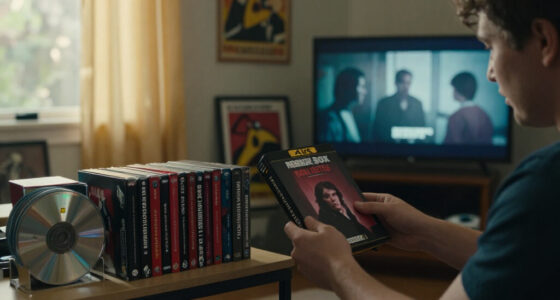
A shelf of horror discs can look like a midnight library: black spines, lurid art, and films you may have hunted for years. Yet a handsome box can hide a disc that will not play in your player, while an ordinary-looking release may contain the strongest restoration and most useful extras.
This guide helps you choose a boutique horror Blu-ray label by what you actually want to watch and own. You’ll learn how to compare catalogs, transfers, bonus material, packaging, region coding, reissues, and customer support, with practical checks you can use before placing an order.
Choose a label by the films its catalog releases, not by its reputation alone.
A 4K UHD logo does not tell you whether the restoration improves on an earlier edition.
Check which extras and printed items are exclusive to the collector’s edition.
Verify Blu-ray region coding for every disc, including discs packaged with UHD sets.
Check official reissue news and buy for the film or edition you want, not a prediction about resale value.
Collector’s field guide · Horror on disc
How to Choose a Boutique Horror Blu-ray Label
Start with the films you want. Then compare the release itself: restoration, extras, edition contents, region compatibility, and price. The right label is the one whose catalog and editions fit your collection.
Choose by
Your wishlistCatalog fit beats logo loyaltyCompare
5 detailsTransfer, extras, edition, region, priceFormats
UHD + Blu-rayCompatibility can vary by discMarket
Always shiftingLicenses, stock, and editions changeAt a glance · Five useful rules
Buy for the film and the edition
A midnight library of black spines and vivid cover art is only part of the appeal. The disc inside should suit what you watch, collect, and can play.
Choose a label by the films it releases, not reputation alone.
A 4K UHD logo does not prove the restoration improves on an earlier edition.
Find out which features and printed items are edition-exclusive.
Verify compatibility for every Blu-ray disc, including UHD sets.
Check reissue news; buy for the film or edition you want, not resale predictions.
01 · Find your shelf
Start with the horror you love
Labels are useful starting points, not promises. Catalogs overlap, licenses move, and focus can shift. Browse recent and past releases; the titles you keep spotting matter more than a striking logo.
Cult & exploitation
Follow the films
Collectors of cult and exploitation cinema may find relevant titles across companies such as Vinegar Syndrome and Severin Films.
Try this: Make a wishlist, then count which labels appear most often.
Classic studio horror
Look for a catalog trail
Scream Factory may be worth exploring for classic studio horror. Check the current title listing and edition details.
Try this: Compare several films you already enjoy with releases you hope to discover.
International & beyond
Keep the field open
Arrow Video, Synapse Films, Second Sight Films, Shout! Studios / Shout! Factory, and 88 Films offer other paths through the genre.
Try this: If you collect atmospheric Italian horror, prioritize relevant titles over elaborate packaging.
02 · Check the transfer
Format is only one part of picture quality
The source, restoration choices, and encoding all shape what reaches your screen. A strong older Blu-ray may hold up well; a new 4K release may offer a modest change if it uses similar materials.
| Listing detail | What it helps you assess | Useful question |
|---|---|---|
| Source & restoration notes | Film materials, scan, and restoration work | What was restored, and how does it compare with my edition? |
| Aspect ratio & resolution | Presentation and available formats | Does this match the intended presentation and my setup? |
| Transfer & encoding | How grain, color, contrast, and detail appear on disc | Are there meaningful technical details beyond “4K”? |
| Included discs | Whether UHD, Blu-ray, or both are supplied | For an HD-only setup, how does the included Blu-ray look? |
A new 4K scan can point to an upgrade, but compare the restoration details against the edition you already own before deciding.
03 · Read the contents
Extras and packaging have different kinds of value
On-disc extras
Look for new insight
Commentaries, interviews, documentaries, and archival footage can deepen a return visit. Check what is newly produced and what carried over.
Printed material
Check the fine print
Essays and booklets can add history and context. Confirm page count and whether the booklet appears in every edition or only a collector’s version.
Physical edition
Know what the premium buys
A slipcover, hard box, poster, or soundtrack may be appealing, but does not necessarily mean the film discs differ from the standard release.
Name your priority
Film, commentary, booklet, or shelf presentation?
Compare editions
Read standard and collector’s contents line by line.
Check what is new
Separate new features from carryovers and packaging.
Check exclusives
Look for a stated print run and precise edition-only items.
Choose your fit
Match the package to your space, budget, and enjoyment.
04 · Playback check
Check every disc against your player
Blu-rays may be region-locked. UHD Blu-rays are generally region-free for films, but a Blu-ray bundled with the same set may still have a regional restriction. Do not infer compatibility from the box’s headline format.
Blu-ray disc
Confirm the region code on the product page or disc specifications.
4K UHD disc
Generally region-free for films; still verify the specific release details.
Mixed-format set
Review each included disc separately, especially an accompanying Blu-ray.
05 · Price, timing & trust
Make the decision with current details
- Check whether a less expensive standard edition includes the same film transfer and extras.
- Look for official reissue announcements; licenses and availability can change.
- Do not treat a sellout or preorder countdown as proof that a title will never return.
- If buying a premium edition, identify the exclusive item you actually want.
- Review current region coding and included formats for the exact release.
- Consider whether the label communicates delays and handles replacement requests clearly.
Limited editions can sell out, become costly, and later return through a reissue or another license. Current listings change; verify details at the point of purchase.
Trace the choice
From wishlist to a disc you can enjoy
Start with the horror films you want to own
A boutique horror Blu-ray label is a home-video company that releases films with added attention to presentation, extras, packaging, or historical context. The best match for you is the label whose catalog repeatedly includes films you want to revisit, whether that means cult oddities, international horror, classic studio films, regional cinema, or newer independent work.
Think of a label’s catalog as a neighborhood video store: the storefront gives you a clue, but the titles on its shelves decide whether you’ll return. If your collection leans toward cult and exploitation cinema, browse companies such as Vinegar Syndrome or Severin Films. If you seek classic studio horror, Scream Factory’s catalog may be worth exploring. Arrow Video, Synapse Films, Second Sight Films, Shout! Studios / Shout! Factory, and 88 Films each offer other paths through the genre.
Those names are starting points, not guarantees. Catalogs overlap, licenses move, and a label’s focus can shift. Look through several recent and past releases. If you keep spotting films you already love—or titles you’ve been curious about—that is a better signal than a striking logo.
For example, imagine you mainly collect atmospheric Italian horror. A label with several relevant releases and detailed notes on each film may serve you better than one whose releases have elaborate boxes but rarely match your interests. Make a short wishlist first, then see which labels appear most often.
Popular right now

Samsung 85-Inch QN70H Neo QLED 4K Smart TV (2026)

Ninja CREAMi 7-in-1 Ice Cream Maker, NC299AMZ

TCL QM64L 85-Inch QD-Mini LED 4K Smart Fire TV
As an affiliate, we earn on qualifying purchases.
Check the transfer before you pay for 4K
For picture quality, compare the specific restoration and transfer details rather than assuming 4K UHD is automatically better than Blu-ray. A new scan, careful restoration, source condition, and disc encoding all shape what reaches your screen; the format name alone does not tell the whole story.
A 4K scan starts with film materials at high resolution, but the final disc depends on more than that scan. Restoration choices can affect grain, color, scratches, and contrast, while encoding determines how efficiently the image fits on the disc. An older Blu-ray can still look strong, and a newer release may offer a modest change if it uses similar materials.
When a listing or label announcement includes them, check the source materials, restoration credits or notes, aspect ratio, resolution, and included formats. Compare those details against your current edition. If you own a Blu-ray and a new release says only that it has a 4K disc, you still need more information before calling it an upgrade.
Say you’re considering a film you already own on Blu-ray. If the new set advertises a 4K restoration and includes a UHD disc, that points to a possible visual improvement. If it mainly highlights new artwork and a slipcover, the change may be about shelf appeal instead. For an HD-only setup, the included Blu-ray and its transfer may matter most.
Use the extras to find out what an edition adds
Extras add value when they help you understand the film or revisit its history, so check the contents before treating a release as a definitive edition. Commentaries, interviews, documentaries, archival footage, essays, and booklets can turn a movie night into a longer conversation with the film.
Look closely at what is new and what carried over from an earlier release. A set may add an interview but reuse the same commentary, or include a booklet only in its collector’s edition. Listings sometimes separate disc extras from printed material, so read the edition contents rather than relying on a banner that says “special edition.”
Imagine buying a film you know well. A commentary can make familiar scenes feel like a workshop in pacing and performance; an essay can offer historical context you can take in at your own speed. If the only new feature is packaging, that can still appeal to you, but it is a different kind of value.
One useful test is to name the extra you most want before you buy. If you’re eager to hear the director discuss the film, confirm a commentary or interview is included. If you collect books, check the booklet’s page count and whether it is exclusive to a particular edition. These details help you choose a package for what’s inside, not just what its cover promises.
Compare collector packaging with the standard edition
A collector’s edition may add a slipcover, hard box, poster, soundtrack, or booklet, but those additions do not necessarily mean the movie discs differ. Compare the standard and premium editions line by line so you know whether you’re paying for new film content, physical extras, or both.
Some collectors love a rigid box with painted artwork and a poster tucked inside. Others would rather have a sturdy case that fits neatly between their existing discs. Neither preference is wrong. The important detail is knowing what the higher-priced edition actually includes, and whether any booklet or bonus item is exclusive to it.
Limited-run language can create urgency, but a clear print-run figure or a precise description of what is exclusive gives you more to work with than a countdown. Edition availability can change, and some films return in reissues or under another license. If you primarily want to watch the film, check for a standard version before rushing into a premium package.
Picture a collector with one narrow shelf left. A standard edition with the same transfer and extras may fit both the space and the budget. Another collector might be delighted by the large box because the artwork is part of the experience. The right choice depends on which contents you’ll enjoy once the shrink wrap is gone.
Confirm your player can handle every disc
Before ordering an import, check the region coding of each disc and confirm that your player supports it. Blu-ray discs may be locked to a region, while UHD Blu-rays are generally region-free for films; a Blu-ray included in the same set can still have a regional restriction.
That difference is easy to miss when the package prominently advertises a 4K disc. A set might include UHD for the feature and a region-coded Blu-ray for bonus features or an alternate version. If your player cannot read that Blu-ray region, you may not be able to access all the contents you paid for.
Use the release’s specifications and your player’s manual as your checks. Don’t assume a label releases every disc in the same way, and don’t rely on the country where you ordered from as proof of compatibility. When the listing is unclear, look for a complete specification from the label or an authorized retailer before checkout.
For example, say you’re ordering a British release for a player bought in North America. Check the Blu-ray region and the UHD disc separately. A quick glance at both specifications can save you from opening a beautiful box only to find that one disc won’t play at home.
Make a quick edition check before you order
To choose a boutique horror Blu-ray edition, match the film and format to your collection, then confirm its transfer, extras, region, packaging, and buying terms. This short routine catches the details most likely to turn an exciting preorder into a disappointing shelf addition.
- Start with the film. Decide whether this release fills a gap, replaces an edition you own, or simply appeals to you.
- Compare the presentation. Check restoration notes, aspect ratio, formats, and any available details about the source.
- Read the contents. Separate disc extras from booklets, posters, soundtracks, and other physical items.
- Check compatibility. Verify Blu-ray region coding and whether each disc will play on your setup.
- Review the terms. Compare the standard and collector’s editions, shipping costs, return policy, and preorder conditions.
Use the routine on an actual release rather than trying to rank every label at once. For instance, if a favorite film receives a new UHD edition, you can check in minutes whether it brings a new restoration, a different set of extras, and compatible discs. Then you can decide whether the upgrade fits your budget.
Preorders sometimes face schedule changes, so make a note of the retailer’s cancellation and refund policies. Buy from the label or an authorized retailer when possible, and check shipping protection if a dented box would bother you. These practical details are part of choosing an edition you’ll be happy to own.
Think twice before chasing a sold-out release
A sold-out boutique edition may return in a reprint, reissue, or release from another label, but no general rule predicts when that will happen. Check official label announcements and current listings before paying a premium on the secondary market, where a title’s future availability and resale value are uncertain.
Licenses change hands, and films can disappear from sale before resurfacing in a new edition. A reissue may keep the same discs, add features, change the packaging, or offer a different presentation. Compare the actual contents instead of assuming that a later version will be identical—or that it will never appear.
This matters when a preorder window closes or a limited box sells out. If you want the film to watch, see whether a more affordable edition is already available. If you want the particular box, poster, or booklet, then the premium may be worth it to you—but make that decision for the objects and contents you value.
For a collector building a shelf on a set budget, patience can preserve money for other films. A sold-out listing is not proof that a title will never return. Treat collectability as a personal bonus, not a promise of future resale value, and buy first because the movie or edition belongs in your collection.
Frequently Asked Questions
Which boutique horror Blu-ray label is best?
There is no single label that suits every horror collector. Compare catalogs from Arrow Video, Shout! Studios / Shout! Factory, Synapse Films, Severin Films, Vinegar Syndrome, Scream Factory, Second Sight Films, and 88 Films, then choose based on the films and releases you value.
Is a 4K UHD horror release always an upgrade?
No. A 4K UHD format does not by itself guarantee a better presentation than an existing Blu-ray. Compare the release’s restoration notes, transfer details, and extras against the edition you already own.
Are boutique Blu-rays region-free?
Some are and some are not. Check each disc’s specifications before buying, because a set can contain a generally region-free UHD disc and a region-locked Blu-ray.
Will a sold-out boutique edition be reprinted?
Sometimes a film returns through a reprint, reissue, or new license, but there is no reliable rule for when that will happen. Look for an official announcement from the label rather than treating resale listings or rumors as confirmation.
Do collector’s editions have better transfers than standard editions?
Not necessarily. A collector’s edition may add packaging or physical extras while using the same discs as the standard version. Compare the listed disc contents and transfer details before paying more.
How should a beginner start a boutique horror collection?
Start with a few favorite films and confirm that their discs work with your player. Compare the available editions for transfer, extras, region, and price before expanding your collection.
Conclusion
The most reliable way to choose a boutique horror Blu-ray label is to start with the film, then judge the individual edition: its restoration, extras, format, region, and price. Label names can point you toward the right shelf, but release details tell you what will actually arrive.
Make those checks before you order, and your collection will grow around films and editions you’re glad to revisit. Let the shelf hold the movies you love, not the boxes you bought in a hurry.
Halloween Picks

Halloween Inflatable Haunted House Maze – 20×20 ft with Removable Roof and Blower

Panefright Halloween Window Projector – Scary Projector for Spooky Decor

Haunted Hill Farm 2-Ft. Zombie Raccoon Halloween Animatronic
As an affiliate, we earn on qualifying purchases.