
TL;DR
The best horror books set in small-town America make the town shape the danger: neighbors share secrets, local history refuses to stay buried, and familiar streets become threatening. Start with ‘Salem’s Lot for classic vampire horror, IT for a town haunted across generations, or Black River Orchard for contemporary folklore-inflected unease.
A quiet town can make a monster harder to escape than a crowded city. Everyone knows the diner’s hours, which families have lived on the same street for generations, and what happened near the old school. When something breaks that routine, the whole community becomes part of the story.
The best horror books set in small-town America use that closeness as more than scenery. In Stephen King’s ‘Salem’s Lot, a vampire threat spreads through a Maine town; in IT, Derry’s history keeps reaching into the lives of the same people. Contemporary novels such as Black River Orchard bring new folklore and family tensions to familiar streets. The town changes what the characters can hide, who they can trust, and how quickly they can ask for help.
This guide looks at what makes small-town horror work, then matches notable books to the kind of reading mood you want. You’ll find vampires, recurring supernatural evil, science-fiction horror, Southern Gothic mystery, and apples with a sinister pull. The selection favors books where community and place shape the danger, rather than treating a small setting as a backdrop.
Choose ‘Salem’s Lot for classic vampire horror centered on a Maine community changing under threat.
Choose IT if you want childhood friendship, adult memory, and a fictional town whose history shapes the horror.
Try The Tommyknockers for science-fiction horror, Boy’s Life for Southern Gothic mystery, or Wendig’s Pennsylvania novels for contemporary supernatural unease.
A small-town story earns the label when local relationships and shared history change what characters can know, trust, or do.
Check current content notes and edition listings when tone, age suitability, or format matters to your choice.
Best Horror Books Set in Small-Town America
In small-town horror, familiar streets become part of the danger. Neighbors share secrets, local history refuses to stay buried, and the people who could help may also be part of the silence.
A town can make a monster harder to escape than a crowded city.
Shared routines create safety—and give fear a way inside.When everyone knows the routine, a change is a warning
A small town earns its place in a horror story when its relationships and shared past change what characters can know, trust, or do. The diner, school, church steps, and quiet street carry local memory; even an ordinary conversation can expose who is keeping quiet.
Landmarks remember
Local customs and familiar places shape the conflict. An empty house or a closed shop can carry years of meaning.
Silence spreads
Residents may know more than they admit. Social pressure can protect an old secret—and leave someone facing danger alone.
Fresh eyes notice
A visitor, returning local, or new family can ask the question longtime residents have learned to avoid.
The past returns
A recurring threat can link childhood memories to adult lives, making the town’s history feel active.
Help can be far away
Distance from a hospital is one kind of isolation. Being surrounded by neighbors who will not believe you is another.
More than monsters
Vampires, supernatural forces, science-fiction horror, and human behavior all find room in a close-knit community.
From familiar place to personal threat
Closeness offers real support, but it also makes people easier to watch, pressure, and silence. The same web that brings soup when a neighbor is ill can spread private news before dinner.
Seven books, seven routes into the town
This is a guide by mood, not a ranking. Start with the role you want the town to play: a community changing under threat, a place carrying generations of memory, or a local landscape disturbed by something unfamiliar.
| Book | Setting & threat | Try it if you want |
|---|---|---|
| ’Salem’s Lot / 1975 Stephen King | A Maine town faces a growing vampire threat. | Classic vampire horror and a community in transformation. |
| IT / 1986 Stephen King | Fictional Derry’s past connects with a recurring evil. | Childhood friendship, adult memory, and a town’s long history. |
| The Tommyknockers / 1987 Stephen King | An alien presence changes Haven, Maine. | Small-town unease mixed with science fiction. |
| Boy’s Life / 1991 Robert McCammon | A fictional Alabama town in the 1960s. | Coming-of-age, supernatural mystery, and Southern Gothic atmosphere. |
| The Southern Book Club’s Guide to Slaying Vampires / 2020 Grady Hendrix | A Charleston-area book club confronts a vampire threat. | Domestic tension and the expectations placed on a community. |
| The Book of Accidents / 2021 Chuck Wendig | A family returns to a Pennsylvania coal town. | Buried history and supernatural danger. |
| Black River Orchard / 2023 Chuck Wendig | Strange apples disturb a small Pennsylvania town. | Folklore-inflected horror and local relationships. |
A small place alone does not make a story small-town horror: the community and its shared history need to shape the conflict. Suburban neighborhoods and remote rural settings can share isolation, but they create different kinds of community and fear.
Pick the atmosphere you want to enter
’Salem’s Lot
A writer returns to his hometown as a growing vampire threat transforms the community. Choose it for a direct, classic entry into the way danger can move through familiar relationships.
IT
Childhood friends confront a recurring evil, while Derry’s history and residents’ responses become part of the horror. Choose it for memory that follows people into adult life.
The Tommyknockers
An alien presence begins changing the people of Haven. Choose it for a familiar local setting disturbed by something beyond the everyday.
Black River Orchard
Strange apples unsettle a Pennsylvania town. Choose it for contemporary supernatural unease rooted in local relationships and folklore.
Derry, Jerusalem’s Lot, and Haven are fictional Maine towns. Their atmosphere may feel recognizable, but the novels are not factual accounts of real communities.
Match the threat to your reading mood
The selection spans vampire stories, supernatural recurrence, science-fiction horror, Southern Gothic mystery, and folklore-inflected unease. The distribution below is a reading guide based on the books listed, not a measure of quality.
Community is part of the threat’s machinery: shared history can help neighbors support one another, while denial, secrecy, and social pressure make it harder to escape.
Before you choose your next read
What makes a book “small-town horror”?
The town’s close-knit social structure should meaningfully shape the conflict. A story set in a small place does not automatically fit if the community has little effect on what characters know, trust, or can do.
Is every kind of isolation the same?
No. Distance from help is physical isolation; being surrounded by people who do not believe you is social isolation. Both can leave characters alone when they need support.
Where should a new reader start?
Choose ’Salem’s Lot for classic vampire horror, IT for friendship and a town’s long memory, or Black River Orchard for contemporary, folklore-inflected unease.
What should I check before borrowing or buying?
Confirm current edition and format details with a library or publisher listing. Check content notes and age suitability when those matter to your choice.
See why a close-knit town makes danger feel personal
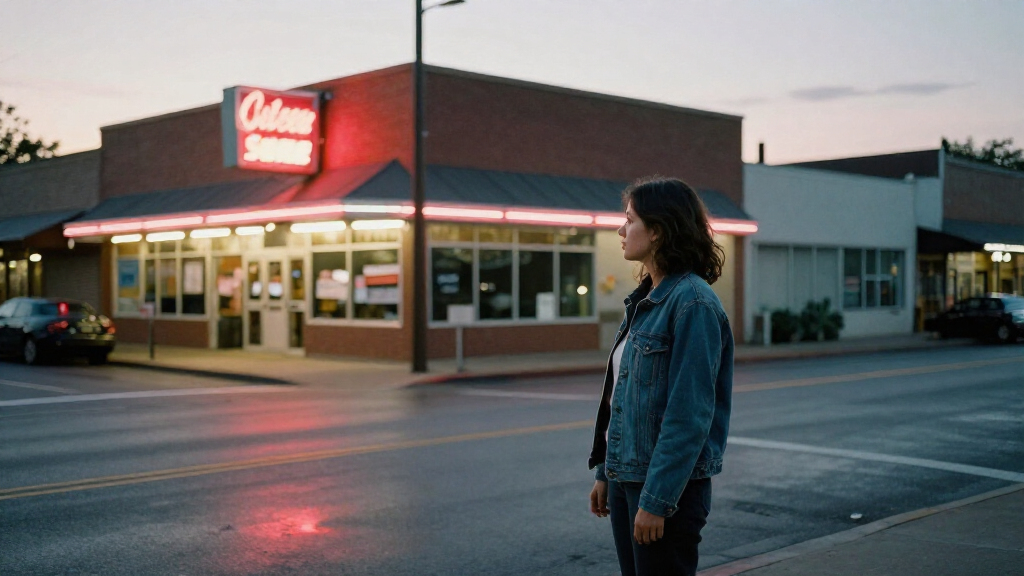
Small-town horror works when the community changes the danger, not just when the story happens on a quiet street. The neighbors know one another’s routines, local landmarks carry memories, and an outsider may notice trouble that longtime residents have learned to ignore. That closeness makes everyday places—school hallways, church steps, a diner booth—feel loaded with history.
Think of a newcomer asking why a particular house has stood empty for years. In a city, that question may earn a shrug; in a small town, the answer may bring a pause, a glance across the counter, and a quick change of subject. The silence tells you the town has already decided which stories are safe to share. That social pressure can feel as unsettling as a shadow in the woods.
Small towns make effective horror settings because their close ties can offer real support while also making people easier to watch and pressure. A neighbor might bring soup when someone is ill, then repeat private news before dinner. In ‘Salem’s Lot, a growing vampire threat transforms the Maine community itself. The ordinary web of local relationships helps the horror spread into places where people expect safety.
Isolation also has more than one shape. A town may sit far from the nearest hospital, or characters may be surrounded by people who won’t believe them. The first is distance on a map; the second is distance at a crowded kitchen table. Both can leave characters alone when they need help.
Popular right now

KitchenAid Classic Series 4.5-Quart Tilt-Head Stand Mixer, Onyx Black

Ninja Foodi DualZone 10-Qt Air Fryer, 6-in-1, Black (DZ302)

Sony BRAVIA 5 85-Inch Mini LED 4K HDR Smart TV (K-85XR50)
As an affiliate, we earn on qualifying purchases.
Choose the right book by the kind of dread you want
The best horror books set in small-town America cover very different fears, so your ideal starting point depends on the mood you want. Choose ‘Salem’s Lot for a classic vampire story rooted in community change, IT for a long view of childhood and town history, or The Tommyknockers for science-fiction horror in a Maine town. These books share a small-town frame, but they take strikingly different routes through it.
If you want a clear first pick, ask what you want the town to do in the story. Does it close ranks around an old secret? Does a threat alter the people who live there? Or does the setting hold the memories of a childhood that adults can’t leave behind? Those questions help more than choosing by publication date alone.
| Book | Setting and threat | Try it if you want |
|---|---|---|
| ‘Salem’s Lot (Stephen King, 1975) | A Maine town faces a growing vampire threat | Classic vampire horror and a community in transformation |
| IT (Stephen King, 1986) | Fictional Derry’s past connects with a recurring evil | Childhood friendship, memory, and a town’s long history |
| The Tommyknockers (Stephen King, 1987) | An alien presence changes Haven, Maine | Small-town unease mixed with science fiction |
| Boy’s Life (Robert McCammon, 1991) | A fictional Alabama town in the 1960s | Coming-of-age, supernatural mystery, and Southern Gothic atmosphere |
| The Southern Book Club’s Guide to Slaying Vampires (Grady Hendrix, 2020) | A Charleston-area book club confronts a vampire threat | Domestic tension and community expectations |
| The Book of Accidents (Chuck Wendig, 2021) | A family returns to a Pennsylvania coal town | Buried history and supernatural danger |
| Black River Orchard (Chuck Wendig, 2023) | Strange apples disturb a Pennsylvania town | Folklore-inflected horror and local relationships |
The table is a starting map, not a ranking. If you like a book that gives a place room to breathe, a longer novel such as IT may suit you; if you want a more focused supernatural hook, the vampire premise of ‘Salem’s Lot gives you a direct entry. Check a current library or publisher listing for edition details before buying or borrowing.
Start with ‘Salem’s Lot or IT for classic Maine unease
‘Salem’s Lot and IT make strong starting points for classic small-town horror because their Maine settings carry weight beyond the map. ‘Salem’s Lot (1975) follows a writer who returns to his hometown and finds a growing vampire threat changing the community. IT (1986) takes place in fictional Derry, where a group of childhood friends confronts a recurring evil and the town’s response becomes part of the horror.
The books create different kinds of unease. ‘Salem’s Lot turns the community into the path through which danger advances: familiar faces and trusted routines no longer feel safe. IT stretches across years, linking childhood memories to adult lives. If you’ve ever returned to your hometown and found a closed shop, a new family in an old house, or a familiar corner that feels smaller than memory, you’ll recognize how place can hold more than one version of the past.
Stephen King’s Maine towns are fictional. Derry, Jerusalem’s Lot, and Haven are invented places, even as the stories draw on the atmosphere of Maine and small-town life. That distinction matters when you read them: these towns can feel recognizable without serving as factual accounts of real communities.
For a third flavor, The Tommyknockers (1987) shifts the threat toward science fiction. An alien presence begins changing the people of Haven, Maine, giving the town a more disorienting atmosphere. Pick it if you want a familiar local setting disturbed by something beyond the everyday, instead of a story focused mainly on vampires or childhood memory.
Try Southern Gothic mystery for a different kind of small town
Small-town horror doesn’t have to look like a New England main street under a gray sky. Boy’s Life, by Robert McCammon (1991), is set in a fictional Alabama town in the 1960s and blends coming-of-age, supernatural mystery, horror, and Southern Gothic elements. Its small-town setting gives the story a distinct regional and historical texture.
That era matters to the feel of the novel: a child’s world is shaped by the people around him, the places he can reach, and the questions adults may leave unanswered. Picture the difference between hearing an odd story from a friend at school and hearing the same story discussed in low voices on a porch after supper. The town’s shared habits and boundaries shape how much anyone is willing to explain.
Grady Hendrix’s The Southern Book Club’s Guide to Slaying Vampires (2020) offers another approach. A suburban Charleston book club confronts a vampire who threatens its members’ families. The setting is suburban rather than a small town, so it belongs in a related conversation rather than a strict small-town list. Its tight-knit group and domestic expectations still show how community rules can build pressure around a supernatural threat.
That distinction is useful when choosing your next read. Small-town stories often emphasize local history and a web of long-standing relationships; suburban horror can focus on neighborhood routines and expectations inside family life. Both can make a familiar street unsettling, but they create different kinds of community. If your favorite moments involve a book club, a kitchen, or polite social rules fraying at the edges, Hendrix may be a better fit than a novel built around a town’s entire history.
Read contemporary Pennsylvania horror for buried history and strange folklore
Two contemporary Chuck Wendig novels use Pennsylvania towns to bring family history and local strangeness into the same frame. In The Book of Accidents (2021), a family’s return to a coal town brings buried history and supernatural danger to the surface. In Black River Orchard (2023), strange apples begin affecting residents of a small town, combining community dynamics with folklore-inflected horror.
A return home is a potent setup because the character arrives with two versions of the place: the town as it is now, and the town as they remember it. The old road may still curve past the same houses, but a family’s reasons for leaving—or what the town chose not to discuss—can change the meaning of that familiar drive. The danger in a story like this comes from what has been waiting under the ordinary surface.
Black River Orchard gives that unease a concrete object. An apple belongs in a lunchbox, a pie, or a paper bag from a farm stand; once it starts affecting the townspeople, those familiar uses turn strange. That everyday contrast lets folklore brush against the practical rhythms of community life.
Try these books if you want newer examples of the form and enjoy horror that folds family, class, local power, or the past into supernatural trouble. The setting remains recognizable—a town, its neighbors, its local history—but the threat need not look like a traditional monster in a cellar. Sometimes the unsettling thing starts on a branch in an orchard everyone can see.
Use these three questions to decide whether a book is truly small-town horror
A book counts as small-town horror when the town’s social structure meaningfully shapes the conflict. A small population alone isn’t enough: the community should affect what characters know, whom they trust, or whether they can get help. Three quick questions can help you tell a story about a small place from a story where the setting is mostly scenery.
- Do shared relationships change what characters can do? A character may need to ask a neighbor for help, but that neighbor could also be tied to an old family dispute.
- Does local history shape the threat? In IT, Derry’s past and the residents’ response matter to the story, so the town’s history is woven into the horror.
- Would the plot change if you moved it elsewhere? If a story relies on the same families meeting at the same diner or on a rumor everyone has heard, moving it to a city could change its engine.
Try the questions on a book you already know. If you move the action from a tight community to a city and nothing meaningful changes, the horror may be rural, suburban, or simply local in scale. Those categories can overlap, but small-town horror usually puts social ties and shared history near the center.
Rural horror often gives more weight to landscape, distance, and survival beyond populated areas. Small-town horror can use those same dark woods or isolated roads, but it also asks what people in town know and what they have agreed not to say. The distinction helps you find a story that matches the atmosphere you want.
Check tone and content before you pick your next read
Small-town horror ranges from eerie mystery to intense supernatural conflict, so one label can’t tell you how a book will feel. A vampire novel, a coming-of-age story with supernatural elements, and a folklore tale about strange apples each create a different reading experience. If you want a gentler entry, look for atmospheric, gothic, or supernatural mystery and check current reviews or content notes.
For example, you might pick up a horror novel expecting quiet fog, old houses, and an uncanny local legend, then find that it also contains mature themes or graphic violence. A quick look at a library catalog or publisher description can help you decide whether its tone suits your evening. That small check is especially useful when choosing books for a younger reader, since age suitability depends on the individual title and the reader.
Readers also differ in what they find frightening. One reader may enjoy a slow build where a familiar neighbor starts acting strangely; another may prefer a clearer supernatural threat and less ambiguity. A book that one horror fan calls atmospheric may feel intense to someone else, so use several descriptions when you’re unsure.
When choosing an edition for your shelf, check the publisher and library listings for details such as format, publication information, and any included material. A worn paperback with a creased spine may suit a book you plan to carry on a commute, while a larger edition can be easier to display or read at home. The right choice depends on what you want from the book: portability, shelf appeal, or simply a story that keeps you listening for footsteps on the porch.
Frequently Asked Questions
What makes a book small-town horror?
Small-town horror makes the community part of the conflict. Local history, close relationships, social pressure, or shared silence should affect what characters know and what they can do. A quiet setting by itself isn’t enough.
Which small-town horror novel is a good place to start?
Start with ‘Salem’s Lot if you want classic vampire horror centered on a Maine community. Pick IT if you’d rather read about childhood friends, adult memory, and a town whose past keeps shaping the present.
Are the Maine towns in Stephen King’s books real?
Derry, Jerusalem’s Lot, and Haven are fictional towns. Their sense of place draws on Maine atmosphere and small-town life, but they aren’t real communities.
Is The Southern Book Club’s Guide to Slaying Vampires set in a small town?
It focuses on a suburban Charleston book club, so the setting is suburban rather than a small town. It still makes a useful comparison because a close-knit community and domestic expectations shape how the group faces a vampire threat.
Are small-town horror books always supernatural?
No. Some build fear around supernatural forces, science-fiction threats, or folklore; others draw tension from secrecy, social pressure, or human behavior. Many mix those sources of unease.
How is small-town horror different from rural horror?
Small-town horror tends to focus on community relationships and shared history. Rural horror often gives more weight to distance, landscape, and survival outside populated areas, though a story can use both kinds of fear.
Conclusion
For your next small-town horror read, choose the community you want to enter: Salem’s Lot’s threatened Maine streets, Derry’s layered past, or a Pennsylvania town where folklore takes root in an orchard. The strongest stories make a familiar place feel newly uncertain because the people and history are part of the danger.
Read with the lights you like, then listen to the house settle when you close the book. Which ordinary place in your town would feel different if everyone suddenly stopped talking about it?
Evergreen bestsellers Picks
KitchenAid Classic Series 4.5-Quart Tilt-Head Stand Mixer, Onyx Black
Ninja Foodi DualZone 10-Qt Air Fryer, 6-in-1, Black (DZ302)

Breville Bambino Espresso Machine, Brushed Stainless Steel (BES450BSS)
As an affiliate, we earn on qualifying purchases.